Chapter: 18
Managing the Commons in a Climate Emergency: An Experiment in Good Governance
Maya de Souza
Abstract
This chapter explores the challenges that arise in effectively managing the Mhadei river in the context of climate change. It considers what good governance involves in this changing situation. There have been many papers written on river basin governance but the challenges and demands of the growing climate emergency have not been widely considered, at least in India.
Our contention is that we are in a new “time,” a new era that requires a review of existing systems and approaches. This chapter is in part a provocation—pushing for urgent thinking to enhance these systems—and in part an assessment of the existing legal framework and its deficiencies in the context of the new landscape we live in where the magnitude of risk from failing to act is much higher.
Although we are entering a new era, much of the research on managing common pool resources remains relevant: both the risks of the tragedy of the commons and the possibilities of cooperation. The question is how to ensure equitable and sustainable use and management of these resources in the face of increased need. This chapter brings in the thinking and studies of Elinor Ostrom (1990) on how participatory approaches have worked and can work.
Our Proposition
CLIMATE change will exacerbate the problems that already exist in the Mhadei river basin including erratic rainfall concentrated over short periods of time, which means less water capture and increased flood risk plus soil erosion, and drought and heat which create greater demand for water. The pressure to control water resources and to divert water illegally will increase as a result. Indirect pressures include salinity from sea-level rise, higher temperatures which will harm some organisms and threaten or make existing ecosystems fragile, and forest fires as areas become drier with the heat. This requires forward-planning, agility, and the capacity to deal with trade-offs and to find compromises.
The legal framework in India, which gives both the Union and State Governments functions in relation to water, is not in our view fit for the challenge (Sawaikar 2025). The Constitution of India gives the Union government functions in relation to the regulation of inter-state rivers and river valleys (List 1, para 56) and the states functions in relation to water supply (Article 246). River basin management structures, though in place for some rivers, are missing for the Mhadei—though the Mhadei Water Disputes Tribunal itself asked for such governance—and those that do exist do not have a track record of addressing the complex challenges and trade-offs that arise. A new structure is needed to confront climate challenges.
This chapter makes the case for a governance structure with a strong non-political executive body. Strong executive structures are in place in some river basins including the Mekong in Southeast Asia, the Murray–Darling in Australia, the Rhine in Germany and the St. Lawrence River in USA/Canada. A depoliticized technocratic body can help address the lack of trust between states and support long-term thinking and planning that goes beyond political cycles. Additionally, this chapter makes the case for a participatory structure, not only for the purpose of consultation but also of scrutiny—and so we refer to it as an assembly. Setting up a body that is not open to capture by the most powerful is a challenge and so this requires considerable thought. The third pillar is extensive information and technical expertise without which neither of the above can function. It must be stated that technical expertise does not come from engineers and hydrologists alone but may also come from farmers, those managing local irrigation systems, comunidades, and others. The assembly will therefore comprise plural understandings of the river and signify “epistemic pluralism” where no single group of people is regarded as having a monopoly on knowledge.
Recourse to the judiciary, when no compromise is possible, is the fourth pillar. The courts may be the best option for dispute resolution as procedures exist for urgent adjudication among conflicting viewpoints rather than having to constitute a tribunal anew. The fifth is a set of policy measures that need to be explored, such as water pricing, thereby reflecting the value of water and the impact of over-use, and possibly also the trading of water rights.
The State of the Mhadei: How Climate Change Will Affect the River.
1. A Lifeline Now Struggling with Various Pressures
Before looking at climate impacts, the current pressures on the Mhadei and the wider river basin need to be noted. The river basin traverses political boundaries, with basin areas in Maharashtra (4 percent), Karnataka (18 percent) and Goa (78 percent) creating political pressures and multiple demands on the river.
The Belgavi area of Karnataka, where the river begins, is the second most populous area in the state with the growing cities of Belgavi, Dharwad and Hubli creating an increasing demand for water amidst rising scarcity. Demand includes water for water-intensive agriculture (Raghuram 2024), industry, household consumption, and power generation, with water needed for cooling thermal power plants (Times News Network 2024). The neighbouring river basins in the northeast—the Tillari and Malaprabha basins—include an area which is in part dry and arid (Anilkumar, Shankar, and Suprit 2024).
In recent years there have been changes in local responsibility for water management. Villages in Goa traditionally engaged in extensive systems of capturing water and groundwater recharge, using ponds, paddy fields, and bandharas to divert water from rivers into irrigation channels flooding fields that then fed wells. However, there is now greater reliance on modern water management systems where water is held in large reservoirs such as at Selaulim and piped long distances by the Public Works Department (PWD) to homes and other end users. This creates a disconnect between the households and businesses that use the water and the management of the water system. Traditionally, households would have been conscious that the water that falls for such a short period needs to be collected and stored. They would be conscious of the levels of water in their own wells and the need to use it judiciously. They would be concerned about over-use and extraction by neighbours drawing on the same aquifer. Now with close to 100 percent connection to the PWD water supply, the burden of managing water is passed to a government body. Harvesting water and saving water is not regarded as necessary. This reduces the sense of responsibility in towns and villages for securing and managing their water.
This disconnect is a theme that Mridula Ramesh (2023), writing about water across India in her book Watershed, also highlights, explaining how British engineering changed people’s relationship with water and how low water prices have bolstered this relationship. The impact of low water prices is also highlighted in studies by the Centre of Energy, Environment and Water or CEEW (Burton et al. 2011). The Mhadei is one of the most important sources of freshwater in the area, especially for Goa (Indian Express 2018). At the lower reaches it is saline, rendering estuarine water unusable, but nevertheless serves as a healthy breeding ground for fish and shellfish.
2. Climate Impacts on the River Basin
This chapter takes a wide-angle river basin perspective: it is the management of both the river and the water in the wider watershed that determines the actual climate impacts on communities. There is no clear modelling of impacts on the river to look at.1 Therefore, this section begins with the key climate variables and changes that might be expected before examining the likely impacts in this geography. The Goa State Action Plan on Climate Change (GSAPCC) says that there have already been significant changes (Goa State Biodiversity Board 2023) and the Karnataka State Action highlights concerns (Government of Karnataka 2015).
The three main climate variables highlighted in the GSAPCC of relevance to the river basin are:
- Temperature: affecting evaporation and
- Precipitation: quantity and extreme rainfall
- Sea level rise: leading to salinity from seawater
In terms of temperature, CMIP6 uses a number of variables (IPCC 2023). In all cases, temperatures across India will rise. The number of hot days over 35°C will be around 21 days but possibly around 25 days by 2039 in the extreme climate change scenario SSP5-8.5. Maximum daily temperatures for March, April, May will be 41.65°C under SSP3-7.5 and 41.74°C under SSP2-4.5. If climate change is under control with mitigation action being effective then the hot days will be fewer, 11 days median and 19 days at the higher end of projections.
With climate mitigation policy increasingly under attack in the USA and Europe, the risks of the extreme scenarios are more than possible, perhaps increasingly likely. According to Goa’s State Action Plan on Climate Change, Goa’s mean annual temperature has already increased by 1°C since the beginning of the twentieth century (Goa State Diversity Board 2023). Under high emission scenarios, temperatures are expected to rise even more, by up to 7°C by the end of the century. Goa will start experiencing heat waves beyond the 2040s with temperatures over 5°C higher.
In terms of impact on the river basin, this will raise evaporation levels affecting agriculture and household demand for water—showers, swimming pools etc—as well as mechanical cooling demand which in turn requires more power generation. Cooling towers for thermal power, i.e., from coal, will increase the demand for water. In extreme situations, the power stations will fail meaning air conditioning units will be out of action, which could lead to excess mortality in hot weather.
The second key climate variable is precipitation. Goa has very high levels of rainfall—over 3000mm a year (Indian Meteorological Department 2025). With climate change, rainfall levels are expected to increase according to CMIP6 projections. Extreme rainfall incidents have to date actually increased but there is greater variability year to year (Sirur 2024). Although this may sound positive for water security, very heavy rain in a short time space means high run-off rates and flood risk. The common response in flood-prone areas of enhancing drainage and sending this water to the sea as swiftly as possible, combined with construction which seals soil with tarmac and concrete has caused reduction in groundwater recharge. These precipitation levels also create a risk of flooding, which may arise in a city like Panjim with excess rainwater plus severe high tides. In recent years, Goa’s farmers have also lost an unprecedented amount to flood damage (Agroinsurance 2024).
Northern inland Karnataka, which has much lower levels of rainfall—around 700mm per year—may suffer drought with climate change increasing demand for water (Agroinsurance 2024). The Karnataka government in its State Water Policy 2022 outlines the concerns for Karnataka (Government of Karnataka 2022). That the state is already water-stressed is clear and the projections are for increased water stress (Government of Karnataka 2022, 2). Reduced rainfall is expected and a 10–80 percent increase in drought risk.
The third key variable is sea level rise. Goa is experiencing a rise of 1.45 mm a year, and an expected 1 m sea-level rise by the end of the century. And as 14.73 percent of the land is under 15 m elevation, it is severely vulnerable to flooding. UNDP predicts that Goa will lose a large percentage of its land area including its famous beaches and tourist infrastructure (Goa State Biodiversity Board 2023, 67). According to the GSAPCC, a 1 m rise in sea-level would cause damage of around Rs. 8,100 crore (USD $800m). In terms of physical vulnerability, issues include saline water ingress through channels and across broken bunds as the sea-level rises. This will affect agriculture and aquaculture. Increased salinity combined with reduced flow levels of the river will have biological impacts. The risks are of reduced phytoplankton diversity as they need freshwater (Orizar, Repetti, and Lewandowska 2024). There will be stress to larger animals that are not adapted for salt toleration.
Acute sedimentation from run-off will reduce photosynthesis and reduce fish yields.
3. Implications for Goa
Water security will be an issue for Goa and the Mhadei itself with climate change. The river is fed by the monsoons, and its levels are at risk from more erratic monsoons. In fact, the river basin as a whole will be affected by this extreme and temperamental weather. Sufficient water for cities, agriculture, industry and even firefighting will be crucial and competition for what is available will rise:
As far as the peninsular and coastal rivers are concerned, they depend solely on precipitation. During the monsoons, they pass water in enormous quantities, part of which flows waste into the sea. Once the monsoon ends, the water can drop to precipitously low levels, unable to support even basic human needs. If the monsoons are erratic, the consequences become acutely catastrophic. Thus, the low quantity of water in the Northern, peninsular, and coastal rivers is a grave concern (World Bank 2023).
These problems will arise not on their own but in combination with population growth. Water availability levels in 2011 showed Goa having 1,807 m3 of water in 2021 with projections used making it water safe according to the Goa State Water Policy (Government of Goa 2021). Levels between 1700 and 1000 m3 are regarded as leading to water stress, which means periodic water shortages; and below 1000 m3 is regarded as water-scarce. Taking on board the increase in population since 2021, Goa is likely now to be within the “water stress” category or approaching it.
In addition to the impacts on plankton biodiversity, stress on animals not adapted to salt toleration, and decreased fish yields, increased extraction of water combined with heat and less predictable monsoons increases the risk of forest fires. In 2023, Goa witnessed large scale forest fires that burnt around 400 sq km of forests in the Ghats. Furthermore, flooding combined with soil erosion will lead to losses for farmers and reduce the longer-term viability of farming in Goa while also affecting towns, cities and infrastructure. This calls for integrated river basin management approaches that support water security whilst reducing flood risk and erosion.
The GSAPCC does not spell out the impacts of climate change on river basins in any detail. However, in its section on water sector adaptation strategy it says “though Goa is situated in high precipitation zones, it has one of the lowest per capital freshwater availability” (Goa State Biodiversity Board 2023, 21). In the proposals set out, several water actions are listed including enhancing groundwater protection and protecting water resources through reducing the excessive extraction of water for the tankers.
The Intergovernmental Panel on Climate Change (IPCC) Assessment Report 6 (AR6) Synthesis Report is the formal and most recent report of this expert body associated with the United Nations Committee on Climate Change (UNFCCC) assessing the progress and impact of climate change. It highlights the impact of climate change on water resources: “Climate change has caused substantial damages, and increasingly irreversible losses, in terrestrial, freshwater, cyrospheric, and coastal and open ocean ecosystems (high confidence)” (IPCC 2023). Chapter 4 of the main report emphasizes the impacts of climate change on water security. Freshwater resources will be increasingly compromised by high demand and less secure supply. The IPCC warns that adaptation will get harder and harder. It also says that “[a]ctions that focus on sectors and risks in isolation and on short term gains often lead to maladaptation over the long term, creating lock-ins of vulnerabilities, exposure and risks that are difficult to change” (IPCC 2023, B.4.3).
River Basin Management: What Is Needed for the Climate Emergency?
As is evident above, climate change will create additional pressure and in our view a need to:
- Increase agility and responsiveness to less stable rainfall Relying on a system that requires three years of legal proceedings or longer is not appropriate when quick decisions and adjustments are needed.
- Enhance demand management—avoiding excessive extraction of water in upstream areas without regard for the midstream and This involves rethinking demand. There are multiple stakeholders involved—farmers, industry, power stations, and towns and cities.
- Take an integrated catchment approach which involves managing rainwater to slow the flow to the Tributaries can be managed to use natural processes like meanders that help slow the flow to increase climate resilience and enhance ecological systems upstream and downstream. Ensuring sufficient water in the Ghats year-round and capturing water in downstream areas in aquifers to supplement the water from upstream reservoirs can also reduce flood risk in low-lying coastal areas. Planting trees in catchment areas may increase rainfall levels and reduce run-off, which also carries sediment into the rivers, whilst increasing percolation into aquifers.
River Basin Governance in India
In this section, we look at how the river basins are governed in India before considering whether they are fit for current and future challenges. The Constitution gives states a duty in relation to water supply and gives powers to regulate inter-state rivers to the Union government. The Ministry of Water Resources lays down policy guidelines and programmes for the devel-opment and regulation of the country’s water resources and can issue directions. However, its functions primarily relate to overall planning and policy formulation, including technical guidance and research, formulation of national water development perspective, and the determination of the water balance of different basins/sub-basins for consideration of inter-basin transfers. The Ministry also has a function on coordination, mediation and facilitation with regard to the resolution of differences or disputes relating to inter-state rivers and in some instances overseeing the implementation of inter-state projects (Department of Water Resources 2025).
The states have powers over their rivers but are subject to the union govern-ment’s powers. They have opposed central government attempts to widen central powers on this front mainly or at least in part because of a fear that the Union government may use its powers in favour of the state with a government of the same political party (Gupta 2019). This means a bifurcated system which creates uncertainty on who has responsibility for ensuring an equitable allocation of water. There is a chance that no one fully takes responsibility, creating risks in this climate emergency situation.
Under Article 262 of the Constitution, the judicial role to adjudicate between states lies with specially appointed union government tribunals: “(1) Parlia-ment may by law provide for the adjudication of any dispute or complaint with respect to the use, distribution or control of the waters of, or in, any inter-state river or river valley. (2) Notwithstanding anything in this Constitution, Parliament may by law provide that neither the Supreme Court nor any other court shall exercise jurisdiction in respect of any such dispute or complaint as is referred to in clause (1).”
The tribunal system is governed by the Inter-State River Water Disputes Act, 1956. In line with Common Law legal systems, the approach is confrontational rather than investigative. Though river basin structures are common, for example, in the European Union, they are not at the forefront of the Indian governance structure even with provisions for such Boards under the River Boards Act, 1956. The Act gives the union government power to set up River Boards to advise state governments on coordination of activities and resolving conflicts relating to “conservation, control and optimum utilisation of water resources” and other matters such as afforestation and control of soil erosion. The Boards are to consist of a Chair and members appointed by the central government. They can be empowered under Sections 13 and 14(1) to advise governments on regulation and development as well as inter-state conflict, and prepare schemes for the purpose of regulating the inter-state river. They are primarily of an advisory rather than executive nature and the scope of their powers is limited.
Boards have not been established under this Act but under other statutes. Several have been set up including those under the Betwa River Board Act, 1976 and the Brahmaputra River Board, 1980. The Executive Committees comprise officers from the central government and the state governments. The functions of these Boards are largely about supporting actions of the central and state governments: carrying out surveys and investigations and preparing reports for state governments. They have specific executive powers regarding constructing a specified dam, i.e., Rajghat in Madhya Pradesh, and laying down rules of operation of those dams (Government of India 1976, sections 10–12).
Though the mission and vision are in line with planned management of the river basin, with duties to prepare a Master Plan amongst other things, there is an emphasis on utilization of water. The Brahmaputra Board established by the Brahmaputra Board Act, 1980 is required to by planning and such other measures so as to achieve development and utilization of water resources of Brahmaputra (Government of India 1980). The Betwa River Board Act, 1976 refers to sustainable development, maintenance of quality, and efficient use of water resources to match with the growing demands on this precious natural resource of the country. But climate resilience and healthy ecosystems are not mentioned.
There is no reference in the statutes to either a practice of engaging local communities or drawing on local knowledge and expertise in relation to river basins. This may reflect a dominance of engineers rather than those with a climate science background amongst IAS officers (Dhingra 2018). Recent press releases show the importance of engagement is recognized in terms of groundwater. The Atal Bhujal Yojana Scheme (announced on 1 April 2020 for five years) is stated to be designed to enable community participation (Press Information Bureau 2021).
Are the Boards Fit for Purpose?
In answering this question, we consider how well the current structures support the management of common pool resources. We use the term to refer to those natural assets with access shared by many people. These assets can be fields or common land, water bodies, or fishing stock amongst other re-sources. Rivers from which households, towns, villages and businesses can draw water and make use of them for multiple purposes are a form of com-mon pool resource.
There are three reasons for taking the view that they do not perform the role required:
First, power & politics: There is no over-arching structure for managing rivers that depoliticizes conflicts. Existing boards like the Betwa and Brahmaputra River Boards comprise government officers and represent states. They do not prioritize evidence gathering and developing a robust understanding of climate risk. A strong neutral structure would involve commissioning robust evidence, taking a holistic watershed view, and providing neutral advice to governments. As is apparent from the lengthy submissions in various disputes including the Mhadei, states do not trust each other or accept the evidence of the other party.
The existing river basin boards are not strong executive bodies that can take charge of a situation and rise above the political fray. They do not have the technical staff to help take charge and as largely advisory groups, they cannot ensure agility of decision-making and make tough decisions. States continue to claim rights to control the rivers. In the Kaveri situation we see considerable politics between the states of Karnataka and Tamil Nadu. The situation is open to populist manoeuvrings with water featuring in election campaigns or politicians refusing to follow court orders because of political sensitivities (TIMESOFINDIA.COM 2018). Furthermore, where the downstream riparian state is smaller and politically less powerful than the larger ones—in the Mhadei basin, the population of Karnataka’s large towns on the edge of the Ghats is higher than that of Goa—a majoritarian approach carries risks.
Secondly, water management is fragmented with responsibilities across states and spread across departments from those managing river water, surface water, and groundwater to those departments managing supply including the PWD and Agriculture Department.
Thirdly, the existing boards have a river focus and do not consider the catchment as a whole. Similarly, tribunals have also this narrow focus. To ensure adaptation and readiness for climate change, looking at water in the river basin as a whole would increase options for securing water for all in an equitable way. For example, efforts could be made to increase groundwater recharge and slow the flow of smaller tributaries to the Mhadei.
Fourthly, the people on the boards have a narrow educational and professional background. Looking at the composition of the Boards they seem engineer focused. It is not clear that they take on board ecological systems or other non-quantitative aspects of a river such as the social, public amenity, cultural, and spiritual angles. There is not much emphasis on public participation and local knowledge (see Dandekar 2025 in the present volume). There is a sense of alienation from the process by people, especially in Goa. This is in part because of a lack of recognition of the river as a part of nature and of inherent value. The “engineering” tendency goes against this view and does not resonate with the people that have a social, cultural, and religious affinity with the river. There is no body that feels accessible to ordinary people.
Fifthly, the legal process is long and cumbersome and not flexible enough for the unpredictable situation that is already emerging because of erratic and extreme weather.
Alternative Structures and Approaches
In considering alternative structures, this chapter draws on two rich and fertile sources:
- Thinking of participatory community mechanisms of managing common pool resources: this school of thought is associated with the work of Elinor Ostrom who responded to Gavin Hardin’s “tragedy of the commons” thesis by showing that traditional societies had managed shared resources—labelled “common pool resources”—effectively.2
- Real examples from other river basins across the world including the Murray–Darling river basin (Australia), the Mekong (Southeast Asia), the Rhine (in Western Europe showing the EU approach) and the Lawrence (USA and Canada).
Learning from Traditional Systems: What Enabled Them to Work?
In this section, we look at the case studies developed by Ostrom on traditional systems of management which mean that private ownership or state regulatory bodies may not be needed (Ostrom 1990). At the heart of this thinking is that decentralized decision-making can engage people and support optimal decisions. To dispel concerns about the relevance of these examples, it is noted that although these case studies apply to common pool resources with a broad equality of power, not all cases are so straightforward. In any group, there are some people who are more powerful than others.
The examples given by generally have a clearly demarcated asset such as the land at Torbel in Switzerland, which is a small meadow, and larger common lands like the extensive grazing lands in Japan (Hirano, Nigaike and Yamanuka) spanning around 3 million hectares. Some are river basins like the Huerta irrigation institution in Spain related to the Turia River. These “communities” tend to have a representative body such as the syndicate in Huerta. These are insider bodies and there is a level of bottom-up administration. These bodies often involve the beneficiaries putting in time themselves to build a sense of community and allow for joint action. Provision is made for enforcement or conflict-resolution mechanisms. In many cases, there are a series of bodies, a form of “nested governance”—like a set of Russian dolls—which range from the hyper-local to the larger scale body. This is a means of engaging and reducing alienation from the system, though implementation is often complex (Marshall 2008).
In summary, the case studies describe effective systems that have been sustained and worked over the years. Some of them have broken down under various pressures. Table 18.1 shows the full set of necessary requirements put forward by Ostrom: some are preconditions and others are aspects of the system. The right-hand side of the table sets out how they apply to the Mhadei.
Table 18.1: Ostrom’s Design Principles for Sustainable Commons Management and Their Application to the Mhadei River Basin
| (a) Clearly defined boundaries: for river basins, delineate using hydrological boundaries | River basins do have boundaries that can be determined. There is a loosely connected set of agricultural areas and urban areas, including the downstream riparian areas that have an interest.The boundaries are being blurred by river diversion and the claims that the sugar and rice farmers in the Deccan may make, including those in the Malaprabha Basin. |
| (b) Congruence between scheme rules and local rules and conditions
|
It should be possible in theory to tailor extraction rules to the competing demands of the area. However, considering the tensions between the needs of sugar farmers and those of others, as well as politically powerful lobbies, this is politically challenging in the current set-up. |
| (c) Collective choice arrangements: allowing resource users to participate strengthens the legitimacy and acceptance of rules. | Along the Mhadei river, we have a collection of panchayats (village councils) and district administrations as well as the comunidades in Goa that manage agricultural land and related infrastructure collectively. More recently some self-help groups have also been set up, e.g, the Dhabal Famers Self Help Group. The panchayats have Gram Sabha meetings and offer a degree of participation but have few if any powers relevant to river basin management. The new Mhadei-PRAWAH body involves representatives from the three states at a senior civil service level with a male and engineering bias (TIMESOFINDIA.COM 2023). The area does not have inclusive river basin councils. |
| (d) Monitoring of user behaviour and impact. | |
| Graduated sanctions: proportionate penalties for rule violations | The length of the river basin and state administrative boundaries make upstream monitoring by those who are downstream extremely difficult. Actions that should be monitored beyond diversion of the river waters could include illegal unpermitted extraction and wastage of water on water-intensive crops.
Technology could be used to do this, but this is not currently being used. |
| Conflict-resolution mechanisms: arbitration and negotiation systems could be used. | At the moment, the violators appear to be state-sanctioned, and violations are not being punished. |
| Rights of self-organization: the question is how this would work in India as such mechanisms are not yet in place | They may be faster than the tribunal system but are yet to be tested. |
| Nested enterprises – multiple levels of inter-related governance
|
Goa has the basics in village-level governance, from the comunidade system to the panchayats, which have water and sanitation committees. |
It certainly seems to be the case that there is potential for these participatory systems to work in the Mhadei but there are also challenges. Many of the examples given by Ostrom show the collapse of these systems under various pressures, including growing populations, an influx of outsiders not committed to the rules, and poor enforcement because of corruptibility.
The inequality of upstream and downstream communities and governments, with the upstream being more powerful and able to divert waters in the absence of clear legal rules is also an issue. It should be noted that there are benefits of upstream and downstream working together: Karnataka may be able to store water for Goa and at times of heavy rainfall, Goa can take water out of Karnataka to reduce flood risk. Furthermore, hot dry weather which may result in the riverbed running dry and water flowing only seasonally increases the risk of forest fires which could easily spread from Goa to Karnataka.
Modern Governance Systems: The Components
Taking into account the inequality of the communities, the fragility of the system at the moment, and the increasing pressures of climate change, it is also beneficial to look at modern governance systems. Relying solely on decentralized systems carries risks. An examination of the river basin governance structures of various rivers across the world to understand how they are managed and prepared for the risks posed by climate change, reveals some key pillars:
- An institutional structure that sets out clear responsibilities and has a strong and informed central body
- Mechanisms for participation and engagement
- Integrated water management with a broad scope—an extensive river basin approach that enables consideration of water and related issues, g., flood and soils
- Agility to take action swiftly in the event of drought and flooding
- Enforcement systems
Ostrom chose the Mekong, Murray–Darling, the Rhine and related EU law, and the St. Lawrence rivers because they featured numerous parties with an interest and involved tough competition. The St. Lawrence river basin features competition between hydropower and urban centres concerned about flooding and the river’s ecological health (Carr 2015). The Murray–Darling is managed across four states and a territory in Australia. It has a long history of developing its governance arrangements and is often used as an example of good governance. The Mekong flows through six countries and at the source is China, a hugely powerful country compared to those downstream. The Rhine provides water for agricultural, industrial and urban use across nine countries.
- Clear responsibilities with a strong central body: In terms of strong central bodies, the Murray–Darling Basin Authority (MBDA) co-ordinates and officially looks after the interests of all users, utilising science and research to make The organization evolved from an inter-state coordinating body to an Australian government agency (Murray–Darling Basin Authority n.d.a.). The MDBA approves water resource plans developed and implemented by the states. This is supplemented by the Commonwealth Environmental Water Holder, which plans and implements across the basin, and monitors and reports on water from the standpoint of the environment (Department of Climate Change, Energy, the Environment and Water n.d.).The Mekong River Commission is more complex covering six countries with three permanent bodies: the Council of Ministers, Joint Committee, and MRC Secretariat (Mekong River Commission n.d.a.). The Joint Committee steers the implementation of the Strategic Plan. It is assisted by taskforces and working groups and appears to be more political and less technocratic than the Murray–Darling. It has a strong and permanent cross-basin executive structure that monitors and develops forecasts relevant to climate change (Mekong River Commission n.d.b.).The St. Lawrence River is also run by three main bodies: the International Joint Commission (IJC), which sets the overall policy for managing flows; the International Lake Ontario-St. Lawrence River Board, which regulates flows according the IJC policies; and the Canadian and American hydropower entities that operate the dams in the St. Lawrence River. The rules provide that no new uses or blockages can take place without the prior approval of the IJC. It must considerthe interests of both countries and contains an order of precedence of different uses. The IJC has equal representation from both countries.The Rhine river basin structures are similar. The Treaty sets out the duties of countries and has established the International Commission for the Protection of the Rhine (ICPR). The ICPR has extensive duties and once decisions are made, the countries are obliged to obey (International Commission for the Protection of the Rhine 1999, Article 11). Each country sends a delegation to the ICPR (Article 7). There is an annual plenary at which resolutions are passed by Ministers. The Rhine Coordination Committee coordinates the tasks of the ICPR. There are various committees and working groups within the ambit of the ICPR. An international secretariat supports the ICPR. Decisions of the ICPR are made by the contracting parties—each has one vote. Reports show that there is potential to embed collaborative systems for such complex river basins (Schiff 2017). The Rhine Action Programme is regarded as a key tool of ensuring effective “water diplomacy”. It helped with the cleaning up of the river (International Commission for the Protection of the Rhine n.d.).
- Popular participation: Popular participation in processes and decision-making is becoming standard. The Mekong has participation through the Basin Officials Committee with officials from the six states/territories represented in equal numbers. The Murray–Darling website also recognizes the value of It states that “People across the Basin are also key for decision-making. Communities share their deep history and knowledge of the rivers and this local knowledge helps guide decisions” (Murray–Darling Basin Authority n.d.b.). The Basin Community Committee has a Chair and up to sixteen members. BCC members are selected on the basis of their expertise or interest in three key themes: water use, water management, indigenous and local government matters. The committee has sub- committees to do its work.In the St. Lawrence basin, inclusivity is through consultation (Carr 2015). Water managers with decision-making powers engage with stakeholders through participatory approaches that include meetings, workshops and debates. Polarization in the past meant “a conflictive setting with negotiation type processes often dominated the meetings and workshops and a consensus option was not identified.” Despite these negative aspects, the study indicates that participant involvement in the development of the operating plans led to increased innovation and legitimacy, particularly when they were perceived to be supported by sound science. Awareness and understanding of other stakeholder interests also appears to have become higher amongst many participants.In the EU, public participation is required with decentralized implementation preferred. The Water Framework Directive 2000 embeds a bottom-up governance structure, where the main decision-making and responsibilities are taken at the provincial, regional, or local levels. Studies have looked at the effectiveness of the approach with a 2019 study indicating that links between “participatory processes conducted at the sub-district level and decision-making processes at River Basin District should be established” (Pellegrini, Bortolini, and Defrancesco 2019).
- In terms of a holistic and integrated approach, at the EU-level, there is an integrated river basin management approach, requiring the co-ordinated development and management of land in these areas. River Basin Management Plans are to be developed every six years and Programmes of Measures to be A broad and clear aim is set out as “broad ecological and chemical status” combined with promoting sustainable water use, preventing deterioration of water resources, and mitigating the effects of floods and drought.The International Commission for the Protection of the Rhine (“ICPR”) precedes the Water Framework Directive and also shows this integrated approach. The governing instrument applies to the Rhine in a broad sense: groundwater, aquatic and terrestrial systems interacting with the Rhine, and the Rhine catchment area in regard to water pollution, flood prevention and protection (International Waters Governance n.d.).The Murray–Darling Authority has created policies such as water-trading rules; sustainable diversion limit adjustment mechanisms to ensure that water delivery systems are more effective and water losses are reduced; and a Basin Water Plan focused on water recovery to retain water in the system.
- Agility: An ability to respond swiftly to climate-related shifts needs improvement The Mekong structures provide for this to some extent. Cooperation began on the Mekong River with China and Cambodia working together. China provides better hydrological data and contributes to forecasting. China’s power as the upstream country is evident here and it is often criticized for its many hydropower dams. However, it has carried out emergency water releases at times of drought. The International Commission for the Protection of the Rhine has also developed systematic approaches for flood control including the Rhine Action Programme. Having a strong coordinating body, it is better placed for swift action. However, recent events show that even these structures are being caught unprepared for drought and floods (Zimmermann and Cokelaere 2023).
- Dispute Resolution: Enforcement Systems
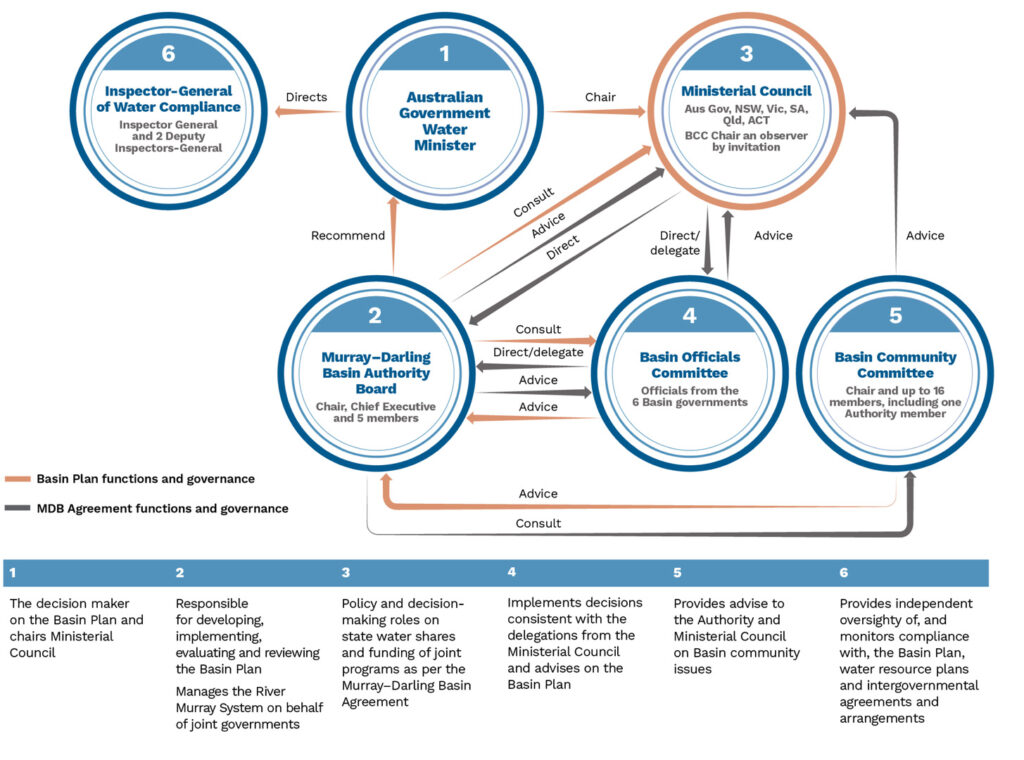
Fig. 18.1: Governance and Core Functions of the Murray–Darling River Authority: An example of cooperative water management. Source: Murray–Darling Basin Authority Canberra, 2024. CC BY 4.0.
The Murray–Darling Authority enforces through the Inspector-General of Water Compliance, which monitors and enforces basin scale compliance. The Mekong has limited provision for enforcement, which has been a criticism levelled against the structure (Climate Diplomacy n.d.). The Rhine requires parties to first try to resolve disputes by way of negotiation, but if that fails arbitration can be requested.
Proposed Mhadei Governance System
The management of common pool resources is clearly difficult and will become more demanding in a heightened situation of competition for resources with climate change. The stakes are high for each state in the event of drought and there will be strong pressure to extract and divert water. Swift action to deal with flood risk will also be needed. Decisions will need to be taken on water usage and on pricing and other policies. Simpler local systems are high risk considering what is at stake and inequity of power along a riverine system.
The appetite for some of these enhancements is developing. The Karnataka Government’s State Water Policy 2022 recognizes the benefit of Integrated Water Resource Management (IWRM) approaches. It says that “integrated water management is a critical requirement that will enable a smoother and more effective adaptation to climate change, when compared to alternative approaches” (Government of Karnataka 2022, para 1.6). Effective IWRM is stated as including:
- An institutional framework that is both robust and flexible and includes modern legislation that supports an integrated and adaptive policy approach; the environment is recognized as a legitimate water user
- Water resources assessment, planning and management
- Stakeholder and community awareness raising and participation
- Regular monitoring and evaluation
Drawing on the examples of river basin governance in other countries, our proposition is that what we need for the Mhadei in this time of change is threefold:
- A central executive which offers strong governance—at once “robust and flexible”. This body will need to make robust, well-informed decisions and have sufficient resources for data collection and
- Public participation and scrutiny to hold the executive to account and enable knowledge to be drawn from the full breadth of
- A quasijudicial or judicial system as states may never be able to agree on issues. This could be supplemented by a body with monitoring duties.
In our view, these institutions require customization for the Indian context. Our proposal for discussion is described below as well as how the right policy framework can help oil the wheels of the system. The policies suggested are essentially about fair water charges. The system put forward is aligned with proposals developed by the Council on Energy, Environment and Water in its National Water Resources Framework study, particularly its recommendation for river basin plans and its goals on:
- Water sufficiency for industry, agriculture and households
- Water conservation and demand management (Burton et 2011).
What Would a Strong and Effective Executive Body Look Like?
We have looked at the structures of river basins across the world, known for their governance systems. Drawing on what appears to work there as well as at the findings of the Mhadei Tribunal, a possible structure and distribution of power and functions is outlined below.
The Tribunal’s recommendations, as explained by Anilkumar, Shankar, and Suprit (2024), address deficiencies in the system based on robust data accepted by all the parties and recommend that the central government:
- Constitute an independent body called the Mahadayi Water Management Authority (MWMA) to implement the decision of the MWDT and to undertake the following tasks with the cooperation of the states
- Collect all hydrological and hydro-meteorological data and evaluate the water availability in the Mahadayi basin and the sub-basins associated with the
- Undertake investigations on all aspects of environmental issues and prepare action plans to address
- Prepare a comprehensive plan for the sustainable development of water
- Monitor and regulate the existing and future projects and schemes” (MWDT 2018, 2629–2631)
Data collection, investigation, planning and monitoring and regulation are highlighted. Taking on board the duties in the EU on “good ecological status” of rivers, we would add monitoring the health of rivers in terms of biodiversity. Our proposition is that the key aspects of an effective governance body are:
- First, a decision-making committee, not just an advisory This will mean the states giving up some control. The EU River Basin structures as well as the Murray–Darling and Mekong all offer useful guides. Another model to draw on is the UK’s Regional Flood and Coastal Defence committees, an appointed body of knowledgeable people tasked with the job of distributing funding (Environmental Agency 2025).
- Secondly, a broad remit which involves powers relating to water in the river basin and not just the This is to face the challenges of erratic rainfall and make use of the opportunities such as to store water at the surface or in the form of groundwater. The Mhadei Tribunal proceedings touched on this as Goa asked for downstream water resources to be ignored on the grounds of salinity whilst the Karnataka government argued that this was a relevant resource.
- Third, sufficient staff and resources to enable an evidence-based approach to decision-making. Collecting and maintaining good hydrological data should be an important part of this function combined with modelling impacts of climate change and robust projections based on monitoring.
- Fourth, in the Indian context, amidst the risk of over-politicizing the situation, it is important that the whole committee have a clear mandate and fiduciary responsibility and avoid taking a simple majoritarian To avoid undue influence, the committee could be given fixed terms that cannot be broken other than in extreme circumstances.
- Fifth, a body that represents different interests. An issue that arises is how to ensure a good understanding of the problems on the ground and how to make use of local Drawing members solely from a civil service elite of engineers is not the answer. Having representatives from different walks of life, more women, and tribal groups can help. However, to avoid undue pressure on them, they may need education and training to be effective on committees.
Facilitating Impactful and Equitable Public Engagement
Public consultation as part of central government decision-making is relatively recent in India (Reddy and CAM Corporate Team 2024). Effective public consultation is problematic. Fear of repercussions and deference by some groups may dissuade people from speaking out, leading to decisions by a small group. So how can we ensure genuine consultation and participation in decision-making?
Looking at a study on participation with examples from the Netherlands, UK and North America, the components of a strong participatory system may be:
- providing space for deliberation and consensus building for better quality decisions
- mobilizing and developing human and social capital for better quality decisions and their implementation
- raising the legitimacy of decisions to facilitate their implementation
This study (Carr 2015) points to the increasing recognition or belief that participatory models can help reconcile different objectives and interests, achieve a result that is perceived to be fair and legitimate, and bring knowledge-holders together in a field that requires considerable knowledge.
Turning to the Mhadei, a basic shift would involve creating space for informed deliberation that is inclusive and brings knowledge-holders together. The benefits, if run with this intention, would include developing social and human capital for discussion and compromise. Though this will challenge the power of the “chief engineers” and politicians who may otherwise form the committees, it may appeal to all on the basis of increased information and legitimacy. The idea of creating this social and human capital through these systems is appealing but will have to be tested and developed.
However, recognizing the possible tension between the board of experts or politicians and laypeople, modifications will be needed to lift the status of this public engagement process and shift the power dynamics. High levels of transparency in decision-making can shift the power balance by enabling scrutiny. Data and background documents could be posted online and decisions could be made in an open forum with dates notified in advance. Robust decisions are more likely to be made under public scrutiny.
In terms of structures, one option is to have a public assembly on the lines of a citizen assembly or jury as in the Netherlands (Carr 2015). This would be high profile and high status and discussions would be informed by expert knowledge. Citizens’ assemblies have produced good outcomes in difficult situations such as in Ireland where an assembly focused on the previously intractable abortion issue was able to reach a conclusion that was regarded as both informed and legitimate. The general approach is to bring together a small number of ordinary people rather than officeholders. The challenges of assemblies lie in constituting them and deciding who to include as a member.
A second option is to create an assembly of assemblies, bringing together panchayat members and comunidade officeholders across the watershed, making the most of existing systems. In line with the 73rd amendment to the Constitution which devolves powers to panchayats, this would strengthen their role and help develop their expertise.
The third and most inclusive option would be an open assembly which everyone could attend. This would have a scrutiny function.
There is no right answer but taking on board the risks of low public involvement and takeover by the engineer elite or politicization and looking at complex structures like that of the Murray–Darling as well as local governance in India, having two forms of assembly running in parallel would help address the challenges:
- a modification of the second option above: working groups that look at data and work through solutions to problems which range from policy measures to the geomorphology of local streams and channels to maximize Comunidades and panchayat members can feed in through these groups. Their skills and knowledge can be used and enhanced.
- a large assembly of citizens modelled on the Gram Sabha but this time utilizing an informed deliberative approach, which takes place every six months.
By keeping the assembly open to all, the risks of capture by powerful stakeholders would be reduced. Affirmation of strong values including transparency, inclusivity and an evidence-based approach to decisions would strengthen public engagement.
Judicial Functions: Disputes
Rather than ad hoc tribunals which may take months or years to establish, it would be possible to rely on the existing court system. The strong executive combined with the public assembly and working group system would largely be playing the role now held by the Mahadayi Water Disputes Tribunal. The benefit is that decisions can be made in a non-adversarial court setting. That adversarial system can mean that an area can lose out because it has failed to prove its case as mentioned by Anilkumar, Shankar, Suprit (2024, 182) in their account of the tribunal proceedings: “Maharashtra had failed to prove that Karnataka’s proposed diversion of 0.56 tmcft (15.9 Mcum) from the Haltara nala would jeopardise the water supply to Virdi village (table S2; pp. 416–418 of MWDT 2018c) and ruled out compensation for the diversion via an additional allocation from the Krishna basin (pp. 2556–2558 of MWDT 2018l).”
A strong executive can ensure good data is collected and make decisions even in the absence of perfect data. The need for this was emphasized by the Tribunal, which ruled that “the upper riparian states should undertake appropriate studies to prove that the proposed projects, particularly diversion of water out of the basin, would not affect the ecology of this fragile ecosys-tem.” (Anilkumar, Shankar, and Suprit 2024). The courts would be a final resort where differences are irreconcilable or on points of law and principle.
Supporting Policy Measures
Although this chapter focuses on structures and not policy, one of the questions is how to ensure the right incentives that will make the system work. If upstream areas can divert water and pay a low price, even with good structures, there is a risk of more powerful areas embedding agricultural or industrial systems unsuited to harsher circumstances.
At present we have a situation where water usage has increased in the Malaprabha basin to grow a water intensive crop, sugar cane (Sharma et al. 2018). In Karnataka, the amount of water needed is the second-highest in India. Areas used to grow sugar also gradually increased. The evidence suggests that this need is a major factor in Karnataka’s bid to transfer water from the Mhadei river basin to the Malaprabha. The Tribunal recognized that Karnataka’s demand for water was connected with this usage.
The tribunal also upheld Goa’s allegation that Karnataka had not given priority to drinking water and had increased sugarcane cultivation in the Malaprabha basin (issues 28–29 and 45–46), with the implication that the drinking-water requirements of Hubli and Dharwad could be met from within the Malaprabha basin.
Other than pricing, other policy measures to consider are:
- Creating a market for water trading: this may encourage Goa to capture its monsoon waters
- Groundwater recharge requirements in new developments, towns, and farms
- Managing river flows using geomorphology principles, which can slow the flow of water
- Biodiversity preservation and conservation
Conclusions
Climate change will increase the pressures on the river basin system. Precipitation will be more erratic and extreme leading to droughts and floods. Hot weather will increase water demand in urban and rural areas. Sea level rise will increase the salinity of the Mandovi. Too much power to the up-stream may collapse the whole system. This suggests a need for an institutional structure which brings agility to decision-making, does not give the upstream excessive power, and allows for planning on an integrated basis from ground to surface water, soils and trees.
Looking at other countries, the key elements of a system are a strong executive, in some cases more political than others, but which equalizes power rather than giving the upstream owner too much power. This may require giving those bodies a clear duty to manage the water for the public good of the residents across boundaries.
The other element is a public engagement set of arrangements. Making this work is complex. We propose a system which includes two or more public engagement systems: both an assembly-of-assemblies system with working groups plus an open access system which enables every resident to play a part. The functions would be a holistic and integrated water management approach that can operate effectively using working groups. The capacity of laypeople to engage would be developed through taking part as Ostrom’s examples show.
A strong executive combined with public engagement could provide a way to avoid the stalemate of the tribunal system and create empowered local bodies. With these additional structures, major disputes can be resolved through the courts. Further debate and discussion is needed on how these different bodies should relate to each other in this system which brings together decentralized stakeholders with a strong central body, as well as on crucial supporting policy measures.
Footnotes
1 This is a gap that the Goa government or institutions could usefully seek to fill. What we have are projections for climate change in India including projections on a state level. The change is explained below having regard to World Bank data drawn from CMIP6, Indian Meteorological Department reports. Useful data has also been published by the Azim Premji Foundation.
2 Hardin’s thesis was that resources owned by many—a shared resource—would be vulnerable to over-exploitation as each owner would maximize their own benefits at the expense of the common good. Addressing this risk required either a shift to private ownership or strict regulation.
References
Agroinsurance. 2024. “India—Goa Faces Unprecedented Monsoon Damage with Record Crop Losses & Infrastructure Destruction.” Agroinsurance, July 22, 2024. https://agroinsurance.com/ en/News/India—Goa-faces-unprec.
Anilkumar, K., D. Shankar, and K. Suprit. 2024. “The Water Budget of the Mahadayi River and its Implications for the Inter-State Dispute.” Journal of Earth System Science 133 (182). https://www. ias.ac.in/article/fulltext/jess/133/0182.
Burton, Martin A., Rahul Sen, Simon Gordon-Walker, Anand Jalakam, and Arunabha Ghosh. 2011. National Water Resources Framework Study: Roadmaps for Reforms. New Delhi: Council on Energy, Environment and Water. https://www.ceew.in/sites/default/files/CEEW-NWRFS-Roadmaps-for-Reforms-Oct11.pdf.
Carr, Gemma. 2015. “Stakeholder and Public Participation in River Basin Management —An In-troduction.” WIREs Water2 (4): 393–405. https://doi.org/10.1002/wat2.1086.
Climate Diplomacy. n.d. “Dam Projects and Disputes in the Mekong River Basin.” Climate Diplo-macy. Accessed May 25, 2025. https://climate-diplomacy.org/case-studies/dam-projects-and-disputes-mekong-river-basin/.
Dandekar, Parineeta. 2025. “Abundant Mother Goddess or a Scarce, Contested Resource? The Life and Times of the River Mhadei.” In The River Mhadei: The Science and Politics of Diversion, edited by Peter Ronald deSouza, Solano Da Silva, and Lakshmi Subramanian. Saligao, Goa: Goa, 1556.
Department of Water Resources, River Development and Ganga Rejuvenation. 2025. Official Web-site. Ministry of Jal Shakti, Government of India. Accessed May 23, 2025. https://jalshakti-dowr. gov.in/.
Dhingra, Sanya. 2018. “Majority of IAS Recruits Are Engineers or Just Graduates, Not ‘Domain Experts’.” The Print , December 28, 2018. https://theprint.in/india/governance/majority-of-ias-recruits-are-engineers-or-graduates-not-domain-experts/169224/.
Environment Agency. 2025. “Regional Flood and Coastal Committees (RFCCs).” GOV.UK , March 31, 2025. https://www.gov.uk/government/collections/regional-flood-and-coastal-committees-rfccs.
Goa State Biodiversity Board. 2023. Goa State Action Plan on Climate Change (2023–2033). Pre-pared with NABARD Consultancy Services (NABCONS). Goa: Goa State Biodiversity Board. https:
//goawrd.gov.in/sites/default/files/Statewaterpolicy2021.pdf.
Government of Goa, Department of Water Resources. 2021. Goa State Water Policy 2021. Panaji, Goa: Department of Water Resources, Government of Goa. Adopted Sep 6, 2021. https://goawrd. gov.in/sites/default/files/Statewaterpolicy2021.pdf.
Government of India. 1956. The River Boards Act, 1956. Act No. 49 of 1956. New Delhi: Ministry of Law and Justice. https://www.indiacode.nic.in/bitstream/123456789/1659/1/195649.pdf.
———. 1976. The Betwa River Board Act, 1976. Act No. 63 of 1976. New Delhi: Ministry of Water Resources. Accessed May 25, 2025. https://www.indiacode.nic.in/bitstream/123456789/1479/2/ A1976-63.pdf.
———. 1980. The Brahmaputra Board Act, 1980. Act No. 46 of 1980. New Delhi: Ministry of Jal Shakti, Department of Water Resources, River Development and Ganga Rejuvenation. Accessed May 24, 2025. https://www.indiacode.nic.in/bitstream/123456789/1810/1/198046.pdf.
Government of Karnataka. 2015. Karnataka State Action Plan on Climate Change (KSAPCC). Bengaluru: Environmental Management and Policy Research Institute (EMPRI). https://empri. karnataka.gov.in/storage/pdf-files/CCC/KSAPCC.pdf.
———. 2022. Karnataka State Water Policy 2022. Bengaluru: Advanced Centre for Integrated Water Resources Management. https://aciwrm.karnataka.gov.in/storage/pdf-files/ReportPDFs/ StateWaterPolicy-English.pdf.
Gupta, Joydeep. 2019. “One Law to Rule India’s Rivers.” Dialogue Earth, September 20, 2019. https:
//dialogue.earth/en/water/one-law-to-rule-indias-rivers/.
India Meteorological Department. 2025. Rainfall Information: State-wise Districts. Ministry of Earth Sciences, Government of India. Accessed May 23, 2025. https://mausam.imd.gov.in/ responsive/rainfallinformation swd.php.
Indian Express. 2018. “What Is the Mahadayi River Dispute?” Indian Express, January 24, 2018. http://indianexpress.com/article/what-is/what-is-the-mahadayi-river-issue-5037378/.
Intergovernmental Panel on Climate Change (IPCC). 2023. Climate Change 2023: Synthesis Report. Contribution of Working Groups I, II and III to the Sixth Assessment Report of the Intergovernmental Panel on Climate Change. Edited by H. Lee and J. Romero. Geneva, Switzerland: IPCC. https:
//www.ipcc.ch/report/ar6/syr/.
International Commission for the Protection of the Rhine. 1999. Convention on the Protection of the Rhine. Signed April 12, 1999, in Bern. https://www.iksr.org/fileadmin/user upload/DKDM/ Dokumente/Rechtliche Basis/EN/legal En 1999.pdf.
———. n.d. “Programme ‘Rhine 2020’.” International Commission for the Protection of the Rhine. Accessed May 25, 2025. https://www.iksr.org/en/icpr/rhine-2020.
International Waters Governance. n.d. “The Rhine.” International Waters Governance. Accessed May 25, 2025. https://www.internationalwatersgovernance.com/the-rhine.html.
Marshall, Graham R. 2008. “Nesting, Subsidiarity, and Community-Based Environmental Gov-ernance Beyond the Local Level.” International Journal of the Commons 2 (1): 75–97. https:// thecommonsjournal.org/articles/50/files/submission/proof/50-1-286-4-10-20080528.pdf.
Mekong River Commission. n.d.a. “Governance and Organisational Structure.” Mekong River Commission. Accessed May 25, 2025. https://www.mrcmekong.org/governance-and-organisational-structure/.
———. n.d.b. “Inputs Provided by: Mekong River Commission.” United Nations Framework Con-vention on Climate Change. Accessed May 25, 2025. https://unfccc.int/files/adaptation/cancun adaptation framework/loss and damage/application/pdf/mrc1.pdf.
Murray–Darling Basin Authority. n.d. Murray–Darling Basin Authority. Accessed May 25, 2025. https://www.mdba.gov.au/.
———. n.d.b. “Governance of Water Management in the Murray–Darling Basin.” Murray–Darling Basin Authority. Accessed May 25, 2025. https://www.mdba.gov.au/about-us/governance-and-committees/governance-water-management-murray-darling-basin.
Orizar, Iris D. S., Sonja I. Repetti, and Aleksandra M. Lewandowska. 2024. “Phytoplankton Stoi-chiometry along the Salinity Gradient under Limited Nutrient and Light Supply.” Journal of Plank-ton Research 46 (4): 387–397. https://doi.org/10.1093/plankt/fbae031.
Ostrom, Elinor. 1990. Governing the Commons: The Evolution of Institutions for Collective Action. Cambridge: Cambridge University Press.
Pellegrini, Emilia, Lucia Bortolini, and Edi Defrancesco. 2019. “Coordination and Participation Boards under the European Water Framework Directive: Different Approaches Used in Some EU Countries.” Water 11 (4): 833. https://doi.org/10.3390/w11040833.
Press Information Bureau. 2021. “Year End Review: Department of Water Resources, River De-velopment and Ganga Rejuvenation.” Ministry of Jal Shakti, Government of India, December 30, 2021. https://pib.gov.in/PressReleseDetail.aspx?PRID=1786616.
Raghuram, M. 2024. “Reservoirs Less Than Half Full, Water Only for Drinking: North Karnataka Grapples with Drought Impact.” Down To Earth, January 19, 2024. https:
//www.downtoearth.org.in/water/reservoirs-less-than-half-full-water-only-for-drinking-north-karnataka-grapples-with-drought-impact-93992.
Ramesh, Mridula. 2023. Watershed: How We Destroyed India’s Water and How We Can Save It . New Delhi: Hachette India.
Reddy, Bharath, and CAM Corporate Team. 2024. “Institutionalising Public Consultations: A Step Towards Building a Stakeholder-Friendly Regulatory Threshold.” India Corporate Law, February 13, 2024. https://corporate.cyrilamarchandblogs.com/2024/02/institutionalising-public-consultations-a-step-towards-building-a-stakeholder-friendly-regulatory-threshold/.
Sawaiker, Vasudha. 2025. “Sifting through the Water Laws: Securing the Mandovi River for Future Generations.” In The River Mhadei: The Science and Politics of Diversion, edited by Peter Ronald deSouza, Solano Da Silva, and Lakshmi Subramanian, 155–73. Saligao, Goa: Goa, 1556.
Schiff, Jennifer. 2017. “The Evolution of Rhine River Governance: Historical Lessons for Modern Transboundary Water Management.” Water History 9: 209–25. https://doi.org/10.1007/s12685-017-0192-3.
Sharma, Bharat R., Ashok Gulati, Gayathri Mohan, Stuti Manchanda, Indro Ray, and Upali Amarasinghe. 2018. Water Productivity Mapping of Major Indian Crops. New Delhi: In-dian Council for Research on International Economic Relations and National Bank for Agriculture and Rural Development. https://www.nabard.org/auth/writereaddata/tender/ 1806181128Water%20Productivity%20Mapping%20of%20Major%20Indian%20Crops,%20Web% 20Version%20(Low%20Resolution%20PDF).pdf.
Sirur, Simrin. 2024. “Climate Models Could Be Underestimating the Impacts of Future Rainfall in India.” Mongabay-India, July 4, 2024. https://india.mongabay.com/2024/07/climate-models-could-be-underestimating-the-impacts-of-future-rainfall-in-india/.
Times News Network. 2024. “B’gavi Grapples with Drinking Water Crisis amid Drought.” The Times of India, March 3, 2024. https://timesofindia.indiatimes.com/city/hubballi/bgavi-grapples-with-drinking-water-crisis-amid-drought/articleshow/108173534.cms.
TIMESOFINDIA.COM. 2018. “Karnataka Election Insights: The Politics of the Cauvery Water Dis-pute.” The Times of India, May 9, 2018. https://timesofindia.indiatimes.com/india/karnataka-election-insights-the-politics-of-the-cauvery-water-dispute/articleshow/64095746.cms.
———. 2023. “Goa, K’taka, Maha Appoint Members to Mhadei Prawah.” The Times of India, September 2, 2023. https://timesofindia.indiatimes.com/city/goa/goa-ktaka-maha-appoint-members-to-mhadei-prawah/articleshow/103315285.cms.
World Bank. 2023. “India—Climate Data Projections.” Climate Change Knowledge Portal. Accessed May 23, 2025. https://climateknowledgeportal.worldbank.org/country/india/climate-data-projections.
Zimmermann, Antonia, and Hanne Cokelaere. 2023. “Europe’s Dry Rivers Put Climate Ambitions at Risk.” Politico, August 16, 2023. https://www.politico.eu/article/europe-dry-river-climate-change-ambitions-risk/.
Author Profile
Maya de Souza has an inter-disciplinary background with over twenty years’ experience in public policy and the law. She graduated from Oxford University in Philosophy, Politics and Economics before studying and practising law. After an L.L.M. (London), graduating with distinction, she joined the Department for the Environment, Food and Rural Affairs in the UK Government Legal Services and later moved to policymaking. She headed various teams on better institutional structures for flood risk and integrated water management where she led a project on holistic approaches to water management in the climate risk context. She has also headed the Business Environment Council Hong Kong’s Policy and Research Team, leading projects on climate resilience; and served on the BITC–UK Circular Economy team as Co-Director, Environment. Maya has been an elected Green Party councillor in London, playing an active role in town and country planning and scrutiny of the environment among other policy areas. Currently,Maya lives and works in Goa, and is a co-director of Act for Goa, co-founder of Materia Verde (a new biomaterials industry accelerator powered by Quicksand). She was previously with Bangalore-based think tank, CSTEP. She also works with various consultancies on future-proofing and strategic insight.