Chapter: 8
Sifting through the Water Laws: Securing the Mandovi River for Future Generations
Vasudha Sawaiker
Abstract
Water laws in India include a wide range of legislation that focuses on the use, protection and conservation of water. As such, analysing these laws provides a glimpse into societal concerns and the state’s relationship with natural resources. The case studied here refers to laws relating to the Mandovi river. In order to understand the evolving nature of the relationship between the law and the river, this chapter gives an overview and analyses of 21 central and state laws and one specific policy relating to the Mandovi river. Despite multiple legislations, the laws have been inadequate in protecting and preserving the river. Civil society experience of institutions implementing the law indicates a lack of care with respect to water resources. The chapter concludes by reflecting on the significance of laws, institutional functioning, people’s participation, and accountability by civil society for securing the Mandovi river for future generations.
Introduction
AWS are a formal mechanism through which nation-states govern human interactions with natural resources such as land, water, forests, and wildlife. However, in today’s democratic polity, laws
also reflect societal concerns and desires that help order our social, cultural and material lives. As an illustration, Article 48A of the Constitution embodies the need to conserve the environment for future generations and requires the state to protect and improve the environment and safeguard our country’s forests and wildlife. While the principles enshrined in the Constitution are aspirational, certain laws directly regulate our everyday engagement with natural resources. The ban on fishing trawlers in Goa during the monsoon season, for example, to allow the fish to breed and to ensure fishermen’s safety from rough seas, indicates how laws enforce a seasonal rhythm in everyday life. Consequently, analysing the laws provides a glimpse into society and the state’s relationship with natural resources.
This chapter specifically focuses on laws relating to the Mandovi river basin in the state of Goa.1 There are nine rivers in Goa, four of which are inter-state rivers. In order of their geographical location from North to South, they are: Terekhol, Chapora, Baga, Mandovi, Sal, Zuari, Saleri, Talpona and Galgibagh.
The Mandovi River basin covers the largest area of Goa compared to other rivers. It is also the subject of an inter-state river dispute between Goa, Maharashtra, and Karnataka. The Mandovi River has a total length of 111 km, out of which 76 km is in Goa. Nearly 60 percent of the Mandovi River in Goa is affected by salinity (Water Resources Department 2021).
The inter-state water dispute, which arose out of Karnataka’s proposal for an inter-basin transfer of water from the Mandovi basin to the Malaprabha basin by Karnataka, has been the central issue of contention between Goa and Karnataka. However, it needs to be stressed that the Goa government has proposed 59 water resource development (WRD) projects (Mahadayi Water Disputes Tribunal 2018) that have serious implications for ecology and the environment on the one hand and the right to water on the other. It may be noted here that the main tributaries of the Mandovi River—Dudhsagar and Mhadei—travel through Mollem National Park and Mhadei Wildlife Sanctuary respectively. The Mandovi river also sustains estuaries and the vibrant ecologically sensitive species at the Salim Ali Bird Sanctuary.
Methodology
This study adopts a descriptive research methodology. The first step was to thoroughly list all legislations relating to the river directly or indirectly, followed by mention of the specific section that relates to the river, the stated reasons for passing the law in the preamble, and finally, the context which led to the passing of the law. Because each legislation is influenced by myriad contextual nuances, an attempt is made here to provide some insight into the context and to mention the literature available on the context, though detailed analysis of the political negotiations that led to the passing of the law has not been dealt with here.
Table 8.1 below lists 21 laws and one policy relating to the Mandovi River, which were reviewed for this study.
| Central Laws | State Laws |
|---|---|
| 1. The Indian Easement Act, 1882 2. The Inter-State Water Disputes 3. The River Boards Act,1956 4. The Wildlife Protection Act, 1972 5. The Water (Prevention and Control of Pollution) Act, 1974 6. Biological Diversity Act, 2002 7. The Forests Rights Act, 2006 8. The Environment Protection Act, 1986 9. Coastal Regulatory Zone Notification 2019 10. National Waterways Act, 2016 11. The Inland Vessels Act, 2021 |
1. The Goa Agricultural Tenancy Act, 1964 2. The Goa, Daman and Diu Land Revenue Code, 1968 3. The Goa, Daman and Diu Marine Fishing Regulation Act, 1980 4. The Goa Daman and Diu Irrigation Act, 1973 5. The Goa, Daman and Diu Town and Country Planning Act, 1974 6. The Goa, Daman and Diu Public Gambling Act, 1976 7. The Goa Ferries Act, 1990 8. The Goa Barges (Taxation of Goods) Act, 1985 9. The Goa Panchayat Raj Act, 1994 10. The Goa Command Area Development Act, 1997 11. Goa State Water Policy, 2021 |
The rationale for adopting this method, as Bhat observes, is “to systematically describe the background, development, phenomenon, and application of legal norms, legal institutions, and mechanisms Tracing its historical
trajectories has the potentiality of disclosing human experience about legal propositions, norms, institutions, and their functioning” (Bhat 2019, 20). The present study describes the law and how institutions entrusted with ensuring people’s participation and conservation have acted concerning the river by analysing two orders passed in 2024 by the National Green Tribunal, Pune Bench. Additionally, one interview each was conducted with Norma Alvares, Senior Advocate, Bombay High Court and with Dr. Pradip Sarmukadam, Member Secretary, Goa State Biodiversity Board to understand the institutional behaviour concerning water laws and the Mandovi River.
Legislations around the Mandovi River: An Overview
Water as a subject matter of legislation comes under the purview of both the State List and Central List in the Constitution of India under Article 256. In case of disputes relating to water, Article 262 provides that the parliament may by law provide for the adjudication of any dispute or complaint concerning the use, distribution, or control of the waters of any inter-state river or river valley. The Eleventh Schedule lists the subjects to be administered by village panchayats and municipal councils/corporations following the 73rd and 74th Amendments and includes “Minor irrigation, water management and watershed development… drinking water.” The Supreme Court has also held that the right to water is part of the right to life in Narmada Bachao Abhiyan v. Union of India in the year 2000. Protection and improvement of the natural environment, including forests, lakes, and rivers, is part of our fundamental duty under Article 51(g) of the Constitution.
The tables below describe the relevant sections, aims and context of the legislations relating to the Mandovi river. Table 8.2 details the laws passed by the Parliament of India and Table 8.3 describes state legislations. The next section of the chapter enlists the varied desires and principles incorporated into the water laws. The term legislation, for this study, means an act passed by the Parliament or State Legislative Assembly. Rules that are made under the act are not included in the analysis. Except for the Coastal Regulatory Zone Notification, 2019, notified under the Environment Protection Act, 1986, no rules or notifications based on an act have been incorporated into Table 8.2. The text of the legislation has been sourced from two online platforms: India Code, a state-owned digital repository of laws, and PRS Legislative Research, an independent research institute and not-for-profit group.
Table 8.2: Overview of Central Laws Relating to the Mandovi River
The Indian Easement Act, 1882
SECTIONS RELEVANT TO MANDOVI RIVER: Section 7 (b): Rights to advantages arising from situation—The right of every owner of immovable property (subject to any law for the time being in force) to enjoy without disturbance try another the natural advantages arising from its situation. (Illustrations and explanations under this section enlist situations which restrict unreasonable disturbance in the natural flow of the water by stating that every natural stream which passes by shall be allowed by other persons to flow within such owner’s limits without interruption and without material alteration in quantity, direction, force or temperature; another explanation recognises the right of every owner of land abutting on a natural stream, lake or pond to use and consume its water provided that he does not thereby cause material injury to other like owners.)
PREAMBLE OF THE ACT: An Act to define and amend the law relating to Easements and Licenses.
CONTEXT THAT LED TO THE EMERGENCE OF THE LAW: This law is a codification of the existing practices in relation to rights of a property owner based on principles in English common law.
The River Boards Act, 1956
SECTIONS RELEVANT TO MANDOVI RIVER: Section 4 : Establishment of Boards: The Central Government may, on a request received in this behalf from a State Government or otherwise, by notification in the Official Gazette, establish a River Board for advising the Governments interested in relation to such matters concerning the regulation or development of an inter-State river or river valley or any specified part thereof and for performing such other functions as may be specified in the notification, and different Boards may be established for different inter-State rivers or river valleys. Section 13 lists the subjects on which the Board can tender advice. It includes amongst others conservation, control and optimum utilisation of water resources of the inter-State river, promotion and operation of schemes for irrigation, water supply or drainage and the development of hydro-electric power.
PREAMBLE OF THE ACT: An Act to provide for the establishment of River Boards for the regulation and development of inter-State rivers and river valleys.
CONTEXT THAT LED TO THE EMERGENCE OF THE LAW: Parliament passed this law based on Article 262 of the Constitution of India. Dr. B. R. Ambedkar is credited with the vision incorporated in the law (Central Water Commission 2016).
The Inter-State Water Disputes Act, 1956
SECTIONS RELEVANT TO MANDOVI RIVER: Section 5: Adjudication of Water Disputes: disputes—(1) When a Tribunal has been constituted under section 4, the Central Government shall, subject to the prohibition contained in section 8, refer the water disputes and any matter appearing to be connected with, or relevant to, the water dispute to the Tribunal for adjudication. [(2)
The Tribunal shall investigate the matters referred to it and forward to the Central Government a report setting out the facts as found by it and giving its decision on the matters referred to it within a period of three years.
PREAMBLE OF THE ACT: An Act to provide for the adjudication of disputes relating to waters of inter-State rivers and river valleys.
CONTEXT THAT LED TO THE EMERGENCE OF THE LAW: Parliament passed this law based on Article 262 of the Constitution of India. Dr B.R. Ambedkar is credited with the vision incorporated in the law (Central Water Commission 2016).
The Wildlife Protection Act, 1972
SECTIONS RELEVANT TO MANDOVI RIVER: Section 29: No person shall divert, stop or enhance the flow of water into or outside the sanctuary, except under and in accordance with a permit granted by the Chief Wild Life Warden, and no such permit shall be granted unless the State Government being satisfied in consultation with the National Board that the change in the flow of water into or outside the sanctuary is necessary for the improvement and better management of wild life therein, authorises the issue of such permit.
PREAMBLE OF THE ACT: To provide for the conservation, protection and management of wild life and for matters connected therewith or ancillary or incidental thereto with a view to ensuring the ecological and environmental security of the country.
CONTEXT THAT LED TO THE EMERGENCE OF THE LAW: The United Nations
Conference on the Human Environment held in Stockholm in 1972 was the catalyst behind the decision to legislate a comprehensive national law for the protection of wildlife.
The Water Act, 1974
SECTIONS RELEVANT TO MANDOVI RIVER: The Water Act creates Central and State Pollution Control Board under Section 2 and 3. These Boards advise the Central Government and the State Government on the prevention and control of water pollution. The functions of the Boards are enlisted in Section 16 and 17 of the Act. The Act also provides for fines and punishment in case of violation under Section 45E.
PREAMBLE OF THE ACT: To provide for the prevention and control of water pollution and the maintaining or restoring of wholesomeness of water. For
the establishment of Boards for the prevention and control of water pollution. For conferring on and assigning to such Boards powers and functions relating thereto and for matters connected therewith.
CONTEXT THAT LED TO THE EMERGENCE OF THE LAW: This Act was passed following the United Nations Conference on the Human Environment in 1972. The Act was passed under Article 252 of the Indian Constitution which provides power to the Parliament to legislate for two or more states by consent.
The Environment Protection Act, 1986
SECTIONS RELEVANT TO MANDOVI RIVER: Environment under the Act is defined to include water. The law allows the Central Government to notify the standards of quality of air, water or soil for various areas and purposes; Section 3 of the Act gives the Central Government power to pass rules and guidelines to protect the environment. The law provides for establishment of environment laboratories and for Government Analyst to analyse the samples of air, water and soil. The Environment Impact Assessment and the mandate of public hearings for Environmental clearance of projects is based on the 14/09/2006 notification under Section 3 of the Environment Protection Act.
PREAMBLE: To provide for the protection and improvement of environment and for matters connected therewith. To meet the obligations under the United Nations Conference on the Human Environment held at Stockholm in June, 1972. To protect and improve the environment and the prevention of hazards to human beings, other living creatures, plants and property.
CONTEXT THAT LED TO THE EMERGENCE OF THE LAW: The Act is considered
to be a response to the Bhopal Gas Tragedy, a devastating industrial disaster following a deadly gas leak at the Union Carbide Plant in Bhopal, Madhya Pradesh in 1984.
The Biological Diversity Act, 2002
SECTIONS RELEVANT TO MANDOVI RIVER: Section 41(1). Constitution of Bio-diversity Management Committee- Every local body at the Gram Panchayat level in the rural areas and at the Nagar Panchayat or Municipal Committee at Municipal Corporation level in the urban areas shall constitute a Biodiversity Management Committee (by whatever name called) within its area for the purpose of promoting conservation, sustainable use and documentation of biological diversity including preservation of habitats,
conservation of land races, folk varieties, farmers’ varieties, and cultivars, domesticated stocks and breeds of animals, living things in water bodies and micro-organisms and chronicling of knowledge relating to biological diversity. Section 37—Notifying Biological Heritage Sites: Based on the recommendations of the State Biodiversity Board, the State Government may. . . notify in the Official Gazette, areas of biodiversity importance as biodiversity heritage sites under this Act.
PREAMBLE OF THE ACT: An Act to provide for conservation of biological diversity, sustainable use of its components and fair and equitable sharing of the benefits arising out of the use of biological resources, knowledge and for matters connected therewith or incidental thereto.
CONTEXT THAT LED TO THE EMERGENCE OF THE LAW: There were three main reasons for passing of the law: (i) India was a signatory of the UN Convention on Biological Diversity, 1992 (ii) India is a Party to the Nagoya Protocol
(iii) The passing of the Act also meant protection of indigenous communities from exploitation by international pharmaceutical companies. The Act was passed because India was a signatory of the UN Convention on Biological Diversity, 1992. It was amended in August 2023 to incorporate India’s obligations under the Nagoya Protocol, 2010. The Nagoya Protocol on Access to Genetic Resources and the Fair and Equitable Sharing of Benefits Arising from their Utilization is a supplementary agreement to the Convention on Biological Diversity. A state signatory to the protocol is obligated to create a transparent legal framework for fair and equitable sharing of benefits arising out of the utilization of genetic resources at the domestic level. (Secretariat of the Convention on Biological Diversity 2015).
The passing of the Act also meant protection of indigenous communities from exploitation by international pharmaceutical companies for biological resources.
The Scheduled Tribes and Other Traditional Forest Dwellers (Recognition of Forest Rights) Act, 2006
SECTIONS RELEVANT TO MANDOVI RIVER: Section 3. Forest rights of Forest dwelling Scheduled Tribes and other Traditional Forest Dwellers.–(1) For the purposes of this Act, the following rights, which secure individual or community tenure or both, shall be the forest rights of forest dwelling Scheduled Tribes and other traditional forest dwellers on all forest lands, namely:– (d) other community rights of uses or entitlements such as fish and other products of water bodies, grazing (both settled or transhuman) and traditional seasonal resource access of nomadic or pastoralist communities;
PREAMBLE OF THE ACT: An Act to recognise and vest the forest rights and occupation in forest land in forest dwelling Scheduled Tribes and other traditional forest dwellers who have been residing in such forests for generations but whose rights could not be recorded; to provide for a framework for recording the forest rights so vested and the nature of evidence required for such recognition and vesting in respect of forest land.
WHEREAS the forest rights on ancestral lands and their habitat were not adequately recognised in the consolidation of State forests during the colonial period as well as in independent India resulting in historical injustice to the forest dwelling Scheduled Tribes and other traditional forest dwellers who are integral to the very survival and sustainability of the forest ecosystem;
CONTEXT THAT LED TO THE EMERGENCE OF THE LAW: A long-drawn agitation in 2006 by tribal communities in addition to civil society action led to the passing of the Act during the UPA government in 2006. (Indranil 2010)
The National Waterways Act, 2016
SECTIONS RELEVANT TO MANDOVI RIVER: Section 2 (2) The regulation and development of the waterways referred to in sub-section (1) which have been under the control of the Central Government shall continue, as if the said waterways are declared as national waterways under the provisions of this Act. Section 2 (3) The inland waterways specified at serial numbers 6 to 111 in the Schedule along with their limits given in column (3) thereof are hereby declared to be national waterways for the purposes of shipping and navigation.
The National Waterways Act, 2016 has declared six waterways in Goa as National Waterways (NWs). One of which is Mandovi River (NW-68) – from Bridge at Usgoan to confluence of Mandovi River with Arabian Sea at Reis Magos.
PREAMBLE OF THE ACT: An Act to make provisions for existing national waterways and to provide for the declaration of certain inland waterways to be national waterways and also to provide for the regulation and development of the said waterways for the purposes of shipping and navigation and for matters connected therewith or incidental thereto. While placing the Bill in the Parliament it was stated that ‘inland water transport is recognised as fuel efficient, cost effective and environment friendly mode of transport, especially for bulk goods, hazardous goods and over dimensional cargos. It also
reduces time, cost of transportation of goods and cargos, as well as congestion and accidents on highway’.
CONTEXT THAT LED TO THE EMERGENCE OF THE LAW: The National Waterways
project now intends to create large-scale, commercial shipping and navigation systems in 111 waterways. These are intended to realize the potential of cargo and passenger traffic, including tourism and cruise. Before this Act, there were five national waterways, each declared as such by separate legislation. This law intends to make the river part of the transportation grid for cargo. (Dharmadhikary and Sandbhor 2017)
Coastal Regulatory Zone Notification, 2019
SECTIONS RELEVANT TO MANDOVI RIVER: The Goa Coastal Zone Management Authority is responsible for identifying CRZ areas and preparing a coastal zone management plan for Goa. The map identified areas as No Development Zone (NDZ), CRZ-I A, CRZ-IB, CRZ-II, CRZ-III and CRZ-IV.
The GCZMA regulates what development activities are permissible based on the categorisation by the CRZ notification. 60 percent of the Mandovi river in Goa is affected by tidal influence and there is presence of Mangroves and Dr Salim Ali Bird Sanctuary. The areas with Mangroves of more than 1000 square meters after leaving a setback of 50 meters and the sanctuaries are considered part of CRZ-IA.
PREAMBLE OF THE ACT: The CRZ Notification 2019 was passed with a view to conserve and protect the unique environment of coastal stretches and marine areas, besides livelihood security to the fisher communities and other local communities in the coastal areas and to promote sustainable development based on scientific principles taking into account the dangers of natural hazards, sea level rise due to global warming, do hereby, declares the coastal stretches of the country and the water area up to its territorial water limit as Coastal Regulation Zone. The islands of Andaman and Nicobar and Lakshadweep and the marine areas surrounding these islands are excluded from this notification.
CONTEXT THAT LED TO THE EMERGENCE OF THE LAW: The changes in the
CRZ Notification, 2011 were made following the suggestions of the Shailesh Nayak Committee Report. The environment, concerns of fishing communities, and livelihoods through eco-tourism have been a matter of concern while navigating the creation of new CRZ notifications. For details read Kapoor (2018).
The Inland Vessels Act, 2021
SECTIONS RELEVANT TO MANDOVI RIVER: Section 3(r) defines “inland waters” and includes any national waterways declared by the Central Government; (parts of Mhadei River have been declared as National Waterways) Section 98 (c) allows the Government to make rules for enforcing standards to avoid and tackle pollution arising in inland waterways; Section 100 provides for the removal of lawful obstruction to the navigation of any inland water with the sanction of the State Government after making reasonable compensation to the person suffering damage by such removal or alteration.
PREAMBLE OF THE ACT: To promote economical and safe transportation and trade through inland waters, to bring uniformity in application of law relating to inland waterways and navigation within the country, to provide for safety of navigation, protection of life and cargo, and prevention of pollution that may be caused by the use or navigation of inland vessels, to ensure transparency and accountability of administration of inland water transportation, to strengthen procedures governing the inland vessels, their construction, survey, registration, manning, navigation and such other matters connected therewith or incidental thereto.
CONTEXT THAT LED TO THE EMERGENCE OF THE LAW: This law is to be read together with the National Waterways Act. The purpose of both laws is to make the river part of the transportation grid for cargo (Dharmadhikary and Sandbhor 2017).
Table 8.3: Overview of State Laws Relating to the Mandovi River
The Goa Agricultural Tenancy Act, 1964
SECTIONS RELEVANT TO MANDOVI RIVER: This law defines Khazan lands as low land situated near creeks or riversides; Section 26 (3) Liability for cost cultivation, tax, works etc.— In the case of Khajan and Kher lands the duty and responsibility of carrying out works of maintenance, repair and conservancy of banks, bunds or ridges of tanks or rivers or other sources of irrigation shall be that of the tenant and the landlord shall not be liable to make any contribution to the cost of such works. The Government may contribute to 50% of the cost of such repairs. The maintenance and repair in relation to the Khazan land is to be completed prior to the monsoons by end of the month of May. Section 38 recognises the right of the tenant to operate sluice gates. Sluice gates are a traditional water management system that ensures adequate water flow in the Khazan lands.
PREAMBLE OF THE ACT: An Act to provide for the regulation of the terms of tenancy with respect to agricultural lands in the Union Territory of Goa, Daman and Diu and for matters connected therewith.
CONTEXT THAT LED TO THE EMERGENCE OF THE LAW: Khazan land and sluice gates are traditional agricultural and fishing practices in Goa carried out on the banks of rivers. Goa’s first chief minister, Dayanand Bandodkar, is credited with passing this tenancy legislation. He pushed the legislation to ensure that tenants receive the right to the land they cultivated. He was firm believer that the land belongs to the tiller.
The Goa, Daman and Diu Land Revenue Code, 1968
SECTIONS RELEVANT TO MANDOVI RIVER: Section 14 declares the title of the Government on rivers and bed of the seas and harbours and creeks, streams and nallas, lakes and tanks, and all canals and water courses, and all standing and flowing water and all rights in or over the same or appertaining thereto, which are not the property of any person. The title of the Government is subject to right of way, and all other rights, public and individual, legally subsisting. Section 36 also declares the rights of the Government to the minerals found in the river-bed.
PREAMBLE OF THE ACT: To consolidate and amend the law relating to Land and Land Revenue in the Union territory of Goa, Daman and Diu.
CONTEXT THAT LED TO THE EMERGENCE OF THE LAW: Usgaonkar (2018) writes
that the Portuguese Civil Administration was contrary to the British Land Revenue System. No land tenure law existed in Goa, and all landowners were owners of the soil and paid agricultural income tax to the National Treasury during the Portuguese rule. However, after Goa’s liberation, “the State Government acting on ill advice of the officers from Maharashtra who were deputed to Goa Administration enacted said Code in [the] year 1968, which uprooted Portuguese Civil Administration in Goa.” He states that the Code is a “carbon copy” of Maharashtra Land Revenue Code, 1960 and argues that The Goa, Daman and Diu Land Revenue Code, 1968 is unconstitutional.
The Goa, Daman and Diu Marine Fishing Regulation Act, 1980
SECTIONS RELEVANT TO MANDOVI RIVER: 18A. Prohibition on destruction of fish by explosives in inland waters and on coast.—(1) No person shall use any dynamite or other explosive substance, with intent to catch or destroy fish in any waters. (2) No person shall put any poison, lime or noxious material in any waters, with intent thereby to catch or destroy any fish therein.
PREAMBLE OF THE ACT: An Act to provide for the regulation of fishing by fishing vessels in the sea along the coastline of Goa, Daman and Diu.
CONTEXT THAT LED TO THE EMERGENCE OF THE LAW: The Act was initially intended to govern fishing in the sea and along the coastline. However, an amendment was passed in 2019 to include inland waters.
The Goa Daman and Diu Irrigation Act, 1973
SECTIONS RELEVANT TO MANDOVI RIVER: This law defines bandhara, canal and flood embankment. It creates an institutional mechanism for construction, control and maintenance of Canals. Under Section 11, the Government has the power to prohibit and remove any obstruction to the river if the obstruction can cause public inconvenience or harm public health. It also provides for the levy of water-rates, betterment charges and irrigation cess.
PREAMBLE OF THE ACT: To make provision for the construction, maintenance and Regulations of Canals, for the Supply of Water therefrom, obtaining labour in emergencies and for the levy of rates for water so supplied and certain other matters pertaining to Irrigation in the Union territory of Goa, Daman and Diu.
CONTEXT THAT LED TO THE EMERGENCE OF THE LAW: Goa was part of the
union territory of Goa, Daman and and Diu. The law was passed four months after the death of Goa’s First Chief Minister Dayanand Bandodkar. At that time, Bandodkar’s daughter Shashikala Kakodkar was the Chief Minister and
S.K Banerji was the Administrator of Goa, Daman and Diu.
The Goa, Daman and Diu Town and Country Planning Act, 1974
SECTIONS RELEVANT TO MANDOVI RIVER: Section 11 list the contents of a Regional Plan. The following are required to be part of the Regional Plan (d) the prevention of erosion of soil, provision for afforestation, or
re-afforestation, improvement and re-development of water front areas, rivers and lakes; (e) transport and communications network such as roads, highways, railways, water ways, canals and airports including their future development; g) for irrigation, water supply and hydro-electric works, flood control and prevention of water pollution;
PREAMBLE OF THE ACT: To provide for planning the development and use of rural and urban land in the Union territory of Goa, Daman and Diu and for purposes connected therewith.
CONTEXT THAT LED TO THE EMERGENCE OF THE LAW: Da Silva (2024) writes,
“Goa began using land zoning in the 1980s to ‘broadly demarcate areas for different land uses: agriculture, forestry, industry, urban and rural settle-ments’ and ‘provide areas for recreation, natural resources, gardens and sites of historical and archaeological value’ as in the Goa Town and Country Planning Act, 1974. The Act empowered the TCP to prepare spatial plans to
guide future land uses in the State.”
The Goa, Daman and Diu Public Gambling Act, 1976
SECTIONS RELEVANT TO MANDOVI RIVER: 13A. Authorised Game.—(1)
Notwithstanding anything contained in this Act, the Government may authorise any game of electronic amusement/slot machines in Five Star Hotels and such table games and gaming on Board in vessels offshore as may be notified subject to such conditions, including payment of such recurring and non-recurring fees, as may be prescribed.
PREAMBLE OF THE ACT: To provide for the punishment of public gambling and the keeping of common gaming houses in the Union territory of Goa, Daman and Diu.
CONTEXT THAT LED TO THE EMERGENCE OF THE LAW: The Mandovi River
hosts offshore casinos in Panjim. The Goa Public Gambling Act was amended to permit these casinos in the Mandovi River in 1996.
The Goa Barges (Taxation of Goods) Act, 1985
SECTIONS RELEVANT TO MANDOVI RIVER: Section 2(3) defines “goods” to include minerals and anything carried by a barge except living persons, personal luggage of crew travelling in the barge and the equipment ordinarily used with the barge. The Act provides for taxes to be paid every month by the registered owner of the barge to the treasury. There are provisions for assessment of the tax, filing of returns by the registered owner and for recovery of taxes when the same have not been paid.
PREAMBLE OF THE ACT: To provide for levy of tax on goods carried in barges in inland waters of the Union territory of Goa, Daman and Diu.
CONTEXT THAT LED TO THE EMERGENCE OF THE LAW: This law provides for the charging of taxes on mineral ore being transported by barges from Usgao to Mormugao port on the Mandovi River.
The Goa Ferries Act, 1990
SECTIONS RELEVANT TO MANDOVI RIVER: Section 2(b) ‘channel’ means any canal, river, lake, backwaters, creeks or other navigable waterways; Section 2 (d) define or alter the routes of navigation at any public ferry; The Act primarily relate to tickets and the penalty for not paying the tolls.
PREAMBLE OF THE ACT: To regulate the use of ferries in the State of Goa.
CONTEXT THAT LED TO THE EMERGENCE OF THE LAW: To ensure collection of fees/tickets from commuters using the ferry.
The Goa Panchayat Raj Act, 1994
SECTIONS RELEVANT TO MANDOVI RIVER: Section 65 (e): Panchayats have the power to deepen or otherwise improve any water way. Section 65 (e): Panchayats have the power to deepen or otherwise improve any water way.
PREAMBLE OF THE ACT: To replace the present enactment relating to Panchayats by a comprehensive legislation, in keeping with the Constitution Amendment relating to Panchayats for greater participation of the people and more effective implementation of rural development programmes.
CONTEXT THAT LED TO THE EMERGENCE OF THE LAW: The Act was passed following the 73rd Amendment to the Constitution of India. It repealed the previous law relating to Panchayati Raj.
The Goa Command Area Development Act, 1997
SECTIONS RELEVANT TO MANDOVI RIVER: Section 2(31) defines “Water Distribution Co-operative Society” as co-operative society of farmers of command area of any irrigation for the purpose of efficient water management and implementation of CAD programmes; Section 15 deals with the formation and registration of the water distribution co-operative society. Section 4: Provides for the creation of a Command Area Development Board.
PREAMBLE OF THE ACT: To provide for accelerated increase in agricultural and allied production in the State of Goa, through a programme of comprehensive and systematic development of command areas on scientific and modern lines, comprising measures for optimum use of land and water, prevention of land erosion and water logging, improvement of soil fertility and regulation of cropping pattern, and for proper maintenance and upkeep of irrigation systems in the State of Goa for ensuring maximum benefits to the cultivators under the command areas and for matters connected therewith.
CONTEXT THAT LED TO THE EMERGENCE OF THE LAW: This law was passed
following the liberalization of the Indian economy. It emphasized the participation of farmers in the management of water resources.
Goa State Water Policy, 2021
SECTIONS RELEVANT TO MANDOVI RIVER: The Water Policy was notified in August 2021 and consists of 8 sections. It covers various issues (data on water, groundwater recharge, sewage treatment, agriculture). It provides statistical data relating to the Mandovi River and attempts to assess per capita water availability for Goa’s population.
PREAMBLE OF THE ACT: The main objective of the policy is to ensure water security, i.e., water of satisfactory quality and adequate quantity for all human requirements. Hence, it attempts to optimise the utilisation of available water resources. The policy prioritises drinking water requirements, and there-after, allocation is to be determined based on the principle of the greatest good of the greatest number.
CONTEXT THAT LED TO THE EMERGENCE OF THE LAW: After more than twenty years had passed since the notification of the last The last Goa State Water Policy in 2000, a new policy was needed to reflect changes resulting from the passage of time. The policy was prepared in consonance with the requirements of the National Water Policy, 2012.
Desires and Principles in Water Laws
The laws listed in Tables 8.2 and 8.3 indicate that many of the river-related laws were born out of the primary concern for the environment, ecology, and sustainability, with the aim to protect the river from the harm caused by possible economic activities. For example, the purpose of the Water (Prevention and Control of Pollution) Act is “the maintaining or restoring of wholesomeness of water.“ The Goa Marine Fishing Regulation Act makes using substances like poison, lime or noxious material in any water to catch or destroy any fish a punishable offence. However, an analysis of the aims and the context in which each law was passed, suggests a range of mixed desires and principles that led to bringing about these laws. Enlisted below are some of these desires and principles drawn from the texts of the legislations:
1. Managing Water as a Resource
A majority of the laws in Tables 8.2 and 8.3 are directed towards enabling adequate and appropriate use of water resources for various human needs. The state assumes this function as an owner or guardian of the resource. This can be eminent domain, parens patriae (“parent of the country”), or a trustee of the resource. While each is a different principle, the state assumes the power to allocate and use the resource based on the assumption of anthropocentricism. The law is an instrument to adequately allocate water amongst different needs and stakeholders. The Land Revenue Code and The National Waterways Act establishes the title of the government on rivers, waterways, and minerals in the riverbed. Additionally, laws provide a mechanism for the maintenance of this resource by directing various governmental institutions to perform certain ancillary functions. For example, cleaning water canals (the Goa Panchayat Raj Act), preventing pollution of the river (The Water Act), regulating the use of water by users (The Inland Vessels Act, The Easement Act and the Goa Command Area Development Act) and the levying taxes and fees on various users (The Goa Ferries Act and The Goa Barges (Taxation of Goods) Act). Hence, through the law, the state assumes the power to manage water as a resource.
2. Safeguarding the Ecology for Future Generations
The question of safeguarding ecology is dominant in the Environment Protection Act, The Wildlife Protection Act, the CRZ Regulations and the Water Act. These laws are an attempt to prioritize ecological concerns for future generations, incorporating and implementing principles of sustainability. These laws flow from the principles of the Stockholm Conference in 1972. The Stockholm Declaration proclaims that “Man is both creature and moulder of his environment, which gives him physical sustenance and affords him the opportunity for intellectual, moral, social and spiritual growth… Both aspects of man’s environment, the natural and the man-made, are essential to his well-being and to the enjoyment of basic human rights- even the right to life itself” (United Nations 1973). This conveys the relationality of man and the environment, emphasizing that conservation of the environment is essential because human rights and our future depend on it.
3. Honouring International Treaties
The principle of pacta sunt servanda (“agreements must be kept”) is a significant principle of international law that led to the passing of the Wildlife Protection Act, Environment Protection Act and the Biodiversity Act. India has been a signatory of several treaties and conventions on the environment since the Stockholm Conference and these laws have been past with the intent to honor international treaties to which the country is a signatory.
4. Fostering Amicable Inter-State Relations in a Federal Polity
Amicable relations between different states was an important concern for a newly formed democratic independent nation. The Inter-State River Dispute Act aimed at providing a just and fair mechanism for resolution of interstate river disputes and the River Boards Act provided for the creation of River Boards. Both laws envisaged that river disputes and management of river water between states should be resolved amicably, promoting the unity of the country in a federal polity.
5. Remedying Historical Injustice
The Agricultural Tenancy Act and the Forests Rights Act are laws aimed at recognising and remedying historical injustice and promoting social justice. The laws recognize historical exclusion and marginalization of communities. The Forests Rights Act aims to “recognise and vest the forest rights and occupation in forest land in forest dwelling Scheduled Tribes and other traditional forest dwellers who have been residing in such forests for generations but whose rights could not be recorded.” Similarly, the tenancy law in Goa was a recognition of the rights of the tiller to manage the sluice gates and khazan lands without interference of the landlord.The principles cited above, namely, managing water as a resource, safeguarding the ecology for future generations, honouring international treaties, fostering amicable inter-state relations in a federal polity, and remedying historical injustice, indicate a varied set of desires and principles incorporated in the 22 central and state laws relating to water. A collective reading of these suggests that the water laws assume mastery of man over nature, performing the function of regulating the Anthropocene by accommodating and negotiating a varied set of interests and desires. The water laws including the environmental laws prioritizes human needs for water, ecology, transport and livelihoods, marginalizing the agency and value of more-than-human entities. One way in which this prioritization of human needs takes place is through legal frameworks that privilege scientific knowledge.
Scientific Knowledge and People’s Knowledge
The superiority of scientific knowledge over “people’s knowledge” has been part of most legislation on environment and ecology. People’s knowledge emphasizes and recognizes diverse ways of knowing and includes lay, peasant and indigenous knowledge (Chambers 1996). The Wildlife Protection Act, the Water Act, the Town and Country Planning Act, and the CRZ regulations emphasize science-based knowledge by relying on engineers, foresters, architects, planners, scientists, and bureaucracy. This knowledge framework emphasizes quantifiable data on ecological health and technical reports by experts, markedly contrasting the Biodiversity Act and the Forests Rights Act which recognize and incorporate peoples’ knowledge. The Biodiversity Act envisages the establishment of the Biodiversity Management Committee (BMC) at the panchayat level for the creation of Public Biodiversity Registers (PBRs). The Forests Rights Act mandates the creation of the Forests Rights Committee (FRC) at the hamlet and village levels for preparing a Forest Management Plan in addition to recording existing forest rights. While the Forests Rights Act and Biodiversity Act recognize people’s knowledge, this knowledge must undergo a process of verification by representatives of the Forests Department and the State Biodiversity Board respectively. This primacy of knowledge of experts and scientists underscores the need and possibility of a legal framework, which recognizes knowledge from local and indigenous communities.
Changing Perceptions of Public Interest and the Law
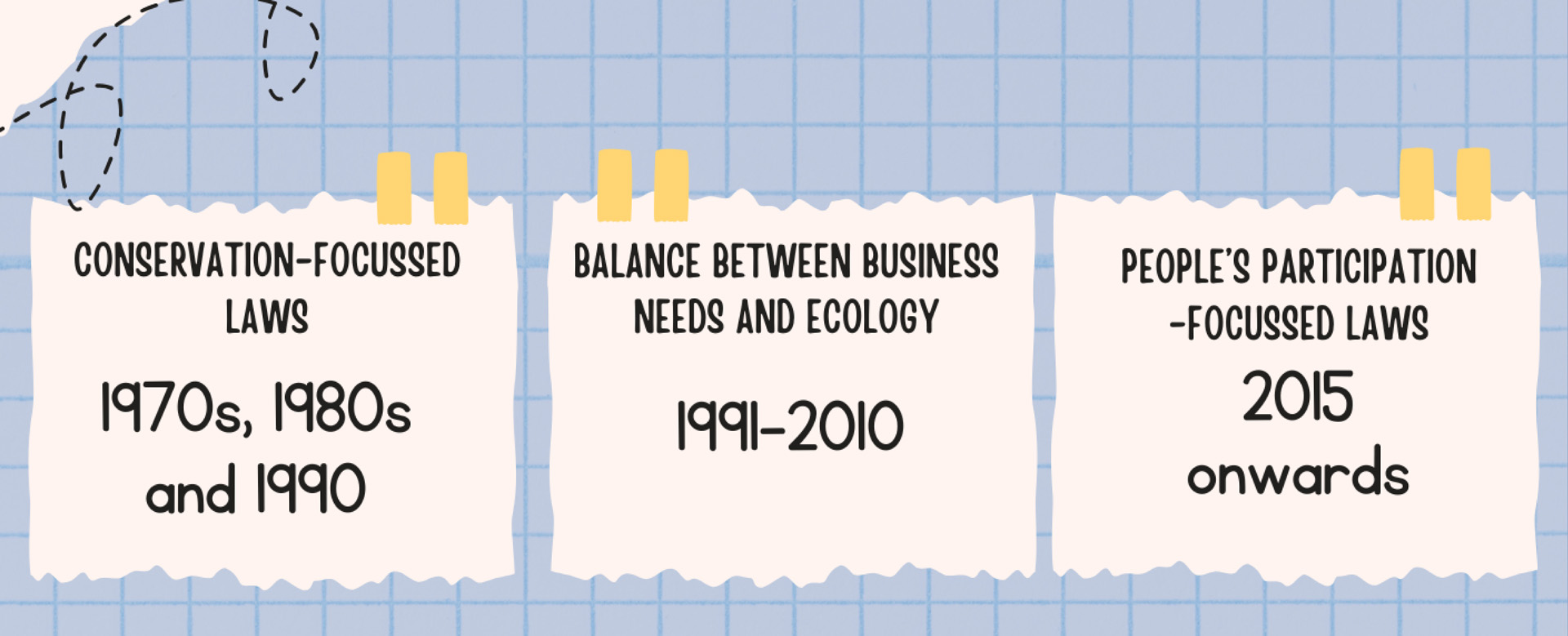
Figure 8. 1: The laws relating to the river over time.
Figure 8.1 indicates how the focus of the laws that regulate the river has altered over time. The first phases from the 1970s to the 1990s saw many environment-related laws passed following the UN Conference on Human Environment in 1972. The 1970s–1980s were a period of heightened awareness of the ecological consequences of human behaviour. As such, laws were passed to regulate industries and social behaviour, emphasizing the protection of the environment.2 Following this, from around 1991 till 2006, the laws focused on people’s participation in water and ecology governance. The requirement of people’s participation in the law has been a consequence of several factors, including the emergence of the idea of good governance, following the reforms of 1991, the 73rd and 74th Amendments to the Constitution of India, and people’s movements (such as the Mazdoor Kisan Shakti Sangathan (MKSS) Movement in Rajasthan for the right to information), as well as policy changes advocated by civil society groups. In addition to people’s participation in processes under the law, there was also a change in discourse about who has the authority to decide about issues such as development projects under panchayat law and individual and community forests rights under the Forests Rights Act; and also about what knowledge is legally valid, as a result of civil society action advocating for the Forests Rights Act. The Forests Rights Act recognized testimonies of village elders to record the rights of forest-dwelling communities.
In the last decade, we have had laws such as the National Waterways Act, 2016 and Inland Vessels Act, 2021, and the Amendment of CRZ Notification based on the perception that environmental concerns are a stumbling block for economic progress and development. As a result, the law moves in the direction of watering down environmental protections to open up of areas for development. At the same time a deliberate attempt is made to indicate the “environmentally and people friendly” nature of these new laws. The preamble of the law on national waterways emphasises waterways as an “environment-friendly mode of transport.” A total of 111 waterways have been notified across India, including a large section of the Mandovi River. These changes suggest that laws have acted as a catalyst for ushering in change in social behaviour in relation to water, ecology, and development, based on changing priorities in the national and international context. Water laws in India have played a dual role—heralding change as well as responding to changing perceptions of public interest over time.
Institutional Mechanisms: Experiences of the State Apparatus
Most of the laws provide an institutional mechanism for their enforcement. This section describes the experience of the legal and institutional authorities that implement the law. Some of these authorities are the Goa State Board for Wildlife, the Goa State Biodiversity Board, the Goa Coastal Zone Management Authority, the Goa State Pollution Control Board and the village panchayats. Senior Advocate Norma Alvares who represents issues relating to the environment and conservation before different legal forums speaks of a lack of care by institutions to look after water resources:
My experience has really been that the Forests [Department] does not bother much about water supply if it is in a wildlife area and there is some issue raised about diversion of the water or removal of sand from the river, collapse of embankments then the Forests Department reacts to the writ petitions which have been filed. In complaints which have been made directly to it, they don’t bother much about the river water; they are more concerned about the trees, the foliage, and things around the area. Even when we have made complaints to the Forest Department in the Bhagwan Sanctuary or the protected areas, they feel it is their responsibility to see to the trees and the foliage and in any violations on that front. Water, they don’t feel it is their responsibility (Norma Alvares, personal interview with the author, 27 November 2024).
The role of the Pollution Control Board and Goa State Coastal Zone Management Authority is mainly to respond to complaints and follow due process. They send their teams to inspect, prepare a report, and so on. However, as Alvares states:
Improving the quality of the water doesn’t seem to be something that is there on their cards. What they are willing to do is if there is any water body which is in some way contaminated with something that you can recognize as you know as effluent being discharged or a lot of material dumped into it. They are willing to remove that, but they expect generally that nature will take its own course and will improve the water as time goes on every year with the monsoons. (Norma Alvares, personal interview with the author, 27 November 2024)
As for the panchayats, Alvares says, “they appear to be strapped for funds” and unable to take up work on account of the long bureaucratic process involved in getting the file approved for tender.
Authorities, hence, are restricted mainly to following due process when they receive a complaint relating to the violation of a law. Regarding the Biodiversity Act, state governments started taking the law with some seriousness after a case was filed before the NGT to implement the Act. In August 2019, the NGT directed 100 percent compliance with the constitution of BMCs and preparation of People’s Biodiversity Register (PBRs) by 31 January 2020, and in case of defaults, the states would be fined Rs. 10 lakhs per month each from 1 February 2020 (Tandon 2020). The Goa State Biodiversity Board has actively formed BMCs and PBRs across Goa. The BMCs have recognized springs, streams, and rivers flowing in their respective villages and the biodiversity dependent on them through a partnership between village panchayats and scientific experts. When asked if there have been any hurdles in the implementation, Dr. Pradip Sarmukhadam said that the law plays a significant role. When a specific mandate is listed as a legal requirement, there is no question of the willingness of the State. He says, “It is important to see our institutions and systems as a living system. Not much was done when grants were given to the Board in 2004. Our commitment is high to implement the Act, but bringing the Act to action needs three things: proper understanding, some institutional mechanism, and deliverables with proper timeframes” (Pradip Sarmukhadam, Personal interview with the author, 26 November 2025). However, when it comes to the question of water and rivers, after recognizing their importance for sustaining biodiversity, the Board believes that it is the primary role of the Water Resources Department to act and form water societies as per the Command Area Development Act, 1997. It expressed caution in seeing the Board’s role as primary when it comes to conserving water as it would involve stepping on to the boundaries of another authority.
The experience of institutions therefore indicates a diffidence to act, even when action is possible under the law. Kapoor (2017) in her study involving State Coastal Zone Management Authorities (SCZMA) in four states in India—Goa, Kerala, Odisha and Gujarat—tries to explain why institutions shy away from action. She analyses SCZMAs based on three pillars of institutional functioning, as cited in Etzold et al. (2012). The first is the presence of rules, the second is the cognitive patterns of the institution, and the third is institutional identity, which is defined by the normative values for which the institution was created. With respect to SCZMAs, she argues that rules are in abundance and new cognitive patterns have emerged,3 and that normative values (such as what vision of the coast the SCZMAs are pursuing) that define the institutional identity are missing (Kapoor 2017, 58). This also appears to be the case with institutional authorities concerning the Mandovi River. We have an abundance of rules, but the cognitive pattern is restricted to providing a mechanism for redressing complaints or granting approvals for projects. A normative value that asserts interdependence, connection and care in relation to the river is absent.
Civil Society Accountability and Two National Green Tribunal (NGT) Orders
Accountability of institutional authorities through civil society plays a crucial role in implementing legal provisions. In The Goa River Sand Protectors Network v. Goa State Environment Assessment Authority and others, an environment clearance dated 12 October 2021 for sand mining was challenged before the National Green Tribunal. The petitioner’s contention was that District Survey Reports (DSR) must be prepared before granting an Environment Clearance (EC). DSR is a requirement under the Sand Mining Guidelines, 2016 and provides details of the river or stream and other sand sources. The DSR is expected to estimate district-wise availability of sand or, gravel, or aggregate resources and mention the details of existing mining leases of sand and aggregates. The Goa government granted the ECs for sand mining without having conducted a DSR. Before the NGT-Pune Bench, the State submitted that it would not pursue the EC as a DSR had not been prepared. The matter was disposed of as infructuous.
In Narendra Gajanan Gaude v. State of Goa, the Water Resource Department had planned to construct a bandhara or minor irrigation system on the Khandepar river, an important tributary of the Mandovi. The villagers of Curti Khandepar vehemently opposed the project, as flooding of the river had affected 400 households in the past. Additionally, the capacity of the proposed bandhara was much higher (30 Million litres per day or megalitres per day or MLD) than the needs of the people (0.1 MLD) and it was suspected that the bandhara was intended to serve a proposed steel plant and the real estate lobby. Despite the protests, the Water Resources Department tried to proceed with the project by holding meetings with villagers and creating awareness. Even with police protection, the officials could not proceed with the project, which they eventually abandoned. As the government gave up the project in light of the agitation by the villagers, the matter was disposed of. While civil society used legal provisions to challenge the clearance for sand mining in the Goa River Sand Protectors Network case, the legality of the project is not a question dealt with in the order in Narendra Gajanan Gaude case.
The Goa River Sand Protectors Network case illustrates how civil society action is essential for compliance with legal provisions, but the Narendra Gajanan Gaude case shows that even when there is a project with adequate permissions, institutions need to account for concerns raised by people beyond the law. The role of civil society hence moves in two different directions as far as the law is concerned: civil society will hold the state to account in implementing the law to safeguard the environment and on other occasions contest the implementation of legal and lawful decisions which harm the environment. In case of the latter, environmental law serves to meet development-related priorities with the government as the owner and manager of the resource; ecological concerns are secondary. Unfortunately, existing laws do not foreclose the possibility of legally compliant institutional decisions that harm the river and our ecology.4 There have also been instances where civil society actions were inadequate in their quest to protect the Mandovi river.5 The above discussion and experiences suggest that the role of civil society actors in making the state responsive cannot be ignored. Their role is that of partners in sustainability that the law seeks to promote, rather than that of habitual disrupters of the development agenda.
Conclusion
To sum up, experience with institutional mechanisms indicates two possible readings of water laws. The first is that we have fine laws but a flawed implementation–an inertia of regulatory and monitoring institutions resulting in improper or non-implementation of the laws. The second reading is that our laws are inherently flawed and inefficient as they restrict themselves to regulating the Anthropocene and minimally account for rights of more-than human entities (Laitos and Wolongevicz 2014). The latter reading underscores the need for water laws to move from a mere regulation of the anthropocene to other perspectives that robustly incorporate our relationality with the Earth.6
The experiences and literature indicate the multifaceted manner in which institutions operate. While most bodies routinely respond to complaints, the state culture embodies a lack of care regarding improving water quality. In the face of an uncaring state culture, conformity with legal requirements is all that civil society actors can hold on to for state accountability. One also notices a lack of convergence among bodies created to conserve and preserve our rivers. This lack is often based on inter-departmental administrative boundaries when, in actuality, it is one connected river that sustains the environment and people’s livelihoods. With civil society action that will hold government and transgressing vested interests to account, our laws, especially the Wildlife Protection Act, 1972; the Biodiversity Act, 2002; the Environment Protection Act, 1986, the Forest Rights Act, 2006; the CRZ Notification, 2019; and the Command Area Development Act, 1997 conceive of a possibility of balancing scientific expertise with people’s participation for protecting the river as well as sustaining economic development.
Acknowledgments
I am grateful to the Mhadei Epistemic Community, especially the editors of the book, for their feedback and comments on this chapter. I thank Senior Adv Norma Alvares, Seby Rodrigues, Dr Pradip Sarmukadam, Dashrat Morajkar and Abhijit Prabhudesai for sharing their experiences and insights during this study.
Footnotes
1 I use the word Mandovi to denote the river basin, as the same has been used in the Goa State Water Policy 2021. There are other versions of the name as well—Mhadei, Mahadayi, and Mandvi.
2 The book Silent Spring by Rachel Carson in 1962 indicated the ecological effects of the use of synthetic pesticides on natural environment and human health. The book brought to the forefront the issues of ecology and environment. The discovery of the depletion of the ozone layer and the Antarctic “Ozone Hole” in 1985 further escalated the urgency for action to protect the earth, leading to the Montreal Protocol in 1987.
4 For example, the Goa State Board for Wildlife in its meeting dated 12 July 2023 approved the construction of a Charavane Minor Irrigation Project inside Mhadei Wildlife Sanctuary. The minutes record that the in-principle approval of the project was on account of larger public interest.
5 See Aurobindo Gomes Pereira’s contribution in the present volume.
6 The earth system perspective is one such perspective. The Earth System perspective incorporates an all-embracing onto-epistemologies of care, anthropocene complexity and a holistic earth system focus. (Toit and Kotze´, 2022, 4).
References
Bhat, Ishwara. 2019. Idea and Methods of Legal Research. New Delhi: Oxford University Press.
Bose, Indranil. 2010. How Did the Indian Forest Rights Act, 2006, Emerge? Manchester: Institutions and Pro-Poor Growth. https://assets.publishing.service.gov.uk/media/ 57a08b1440f0b652dd000ab0/dp39.pdf.
Central Water Commission. 2016. Ambedkar’s Contribution to Water Resources Development . New Delhi: Ministry of Water Resources.
Chambers, Robert. 1996. “Participation and Power: Transformations in the Rhetoric and Practice of Development.” The Cambridge Journal of Anthropology 19 (1): 5–23.
Da Silva, Solano. 2024. “The Making and Unmaking of Goa’s Unique Alternative Urbanity.” Question of Cities, November 15, 2024. https://questionofcities.org/the-making-and-unmaking-of-goas-unique-alternative-urbanity/.
Dharmadhikary, Shripad, and Jinda Sandbhor. 2017. National Inland Waterways in In-dia: A Strategic Status Report . Pune and New Delhi: Manthan Adhyayan Kendra and SRUTI. https://www.sruti.org.in/wp-content/uploads/2022/06/Strategic-Status-Report-on-Inland-Waterways English.pdf.
Goa State Board for Wildlife. 2023. Minutes of the Meeting for Goa State Board for Wildlife Dated 12 July 2023. https://static.gladns.in/goalpub/docs/question docs/file 7ebe33c4-d864-46fc-883f-8f1b832ec09e.pdf.
Kapoor, Meenakshi. 2017. “Why Do Institutions Shy Away from Action? Case of Coastal Zone Management Authorities.” Economic and Political Weekly 52 (31): 55–61. https://www.jstor.org/ stable/26695936.
———. 2018. “Behind the Scenes—Story of CRZ Revamp from Within the Ministry.” Centre for Policy Research, November 22, 2018. https://cprindia.org/behind-the-scenes-story-of-crz-revamp-from-within/.
Laitos, Jan G., and Lauren Joseph Wolongevicz. 2014. “Why Environmental Laws Fail?” William & Mary Environmental Law and Policy Review 39 (2): 1–50.
Mahadayi Water Disputes Tribunal. 2018. State of Goa v. State of Karnataka and State of Maharashtra, Reference 1 of 2011, Volume XII. New Delhi: Government of India, Ministry of Jal Shakti. https://waterresources.karnataka.gov.in/storage/pdf-files/Interstate%20Water% 20Tribunals/Report%20of%20MWDT.pdf.
National Green Tribunal, Pune Bench. 2024. Narendra Gajanan Gaude v. State of Goa.
———. 2024. The Goa River Sand Protectors Network v. Goa State Environment Assessment Authority and Others.
Report of the United Nations Conference on Human Environment. 1972. Stockholm: United Nations. https://docs.un.org/en/A/CONF.48/14/Rev.1.
Secretariat of the Convention on Biological Diversity. 2015. “About the Nagoya Protocol.” https:
//www.cbd.int/abs/about#objective. Accessed May 12, 2024.
Supreme Court of India. 2000. Narmada Bachao Abhiyan v. Union of India, (2000) 10 SCC 664.
Tandon, Mridhu. 2020. “India’s Biological Diversity Act Finally Shows Progress Due to NGT.” Mongabay, June 9, 2020. https://india.mongabay.com/2020/06/commentary-indias-biological-diversity-act-finally-shows-progress-due-to-ngt/.
Toit, Louise du, and Louis J. Kotze´. 2022. “Reimagining International Environmental Law for the Anthropocene: An Earth System Law Perspective.” Earth System Governance 11. https://doi.org/ 10.1016/j.esg.2022.100132.
Usgaonkar, Gajendranath. n.d. “No ‘Revenue Lands’ in Goa, Hence, Land Revenue Code, 1968 Is Unconstitutional.” Herald. https://www.heraldgoa.in/review/no-%7B%60%60%7Drevenue%20%20lands’’-in-goa-hence-land-revenue-code-1968-is-unconstitutional/136509.
Water Resources Department. 2021. Goa Water Policy, 2021. Panaji: Official Gazette, Government of Goa.
Author Profile
Vasudha Sawaiker trained in law at V.M. Salgaoncar College of Law, GoaUniversity and has a post-graduate degree in social work from the Tata Institute of Social Sciences (TISS), Mumbai. At TISS, she was awarded the prize and shield for being the best student in Dalit and Tribal SocialWork. As a lawyer, she represented clients in cases on social justice and inclusion in public employment. Her legal research encompasses diverse areas such as organ donation, forest rights, and construction workers. She was awarded the UGC-JRF Fellowship in Social Work in 2016 and is presently a research scholar at the School of Sanskrit, Philosophy and Indic Studies, Goa University.