Chapter: 3
Abundant Mother Goddess or Scarce, Contested Resource? The Life and Times of the River Mhadei
Parineeta Dandekar
Abstract
Given its relatively small basin size and population, the Mhadei river supports a large number of river festivals that are important to several religions in the country. Despite the unpar-alleled eco-cultural heritage of the river, the Mahadayi Water Dis-putes Tribunal did not consider this aspect at all while working on the award. On the other hand, the discussions of the tribunal exposed shocking limitations in hydrological data collection, pro-cessing, and analysis by experts and premier organizations like the Central Water Commission, none of whom could reach a satis-factory scientific calculation of the annual yield of Mhadei basin. There is an urgent need to acknowledge the eco-cultural impor-tance of Mhadei, not to push for further dams, to improve data collection, research, and analysis, and to develop unbiased scien-tific expertise surrounding the Mhadei as well as other rivers of the country. The case of Mhadei is a touchstone for several rivers in India where inter-basin water transfers are being based on biased studies with problematic and half-baked data.
An Encounter with the River Guardian Pistyo
FORESTS around Krishnapur, North Goa district belong to the river that surges through them. The wide riverbed is strewn with massive boulders pushed downstream by torrential floods. The river
runs unfettered, forming pools and riffles and a few sandy beaches at the nooks of its meanders. Dense, shadow-filled riparian corridors that support a wealth of biodiversity and protect the riverbank from erosion are a veritable lesson in how healthy riparian corridors should be. A paradise flycatcher with a lilting, long tail flits across the riverine forests.
Then, after a particularly bumpy river-crossing, we reach the fabled Pistyochi Kondh: Pistyo’s pool in the river. We peer at the pool from a rocky outcrop
and gasp in wonder. Below us, the shimmering emerald waters of the Mhadei hold shoals upon shoals of mahseer fish. They swim with the grace of ballet dancers and with the abandon of migrating cranes, glinting like rubies and gold as they catch the sun. For someone who has studied the condition of India’s rivers, with increasing dismay, this is an overwhelming sight.
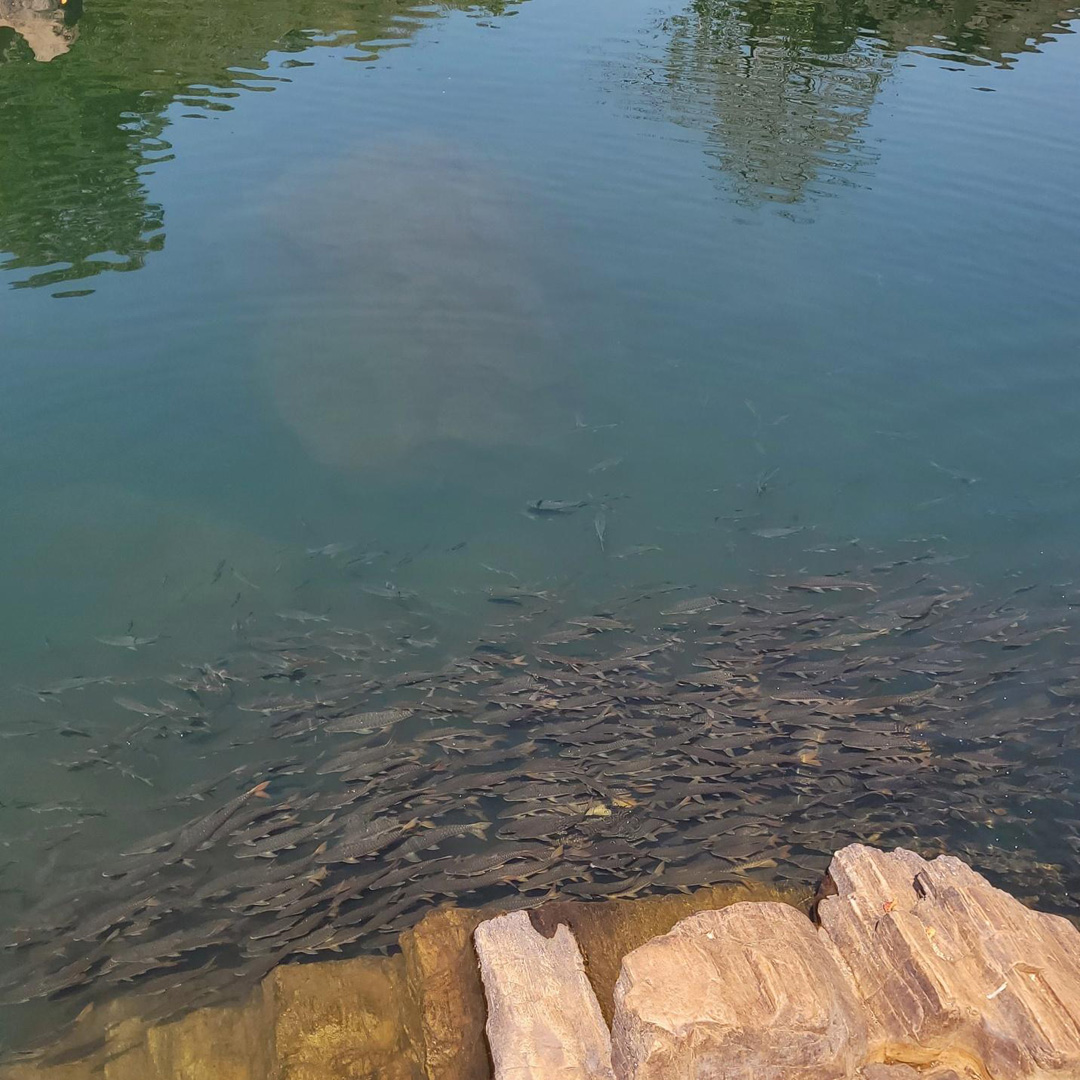
Fig. 3.1: Pistyochi Kondh, Mhadei. Photo by Parineeta Dandekar.
Mahseer—carp fish from the Tor genus—are rarely found in Indian rivers these days in the 2020s. Dam building, pollution and water abstractions have decimated a once-abundant population to a near-collapse. Mahseer species like Tor tor and Tor khudree prefer a clean, flowing river, well-connected with its banks, with the upstream and the downstream of the river, with good water quality, high dissolved oxygen and healthy riparian areas. In short, the mahseer is an indicator of a healthy river system. And here in the river
Mhadei, bordering Karnataka and Goa, in the global biodiversity hotspot of the Western Ghats in India, they are thriving.
Our guide Siddharth Gawde holds court to a group of students who are picnicking at Pistyochi Kondh. He is enacting the tale of Pistyo, the fierce rakhandar or guardian of this pool. So fierce is Pistyo that the villagers do not fish in the pool. The place is an openair sanctuary to the spirit of the guardian and the river. Pistyochi Kond is a unique river sanctuary, and an excellent example of the community conserved areas found along the west-flowing rivers of India. River sanctuaries across India protect the mahseer fish. The author has documented several such sanctuaries in the Western Ghats and each community fish sanctuary stands testament to the legacy of conservation and the rich eco-culture of the region. They achieve something that the mainstream, well-funded ex-situ conservation initiatives could hardly ever equal: protecting a species and its habitat without alienating or driving away local communities. Along the length of Mhadei river, which is known as Mandovi in its lower reaches, one comes across remarkable examples of conservation and eco-culture, which are found nowhere else in the world and are a living legacy of this river.
The Mhadei River has been in the news for all the wrong reasons in the first three decades of the 21st century. Like the Indus river basin or recently the Brahmaputra river basin, the identity of Mhadei is associated with conflicts over water sharing between Goa and Karnataka and to some extent Maharashtra (Dandekar 2016). Of a total basin area of 2,032 sq. km, its headwaters of 375 sq. km lie in Karnataka, 77 sq. km in Maharashtra, and a bulk, 1,580 sq. km or 77.76 percent of the basin area lies in Goa. Of the total geographical area of 3,702 sq. km of Goa, the Mandovi river basin occupies 43 percent of the area of the state, spreading over six talukas of Sattari, Bicholim, Bardez, Tiswadi (Panjim), Sanguem, and Ponda (Mahadayi River Disputes Tribunal 2018, vol. II.)
In 2018, the Mahadayi Water Tribunal Award came out with its decision on water sharing between these three states (see the chapter by Vaishali Kashyap in the present volume.) The process of assessment and review lasted eight years and was painstakingly slow and fraught. Each of the contending states brought in expert witnesses to testify before the tribunal. Even after the final award all three states moved the Supreme Court as they were unsatisfied with the tribunal’s decision. However, the award was gazetted in 2020, and the Mahadayi Authority was formed to oversee its implementation. Nevertheless, due to repeated legal challenges, the tribunal’s award has received its latest extension for a period of six months in February 2025.
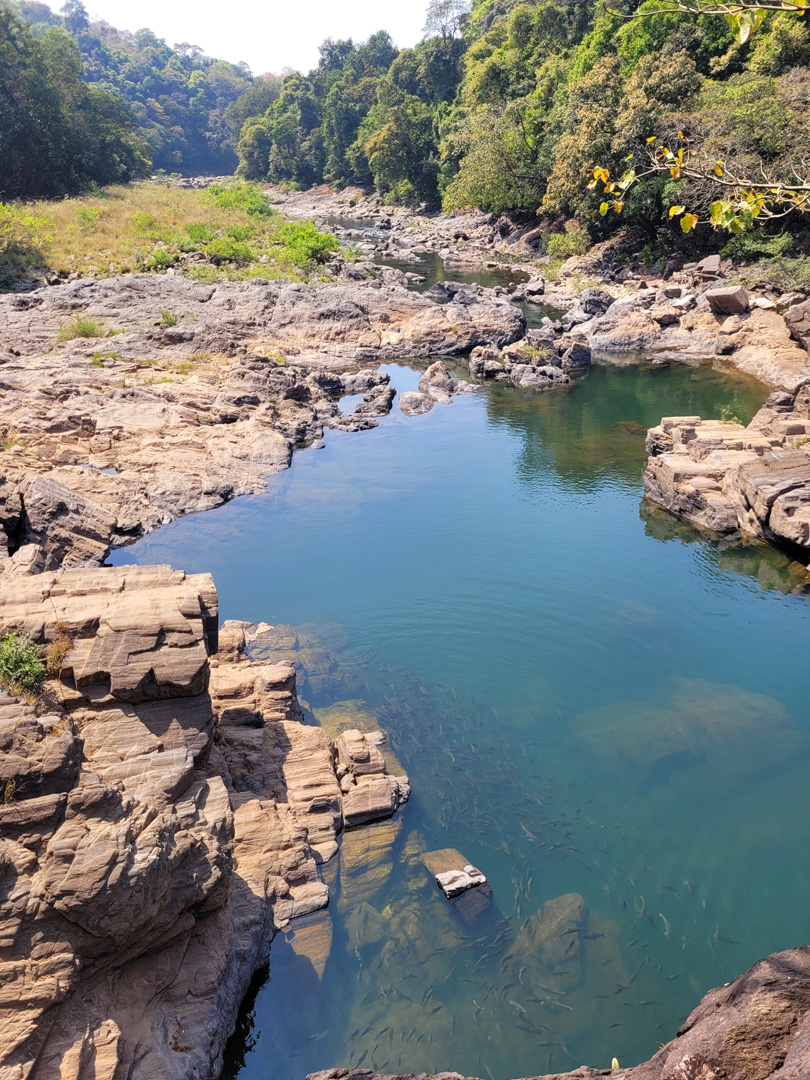
Fig. 3.2: The forested banks of the Mhadei. Photo by Parineeta Dandekar.
The principal focus of this chapter is to review the challenges in calculating water yields of the Mhadei, which also have implications for inter-basin
transfers across the country. In doing so, it offers a critique of the ability of premier institutions such as the Central Water Commission and Ministry of Water Resources to arrive at unbiased, science-backed data and analysis. The lack of scientific research and studies to back the work of a tribunal or management of water resources in India is a serious lacuna that needs to be addressed. The chapter also argues that the dependence on dams as the only means to “utilize” a river, even when it is not required for unique situations such as the Mhadei basin, rests on faulty assumptions. It is essential to understand and appreciate the unique eco-hydrology and riverine culture of Goa as predicated on the Mhadei basin, something that the decisions of the tribunal do not reflect at all.
The Mhadei is in many senses a heritage river, flowing across several timescales. It supports centuries-old conservation and agricultural systems, festivals, and livelihoods at the same time that it is susceptible to contemporary issues like pollution, damming, and water conflicts. In the densely forested upstream, ancient river and forest worship still flourishes, dating back to thousands of years. In the downstream, ancestral khazan lands sway with river paddies and teem with fish. Temples, churches, and dargahs stand tall on the riverbanks; folk deities like Pisho Rawalu, a protector of bunds against battering monsoon winds, stand under the elements protecting their realms; tourists and youth revel on ferry boats even as fisherfolk cast their nets with unerring, timeless wisdom. Mahadayi, Mhadei and Mandovi are the different faces of the same river flowing across multiple timelines.
What makes the Mhadei unique and why does a “consumption-based” water sharing agreement not work in its case? To address and answer this question, we will need to look at water management projects in the area under investigation and the workings and rationale of the Mahadayi Water Disputes tribunal.
Water Management in the West-Flowing Rivers of the Western Ghats in India
While India has 28 major river basins, all of the west-flowing rivers till Tadadi, which is a port at the mouth of River Aghanashini in Karnataka, are grouped under one basin known as “west-flowing rivers from Tapi to Tadri” by the Water Resources Information System of the Central Water Commission, Government of India (Central Water Commission and NRSCISRO 2014). Because of the small basin areas, steep slopes and flashy hydrographs of these rivers (i.e., their tendency to rise and fall quickly either because of steep slopes or rapid fluctuations in water levels), there are few dam-building sites in these basins. A few rare free-flowing rivers are found in here which have been decimated in the other regions of the country (Dandekar 2018). Even a prolific dam builder like Maharashtra (which has built more than double the dams than Madhya Pradesh, the second largest dam building state in the country) has not been able to dam the west flowing basins completely. In fact, a report by this author showed that, “Despite spending more than Rs 6,000 Crores in building these dams for decades, not a single Major or Medium irrigation project has been completed in the Konkan region of Maharashtra till date by the Konkan Irrigation Development Corporation (KIDC). Actual Irrigation Potential created is less than 25%, of which less than one percent is actually used by people for irrigation, for projects tested by CAG. Hydropower generation from projects is shockingly low.” (Dandekar 2016)
The reasons for this are several. Dams and canal-based irrigation systems which work in the Deccan plateau of states like Maharashtra and Karnataka have very limited application in the narrow and hilly western basins of the west-flowing rivers. Additionally, agriculture in this region, such as in Goa, predominantly involves rice paddies and plantations of areca nut, mango, cashews, and coconuts on hill slopes and in narrow river valleys where canal systems cannot reach effectively. In fact, a former official of Water and Land Management Institute of Maharashtra (WALMI) categorically stated, “Large dams in Konkan are a reflection of Intellectual Corruption in the Water Resource Department. I think the area irrigated by Major and Medium Projects here may be less than the land submerged behind them”. When I ask the same question to a senior official of the Konkan Irrigation Development Corporation (KIDC) he says despondently: “It is government policy”’ (Dandekar 2016).
At the same time, there are a few free-flowing rivers in the states of Maharashtra, Goa, Karnataka and Kerala that show remarkable biodiversity as well as economic activity when compared with their dammed counterparts. Main examples include Aghanashini in Karnataka and Shashtri in Maharashtra. Thus, it needs to be appreciated that the west-flowing rivers of the Western Ghats, including the Mhadei, require site-specific water management interventions that respond to the unique hydrogeology and culture of the region.
The Mahadayi Water Disputes Tribunal: Some Important Issues
The Mahadayi Water Disputes Tribunal convened detailed discussions over a period of several years and their work is still not complete, even though the final award was gazetted in 2020. The Tribunal handled some thorny issues and took a surprisingly firm stand on issues on which even the Ministry of Water Resources has proved to be lax in the past, like environmental
flows and the health of estuaries. It stated that “merging of water of river Mahadayi into the Arabian Sea, irrespective of its uses, cannot be considered as a wastage of water” (Mahadayi Water Disputes Tribunal 2018, vol. XII, 2307). This simple hydro-ecological and social fact is not yet acceptable to the centralized water management as is clear from the evidence of former CWC Chairperson Shri. A. K. Bajaj before the Tribunal.
The final decision of the Tribunal has been much discussed and contested. However, the discussions, affidavits and oral evidence put forward by various experts to the Tribunal provide important insights into the direction of water management and inter-state water disputes in India. These discussions are relevant for the entire country as there are several inter-basin water-sharing disputes as well as newer issues arising out of the Indian river interlinking project.
Among the major issues that came up in the course of the discussions was the absence of adequate scientific hydrological data and water yield calculations in the Mhadei basin. A seemingly simple issue of knowing how much water flows through the Mhadei could not be agreed upon by the three states. The discussions exposed serious issues with hydrological data and analysis in our country. The Tribunal bemoaned the fact that each of the three states had projected different figures relating to the availability of water in the Mahadayi basis “with very large variations,” even though the sources of most of the data collected by the three party states were the same and considerable hydrological data were available, thanks to the work of the CWC and National Hydrological Institute. It struggled to arrive at a decision, given that “one state would contend that Mahadayi basin is a surplus basin whereas another State would contend that [it] is a deficient one.” Indeed, most of the time of the Tribunal was occupied in determining the yield of the river at 75 percent dependability (Mahadayi Water Disputes Tribunal 2018, vol. XII).
When the Tribunal finally made recommendations to the Ministry of Water Resources, it highlighted the need to review existing guidelines and review provisions related to assessment of water availability, to develop standard practices for data collection and analysis, to minimize personal judgements by experts, and to provide sufficient training and refresher courses for engineers in the field of data collection, data processing, and assessment of water availability of the basin as a whole and at important locations in the basin. It was evident that the Ministry of Water Resources was inadequately prepared. In fact, this indictment by the Tribunal raises questions about water yield and “surplus-deficit” discussions surrounding several rivers, affecting millions of Indians.
Table 3.1 below indicates the level of confusion when calculating yield of the Mhadei basin.
| Calculating Party/Expert | Area Considered | 50% Dependable | 75% Dependable |
|---|---|---|---|
| (sq. km.) | Yield (TMC) | Yield (TMC) | |
| CWC (2003) Study | 2,032 | 220.13 | 199.58 |
| Review by Maharashtra (as per MW-1 Shri S.N. Huddar) | Not specified | Not specified | 208.73 ( 5,913 Mcum) |
| Shri Chetan Pandit (Goa Expert-2016 Report) | 2,032 (entire catchment) | 178.0 (5,039.8 Mcum) | 154.4 (4,372.4 Mcum) |
| Shri Chetan Pandit (Goa Expert – Usable Yield) | 1,523 | 133.4 (3,777.3 Mcum) | 115.7 (3,277.2 Mcum) |
| Shri Chetan Pandit (Goa Expert – Modified) | 2,032 | Not specified | 113.5 (3,214.70 Mcum) |
| Prof. A.K. Gosain (Karnataka Expert – Sept 2015) | Entire Mahadayi basin | 223.20 (6,321 Mcum) | 206.14 (5,838 Mcum) |
| Prof. A.K. Gosain (Karnataka Expert – May 2017 – Case I) | Entire Mahadayi basin | 215.59 | 198.42 |
| Prof. A.K. Gosain (Karnataka Expert—May 2017 – Case II) | Entire Mahadayi basin | 216.89 | 202.55 |
| Prof. A.K. Gosain (Karnataka Expert—Voluntarily on 18.5.2017) | Entire Mahadayi basin | 223.06 | 206.17 |
| Tribunal’s Assessment | 2032 | Not Specified | 188.06 |
| State of Goa (Statement of Case) | 2032 | 163.45 | 108.72 |
The Tribunal was equally critical of the expertise offered by the CWC and rejected the yield calculations of all the experts. These experts had spent decades in premier institutions like the CWC or IIT Delhi and worked on several such projects. The objections raised by the Tribunal regarding the
experts’ hydrology figures were not limited to unclear data but also intent in obfuscating the available data, using convenient data, and giving no reasons for supporting certain claims, etc. The experts were not only casual to an inappropriate degree, but they also arrived at a yield figure always favoring the side they were on, thus raising very serious doubts about the political economy of knowledge creation. It is worrying to note the Tribunal’s objections, to say the least.
A brief overview of the issues raised by expert witnesses for the contending states is presented below:
Expert witness for Goa, Shri Chetan Pandit
Chetan Pandit, himself a former member of the Central Water Commission for several years, raised serious doubts about the hydrological data collected by CWC at the Ganjim gauging station in North Goa district.In 2006, a weir was constructed downstream of Ganjim gauging site. Shri Pandit maintains that the weir has changed the gauge-discharge relationship, and the CWC’s failure to acknowledge this fact raises doubts about the competence of their staff and the quality of supervision, potentially making data after 2006 and even before suspect.
Expert witness for Karnataka, Shri A.K. Bajaj
The strongest indictment from the Tribunal was directed against the yield calculations of A.K. Bajaj, former Chairperson of the Central Water Commission between 2007 and 2012.
He provided testimony about the hydrological analysis of diversion by the upstream states in the Mahadayi basin, which also includes a water balance analysis in the context of trans-basin diversions of the Mahadayi waters to the Malaprabha reservoir and Kali reservoir as planned by the state of Karnataka. Apart from his analysis of the problem, his conclusions too were extremely problematic. He mentioned that Karnataka’s diversions would not affect Goa’s planned projects, but he had not even considered the impact on existing projects of Goa including the Opa drinking water supply project. He also maintained that water flowing to the ocean is waste and said that “the maintenance of natural equilibrium of Mahadayi River in Goa would be wholly inconsistent with the principles of water utilisation and management of the Mahadayi basin,” thus entirely denying the possibility of ecologically sensitive development and pitching the complex matter of water-sharing as a simple black-and-white issue. It is tragic to hear a former chairperson of the CWC making such shockingly erroneous statements.
The Tribunal did not mince its words while evaluating Mr. Bajaj’s oral evidence. They took exception to his claim that he was not an expert in hydrology, despite the fact that his entire evidence was about hydrology. His testimony also relied heavily on a CWC report from 2003 despite the fact that it had severe data limitations, a fact that he failed to question. He also accepted without question the report of Professor A.K. Gosain—another witness for Karnataka—despite the fact that it was based on the same inadequate CWC report that he himself had used. Asked what his reasons were for agreeing with Gosain, he responded that he had not personally cross-checked material in reports during his tenure as CWC chairperson; rather he had just accepted Gosain’s report since he was the expert in hydrology. He could not prove that the Malaprabha was a deficit basin despite pushing for water transfer from the Mhadei to the Malaprabha basin—a serious shortcoming with far-reaching impacts on similar studies conducted by the CWC. When confronted with the errors and flaws in the computation of the Malaprabha’s yield as well as the planning and formulation of the Detailed Project Reports for the Malaprabha reservoir, he was unable to provide the Tribunal with reasonable justification, merely denying that the errors existed at all. He also failed to consider any environmental flows whatsoever, even though they should have been an integral part of his study. The tribunal concluded that “The statements made by the witness in his affidavit and answers given by the witness during the course of his cross-examination, make his testimony unworthy of acceptance” (Mahadayi Water Disputes Tribunal Report 2018, vol. IV).
Shri A.K Gosain, IIT Delhi, Expert Witness, Karnataka
The Tribunal also raised several serious issues with Professor A.K. Gosain’s evidence and did not accept it. They found that the study he had conducted in September 2015 was not an independent study but had merely reworked the arithmetic of the flawed CWC study from 2003 with twelve more years of data. He had used the CWC study’s processed rainfall data, thereby inheriting all its errors, including variations in rainfall values for the same rain gauge stations and obvious mistakes in computations, such as the gross monsoon yield increasing by 1 MCum every year. Gosain appeared not to have conducted an independent examination and had overlooked these errors. He also selectively excluded data, ignoring runoff data of nine years out of 34 observed at Gankim while developing the rainfall-runoff equation, on the pretext that the runoff factor was more than 1. The Tribunal noted that the reasons for such high runoff factors were not adequately examined. He also excluded data for the year 2006 even though the runoff factor was less than 1.0.
Professor Gosain used different rainfall data in his subsequent study in May 2017 compared to the CWC (2003) report and his own September 2015 study, stating he processed the data himself in 2017 while using CWC’s processed data earlier. This made the CWC (2003) report highly suspect.
- Problems with Regression Equation Derivation: The regression equation obtained by Professor Gosain was found to be incorrect, even arithmetically. When the State of Goa tried to derive the same equation using his data, they obtained a different
- Handling of Outliers and Inconsistent Data: Professor Gosain’s method of handling outliers (years with high runoff factors) was critial. He also drew the double mass curve for Castlerock only up to the year 2000, seemingly to avoid the surfacing of data inconsistency. The Tribunal states: “The most objectionable part of the Study of Prof. A.K. Gosain is the manner in which he has handled the data of Castlerock Station.”
Professor Gosain ignored data from Gawali and Chapoli stations without providing a substantial reason, despite these potentially offering valuable in-sights. He also stated that factors such as utilizable yield, the dependency of Goa on upstream water, forestation, wildlife sanctuaries, navigational needs, and the eco-sensitivity of the coastal estuarine system were “not required to be considered while finding out the yield of the basin.” This narrow definition of yield was a significant point of contention.
More seriously, the Tribunal raised questions on the intent, finding that “Prof. Gosain has taken into consideration that part of CWC (2003) Report which was convenient to him, and which suits the purposes of the State of Karnataka.” He also allegedly changed the data of 1999 to suit his case and claimed it to be a typographical error, though this explanation was not accepted by the Tribunal, which was “of the firm opinion that this explanation of Prof. Gosain is not convincing at all and has been mentioned as an after-thought” (Mahadayi Water Disputes Tribunal 2018, vol. IV).
In essence, the Tribunal found Professor Gosain’s yield calculations to be flawed due to a lack of independent analysis, reliance on potentially erroneous data and methodologies, inconsistencies in his own work, selective data exclusion without proper justification, and a failure to consider crucial ecological and utilization-related factors. These instances of wilful and careless estimation of data as identified by the Tribunal raise serious questions about the credibility of data, and of so-called scientific institutions assigned
with the crucial responsibility of harnessing information for public use and policy planning. If experts are able to and allowed to manipulate data for political purposes, can there be a genuine basis for public trust and for policy intended to benefit the public and protect the environment? It is also telling that all the miscalculations and errors always end up benefiting the state represented by the expert. While it is to the credit of the Tribunal that they detailed the manipulation and placed on record their dissatisfaction with the expert witness, the data fudging has not been reported by the media, nor has the CWC or IIT responded to the Tribunal’s allegations.
Water Utilization in Goa: Some Faulty Assumptions
The government of Goa does not have data about the present and future water requirements for agriculture, groundwater recharge, biodiversity, sedimentation and navigation. These are extremely important issues for Goa’s economy and future in the face of climate change. The Goa government needs to constitute urgent studies to understand these issues and establish their water user rights as soon as possible with the tribunal. It is shocking that a state like Goa does not have this information, particularly as it argues for the preservation of the natural flows of the Mhadei.
With the gazetting of the award in 2020, the Tribunal permitted Karnataka to go ahead with some of the schemes that it had started. (Incidentally, Karnataka had initiated these schemes in violation of the Environment Protection Act and Wildlife Protection Act.) The Tribunal also laid emphasis on Goa’s “maximum consumptive utilization” of Mhadei water through its proposed 59 projects. It directed Goa to obtain all mandatory clearances from the competent authorities for these projects for a maximum consumptive utilization of 668 MCum (24 TMC) of Mhadei river water at 75 percent dependability—including drinking water requirements for humans and live-stock, municipal water needs, irrigation water requirements, and industrial water demands. Throughout the hearing, there was a pressure on Goa from Karnataka, its expert witnesses and also the Tribunal to “utilize” the water in its boundaries. If it did not do so, the other states would have the right to divert this water away from the Mhadei basin. Goa, on its part, never stood up to the Tribunal to claim that its use of Mhadei is not limited to building dams. In fact, by pushing Goa into building more dams, we end up in a situation where no party is thinking about the river and its ecology and biodiversity at all.
There are several serious issues with the Tribunal’s assumption about water utilization. First, it assumes a dam-canal based water resource management as a one-size-fits-all solution. However, in many places along the west-flowing rivers of the Western Ghats, rivers are used differently than their counterparts on the other side of the Sahyadris. As stated earlier, the region is characterized by small and narrow valleys, hilly terrain, and limited sites for dam-building. Canal networks are difficult to construct in a hilly terrain. Instead, site-specific methods like the khazan lands in Goa, use of river pools along the Mhadei, farming in silt banks, conjunctive use of groundwater, etc., are practiced. It is better to give the state the freedom to decide its direction in water management rather than dictating methods to it. Hastily planned schemes can cause more harm than good. User rights are not limited to dam building. The Mhadei is precious to Goans in ways that are unique only to the river. Experts like Dr. Rajendra Kerkar and Dr. Prakash Pareinkar have highlighted several uses specific to the Mhadei which are economically, ecologically and socially important but do not entail building dams. This brings us to the eco-cultural importance of the Mhadei, a topic that has been entirely overlooked by the Tribunal in working out the award.
Eco-Cultural Importance of the Mhadei
Rivers shape the identity of the places through which they flow. They are not only important for water supply, irrigation and hydropower, but for the identity of the region, flowing from history to the future. Such rivers include the Jhelum in Kashmir, Brahmaputra in Assam, Kaveri in Tamil Nadu, and Mhadei in Goa. The deep bond between the land, people and river are remarkable. About 43 percent of Goa’s land lies within the Mhadei basin. In Sattari, Dicholi, Bardes, Tiswadi, Ponda, and Dharbandora, about 19,072 hectares of land are irrigated by the Mhadei (Chari 2021). There are only a few states in India where the headwaters of rivers are protected. Mhadei headwaters receive exemplary protection in Goa within the 208.4 sq. km of the Mhadei Wildlife Sanctuary and a network of four other protected areas. In Karnataka, the region is protected withing the Bhimgad Wildlife Sanctuary.
From its headwaters, where Karnataka plans to erect the Kalasa-Banduri diversion project as well as the Kotni hydropower Project, the river is revered and protected by communities in Karnataka and Goa that share a common affinity with the river. Culturally, the origin of the Mhadei is supposed to be at the Brahmani Maya Temple in Gavali village in Karnataka where it flows out of the temple pond as the Teerthachi Nhai, literally the sacred river.
1. Pools in the Mhadei
Along the length of Mhadei are many sacred pools which hold unique cultural, ecological and economic importance. Some of these pools, according to Pareinkar (2011) and Chari (2021) are:
Pistyachi Kondh; Kalasachi Kondh, Taarchi Kondh, Bodgaachi Kondh, Taalachi Kondh (a riverside pool used to store river water), Dhondachi Kondh (the dhonds or priests of the goddess Lairai Devi used to stay on the banks and fast for five days, hence the name); Phulanchi Kondh near Ustem village (the vines overhanging the river pool cover and perfume the pool whose water is used for the Ustem temple); Nivalanchi Kondh; Govindachi Kondh; Mislayachi Kondh, where illegal fishing and fishing using gelatin bombs are banned; Dhavalaatli Kondh; Duryachi Kondh (the largest and most majestic of the Mhadei’s pools where a unique agricultural practice called puran sheti is practiced); Endachi Kond and Savtichi Kondh (Pareinkar 2011). These pools are habitats for fish as well as a source of water for wildlife and the villages surrounding the pool.
The Tribunal has not considered the impact of headwater diversions on the sacred pools of Mhadei and the people who depend on it.
2. Unique agricultural practices like Puran Sheti
A unique riverbed rice farming technique called puran farming is practiced in 27 villages along the Mhadei using its fertile silt (Gomes 2005). According to experts, puran sheti yields double the harvest as compared to farmland (Dainik Gomantak 2022). The farming practice has an extremely low water footprint as there is no active irrigation. Because of unplanned and insensitive damming, riparian lands practicing puran sheti are being submerged and a way of life and livelihood is being lost (Pareinkar 2011). The practice depends on the availability of moist silt and riverbanks. However, shifting cultivation finds no place in Goa’s land records.
The Tribunal has not considered the impact of headwater diversions on Puran Sheti and people who depend on it.
3. River Goddess Cults
The cult of the seven sisters is found throughout India. It has strong associations with water, deep pools, and rivers, as is seen in Maharashtra. In Goa too, the seven goddesses are supposed to be the local deities of villages across the state. These goddesses are Lairai, also known as Saibin of Shirgaon; Mirabai, also known as Milagres Saibin of Mhapusa; Morjai or Morjim; Mhalsa or Mardol; Mhamay of Mahem; Kelbai of Mulgao; and Adadeepa (Couto 2004). All of the goddesses are associated with water and rivers in some form or the other. Pots full of water with specific local flora like mogra, aboli, mango leaves, jasmine, and banana leaves are the symbols of these goddesses. Several of their shrines are at riverbanks like that of the goddess Brahmani Maya at the origin in Gavali, the Kelbai statue at Zadani on the banks of Mhadei; and the Lairai temple whose priests fast on the banks of Mhadei. These festivals are important for lakhs of devotees in Goa and other states. Flowing river waters and recharged aquifers are important for the worship. The seamless mix of religion, culture, and biodiversity is unique to Goa.
4. River Boat Culture
Goa has an old riverine and maritime tradition testified to by stone panels and inscriptions with boat motifs found along the river in Sattari in North Goa (Gaur and Kerkar 2006). These sculptures probably date to the post-Kadamba period around the twelfth century and highlight the maritime tradition of Goa and the importance of the Mhadei in navigation, trade and worship. Richard Burton (1856) in his book Goa and the Blue Mountains also refers to the long journeys inland along rivers on boats. The Mhadei basin has recorded the presence of dugout canoes (known as ponjal, ponyao, and vodem, which are built from the same log) with outriggers and even plank boats (reveche hode) in the upstream regions in the past (Tripati, Shinde and Shaikh 2011). Dugout and plank boats are found even on hero stones along the river.
The cultural uses of water are evident in the instances of local festivities involving singing and dancing on ferry boats across Mandovi in Panjim. This is not only a tourism activity, but a part of the living cultural identity of Goa (Mora 2016). The Tribunal has not considered the cultural uses of water in Goa in its discussions. Cultural use of water is an internationally acknowledged concept.
5. Religious Unity
Hazrat Pir Sahib’s dargah and the Tar Surla masjid in Surla are situated on the banks of Mandovi. The masjid is one of the oldest surviving mosques in Goa, built in the Adilshahi period in the sixteenth century. Hindu and Muslim communities meet, dance, and celebrate the last day of the Shigmo festival and pray for a good harvest season (Kerkar 2019). The tradition of Hindus and Muslims joining in for Shigmo festivities apparently goes back 250 years and reflects the brotherhood between the two communities (Abdulla 2022). The masjid’s tank is connected with the river. The dargah is much celebrated by the Hindu population of Surla and the five-day long Shigmo festival in this area usually concludes with a procession to the mosque. Hindu villagers pay gratitude to the saint in the ceremony called the bhovartalo. Places like these on the banks of Mandovi highlight the immense syncretic importance of a healthy, flowing river with intact and healthy riparian banks. Such historical significance cannot be translated in terms like “utilizable yield.”
Riverine Festivals Unique to Goa in the Downstream
Sa˜o Joa˜o Festival and Sangodd: Celebrating rivers, boats, and fisherfolk
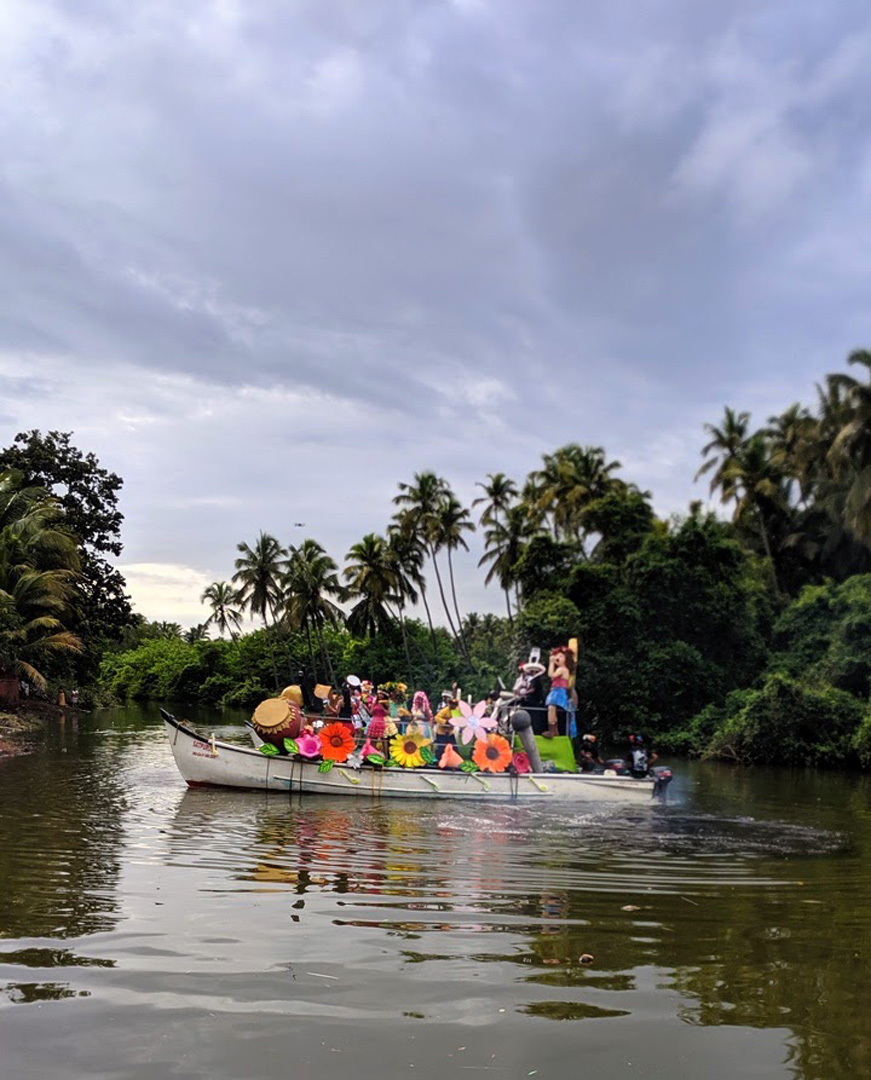
Fig. 3.3: Sailing the boats during the Sa˜o Joa˜o Festival. Photo by Parineeta Dandekar.
On 24 June, Midsummer’s Day, Sa˜o Joa˜o Festival is celebrated along the rivers in the Mhadei/Mandovi basin and throughout Goa. In this syncretic festival,
thousands of revelers set sail on the rivers, jump into wells, decorate river-banks and wells, and participate in joyous river worship (Dandekar 2020a). The festivals support the local economy while contributing to cleaning river-banks.
Similarly, on 29 June, Sangodd Festival is celebrated along rivers in Goa, including the Mhadei, in the downstream (Mendes and Somayaji 2024). In Sangodd, two or more boats are tied together and sailed across the river, symbolizing the unity and collective spirit of the fishing community. The tangible and intangible value of such festivals is enormous. As Professor Mendes (2024) from Goa University puts it, “In rural areas, tangible and intangible cultures are valuable and unique resources utilized to attract tourists, generate income, and sustain local livelihoods.”
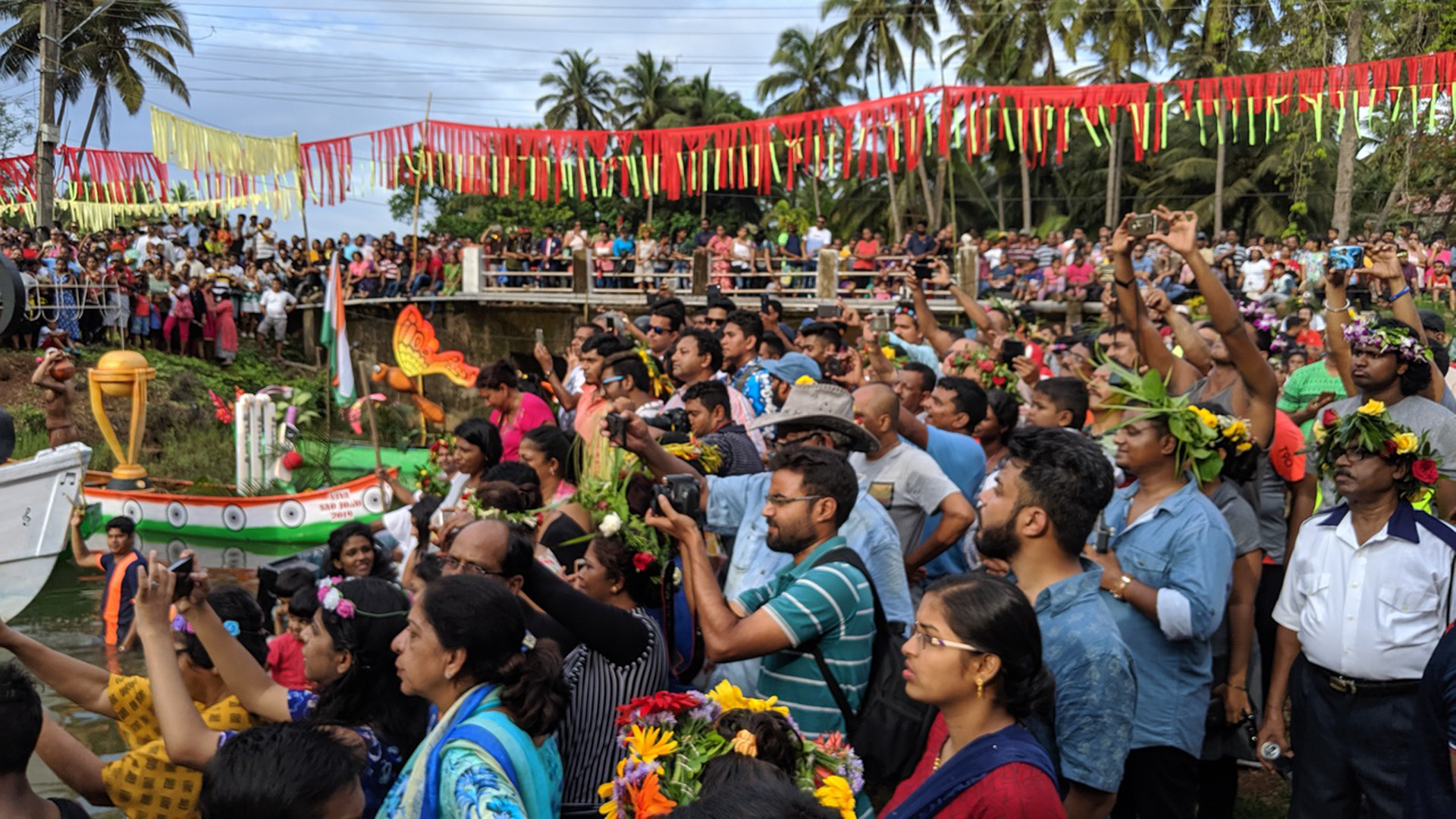
Fig. 3.4: Camaraderie of the river during Sa˜o Joa˜o Festival. Photo by Parineeta Dandekar.
Ufaar Festival: Celebrating bivalves and livelihoods
In a small tidal tributary of the Mhadei, a unique festival/ ritual is celebrated which links riverine biodiversity, sustainable livelihoods, and culture. Before setting out to harvest clams, villagers worship at the Dhadeshwar Mahadev temple and offer a gold clam and betel leaves to the river before starting the clam harvest (Gomes 2022). Both Hindus and Catholics contribute to the making of gold clam. After Ufaar is the Tisryochem Fest in surrounding villages which celebrate the bounty of clams and the river. The Fest is a communal festival (De Costa 2022).
The catch of clams has fallen by 50% in the last 10 years due to increased boat plying, pollution by oil and diesel slicks and also pollution of the estuary, but the local fisherfolk are set to conserve their river for the clams and for their deity (Sayed 2017). The Tribunal does not consider the cultural links, livelihoods and importance of non-consumptive water use while pushing Goa to complete 59 dam projects.
Tripurari Pournima and boat festival at Sanquelim
On the full moon night after Diwali, which is known as the Tripurari Pournima, the banks of the river Valvanti in Sanquelim bloom with hundreds of lights and miniature boats. A unique model boat competition is held on the banks of the river where hundreds of participants, young and old, parade their model boats and sail them on the river. The Valvanti is an important tributary of the Mhadei that originates as Haltara nalla in Karnataka. The Kalasa-Banduri project involves diverting 0.56 TMC water from Haltara nalla to the Kalasa reservoir. The same river is called the Virdi in Maharashtra, which also had plans to dam this river.
The tribunal has not considered the impact of the Kalasa-Banduri Project and water diversions on the festivals of the Valvanti river.
Mannge Thapani: Celebrating crocodiles
Mannge Thapani is a uniquely Goan river festival which connects biodiversity, livelihoods, and riverine culture. It is considered a major festival in villages along the Mandovi and Zuari rivers (Kerkar 2021). Model mud crocodiles are crafted out of fertile agricultural soil and are worshipped for the protection of the harvest and the safety of the fisherfolk and farmers. Nothing like this is found anywhere else in the world.
Unique Livelihoods That Depend on the River without Consumptive Water Use
Khazan lands
Khazan lands are unique agricultural sites developed in Goa since the past 3,000 years (Kamat 2004). Khazan lands are carefully designed as topo-hydro-engineered agro-aquacultural ecosystems. The most important aspect of the structure of these lands is based on the principle of salinity regulation and knowledge of the tidal clock. The functioning and fertility of these lands depends on their distance from the nearest watershed and the tidal estuary and also on the balance of freshwater and saltwater. According to the State of Goa, the Mhadei river flows through the Sattari, Bicholim, Bardez, Tiswadi, Ponda, Sanguem and now Dharbandora talukas, which contribute 1300 hectates worth of of khazan lands (Mahadayi Water
Disputes Tribunal 2018, vol. II). Annual fish production of Khazan lands is estimated to be 300 kg/ hectare which includes 150 kg of exportable white and tiger prawns (Ansari, Pandiyarajan, and Ayajuddin 2012).
Khazan lands are endemic heritage ecosystems of Goa and reservoirs of history and heritage (Sonak 2016).
The Goa government could not provide data about water use for agriculture to the Tribunal. However, it is clear that freshwater is accessed and used in khazan agriculture and pisciculture, even in the absence of a large dam and canal system. This productive agricultural system does not depend on or need any further dams.
Salt pans
Like Aghanashini in Karnataka, the Mhadei was rich in saltpans associated with khazan lands. In fact, salt was one of the “chief local items of export from Goa. In 1849, the salt production touched nearly 75,000 khandis (1 khandi = 100 kg). It is living organic salt, fortified naturally with potassium, calcium and magnesium and teeming with beneficial halobacteria and yeasts” (Gomes 2005).
In Aghanashini estuary in the Uttara Kannada district of Karnataka, solar salt is marketed as Sanikatta and is lauded for its medicinal values (Dandekar 2020b). It provides livelihoods to local communities. However, in the absence of data on water use for saltpans and the livelihoods it supports, it was not considered by the Tribunal.
In Conclusion
The Mahadayi/Mhadei/Mandovi is a unique, heritage river unlike many parallels in India. It supports a lively and thriving economy, ecology and culture. The Mhadei means the Great Mother and majority of Goans consider the river as the lifeline of Goa. This is as much a part of sentiment as it is a part of basin area and water yield calculations. And yet, Karnataka states that “Mhadei is not the lifeline of Goa.” Karnataka Neervari Nigam has dabbled in interbasin water transfers for a long time. One such disastrous projects called Yettinahole Diversion was studied in detail by the author (Dandekar 2015).
It is the author’s contention that the Mhadei basin in Goa supports some of the highest number of riverine festivals of various religions in India, despite its relatively small size. The river flows through a large number of protected areas (five in the upstream and Salim Ali Bird Sanctuary in the down-stream) for its length and the population it supports. The various names of the same river represent different facets of the river: Mahadayi is the formal name of the river in Karnataka; Mhadei is the wild river flowing through dense forests, worshipped by forest dwelling communities and supporting magnificent forests; while Mandovi is the cosmopolitan river of the down-stream, a mix of modernity and timeless charm that brings together various religions and cultures in its delta. The river deserves recognition as a Heritage River, with a management plan going beyond the recommendations or directions of the Tribunal.
Recommendations:
The following recommendations are based on field visits, discussions with experts, and an analysis of the Tribunal’s award and other inter-basin transfers in India.
- The eco-cultural canvas of the Mhadei is extremely rich and rare, encouraging syncretism and ecological The Mahadayi Water Disputes Tribunal needs to consider the river’s ecocultural importance in Goa and Karnataka while deciding how to allocate water.
- Consumptive utilization is not the only way river Mhadei is It has several ecological, livelihoods based, climate-regulating, and cultural features, as mentioned above.
- The Tribunal and the Goa Government should not be in a hurry to maximize its consumptive utilization and push for more dams when they are unnecessary.
- The Central Water Commission and Ministry of Water Resources need to revisit their data collection, analysis, and sharing It is shocking and sad that India is so far behind on these fronts.
- The government of Goa urgently needs to undertake studies regarding water needed for agriculture, groundwater recharge, navigation, fisheries, and It cannot depend on the governments of Karnataka and Maharashtra to address the impacts of their projects on Goa.
We began with the story of the river guardian Pistyo who protects the pool on the Mhadei river. We end by stressing its relevance today. According to legends, Pistyo is a benevolent deity, generous about legitimate needs. He does not stop a person from fishing in the pool in times of true need. However, he unleashes his wrath on those who mislead him and take more fish than they need from the river.
This story is especially relevant for government bodies looking to divert or dam the Mhadei only because they can.
References
References
Abdulla, Aamir. 2022. “Assessment of Masjid as a Place of Racial Harmony.” Paper presented at the 7th Joint Seminar on Islamic Architectural Heritage, International Islamic University Malaysia. http://irep.iium.edu.my/99937/1/ISARCH%202022%20ASSESSMENT%20OF%20A% 20MASJID%20AS%20A%20PLACE%20OF%20RACIAL%20HARMONY%20-%20Amir%20Abdulla.
Ansari, Zakir, R. S. Pandiyarajan, and Mohamed Ayajuddin. 2012. “Khazan Land of Goa and Its Fishery Potential.” Fishcoops (June 2012). https://www.researchgate.net/publication/303880210 Khazan land of Goa and its fishery potential
Burton, Richard Francis. 1856. Goa and the Blue Mountains; or, Six Months of Sick Leave. United Kingdom: Richard Bentley.
Central Water Commission and National Remote Sensing Centre, Indian Space Research Organ-isation. 2014. West Flowing Rivers from Tapi to Tadri Basin. India WRIS WebGIS Basin Report. New Delhi: Central Water Commission & NRSC ISRO. https://indiawris.gov.in/downloads/ WestFlowingRiversfromTapitoTadriBasin.pdf
Chari, Shubhada Prakash. 2021. Antarang Mhadeiche. First edition. Vivekanand Sahitya Sanskruti Abhivruddhi Manch.
Couto, Maria Aurora. 2004. Goa: A Daughter’s Story. New Delhi: Penguin Books.
Dainik Gomantak. 2022. “Itihasjama Jhaleli Puran Sheti.” Dainik Gomantak, May 13, 2022. https:
//dainikgomantak.esakal.com/blog/historical-puran-farming-srd00
Dandekar, P. 2016. “Mahadayi Water Disputes Tribunal: Trouble Brewing in Paradise.” SANDRP Blog. https://sandrp.in/2016/08/02/mahadayi-water-disputes-tribunal-trouble-brewing-in-paradise/
———. 2020a. “The Magic of June 24th: Water Worship around the World.” SANDRP Blog, July 4, 2020. https://sandrp.in/2020/07/04/the-magic-of-24th-june-water-worship-around-the-world/
———. 2020b. “People of the Free Flowing Aghanashini.” South Asia Network on Dams, Rivers and People (SANDRP) Blog, March 31, 2020. https://sandrp.in/2020/03/31/people-of-the-free-flowing-aghanashini/
———. 2015. “Yettinahole Diversion Project (Literally) Holds No Water.” South Asia Network on Dams, Rivers and People (SANDRP) Blog, May 21, 2015. https://sandrp.in/2015/05/21/ yettinahole-diversion-project-literally-holds-no-water/
———. 2018. Free Flowing Rivers: The Soul of South Asia. Oakland, CA: International Rivers. https://www.internationalrivers.org/wp-content/uploads/sites/86/2020/06/free-flowing rivers-the soul of south asia 0.pdf
De Costa, M. 2022. Food History of Goa: Researching Its Multifaceted Aspects from 1900 up to 1961. Goa University.
Gaur, A. S., and R. Kerkar. 2006. “Mother Goddesses with Boat Motifs on Stone Sculptures from Goa.” Journal of Indian Ocean Archaeology 3: 151–163. https://drs.nio.res.in/drs/bitstream/ handle/2264/594/J I.O Archaeol 3 151.pdf?sequence=1
Gomes, B. 2005. Vosaad: The Socio-Cultural Force of Water (A Study from Goa).
Gomes, Venita. 2022. “There’s a Special Ritual in Nerul Prior to Clam-Harvesting.” Gomantak Times, March 25, 2022. https://www.gomantaktimes.com/my-goa/art-culture/theres-a-special-ritual-in-nerul-prior-to-clam-harvesting
Kamat, Nandkumar M. 2004. “History of Khazan Land Management in Goa: Ecological, Economic and Political Perspective.” Paper presented at the Seminar on History of Agriculture in Goa, De-partment of History, Goa University, March 12–13, 2004.
Kashyap, Vaishali. 2025. “The Working of the Mahadayi Inter-State Water Tribunal.” In The River Mhadei: The Science and Politics of Diversion. Saligao, Goa: Goa, 1556.
Kerkar, Rajendra P. 2019. “Shigmo Brings Hindus and Muslims Together in Surla.” The Times of In-dia, March 26, 2019. https://timesofindia.indiatimes.com/city/goa/shigmo-brings-hindus-and-muslims-together-in-surla/articleshow/68570087.cms
———. 2021. “In Borim, Farmers Follow Curious Ritual of Sculpting a Crocodile from Silt.” The Times of India, February 16, 2021. https://timesofindia.indiatimes.com/city/goa/in-borim-farmers-follow-curious-ritual-of-sculpting-a-crocodile-from-silt/articleshow/80940786.cms
Mahadayi Water Disputes Tribunal. 2018. Report-cum-Decision of the Mahadayi Water Disputes Tribunal (under Section 5(2) of the Inter-State River Water Disputes Act, 1956), Vols. I–XII, August 14, 2018. New Delhi: Government of India, Ministry of Water Resources.
Mendes, Ninotchka, and Ganesha Somayaji. 2024. “Tourism and Fishing: Exploring the Gendered Dynamics in Sangodd Festival of South Goa.” Journal of People’s History and Culture 10, no. 2 (December 2024): 36–49. University of Goa Institutional Repository. https://irgu.unigoa.ac. in/drs/bitstream/handle/unigoa/7499/J People Hist Culture 10(2) 2024 36-49.pdf?sequence= 1&isAllowed=y
Mora, A. 2016. Dancing Where the River Meets the Sea: Ambiguous Sensuality and Liminal Cultural Geographies in Goa, India. University of California.
Pareinkar, Prakash. 2011. Mhadei-Kallzantlyan: An Ecoanthropological Study of Mhadei River Basin. Panaji.
Sayed, Nida (TNN). 2017. “Nerul Locals Blame Themselves as Tisreo Harvest Drops 50% in 10 Years.” The Times of India, May 24, 2017. https://timesofindia.indiatimes.com/city/goa/nerul-locals-blame-themselves-as-tisreo-harvest-drops-50-in-10-yrs/articleshow/58814510.cms
———. 2018. “In the Surla Tar Masjid, Muslims and Hindus Gather in Peace.” The Times of India, January 14, 2018. https://timesofindia.indiatimes.com/city/goa/in-the-surla-tar-masjid-muslims-and-hindus-gather-in-peace/articleshow/62494476.cms
Sonak, Sangeeta. 2013. “Khazan Ecosystems of Goa: Building on indigenous solutions to cope with global environmental change.” Dordrecht: Springer.
Tripati, Sila, Vasant Shivram Shinde, and Z. A. Shaikh. 2011. “A Study of Traditional Boats of Goa.” Man and Environment 36 (1): 79–87. https://www.researchgate.net/publication/285584151 A Study of Traditional Boats of Goa
Author Profile
Parineeta Dandekar is an environmental advocate and Associate Coordinator for the South Asia Network on Dams, Rivers, and People (SANDRP), where she works to ensure that India’s last free-flowing rivers remain protected.
Her research uncovers the failures of large-scale water projects while amplifying the voices of communities, cultures, and ecosystems that depend on these rivers. She is pushing for policies that prioritize both people and the planet, ensuring a future where rivers continue to sustain life.