Chapter: 19
Epilogue: The Currents of the River Mhadei
Peter Ronald deSouza
Abstract
The chapter seeks to provide several lenses through which to view the river Mhadei. It does so by identifying eleven archways that can be constructed from the information in the chapters that enable us to enter and travel deeper into the different aspects of the river. These archways are only points of entry into the specific aspects, like the archways that lead to temples in Goa. This chapter also seeks to engage with some of the ethical issues that have emerged in our deliberations and that have lain buried in our preoccupation with specifics. They need to be brought to the surface for air as an inherent part of an ongoing dialogue on the river. Our collection is not the final word on the diversion controversy but the first step in providing a comprehensive reading of the Mhadei or, for that matter, any river for which policies are being made. The subtext in the chapter is the concern with “Just Transitions.”
Framing the Public Deliberations on the River Mhadei
NEAR the banks of the river, at a meeting with the residents of one of the villages, the Bookworm team was recovering stories of the river. A middle-aged gentleman recounted a delightful story about how, as a child, he was often summoned by the women of the village when they needed to row across an angry river. He was told to sit at one end of the canoe, to sit still, and not to fidget. Since the river was angry, they needed ballast before they could set out. He was chubby and just the right weight. Excellent ballast. Practical questions like was he scared, or was he grumpy, or did he like the attention the women gave him, did not enter the universe of his options. He was told to sit still and that is what he did. The rest is irrelevant. When I heard the story many months later it conjured up an image of a stoic eight-year-old Buddha, sitting with arms crossed, like a little figurine at the prow of the boat. Many such delightful stories about the river have been recovered by the Bookworm team, some of which have been retold in the chapter by Sujata Noronha.
If one stepped aside from the big narratives of the river as a source of civilization (the Nile and the world of the Pharaohs, the Ganges and the Indic universe, or the Huang He and the growth of Chinese civilization) or even bypassed the celebrated links between rivers and epic literature and great art (the goddess Ganga, the mother of Bhishma, the great dharmic authority in the Mahabharata, for instance; or the paintings of the Seine by Monet or the famous Hay Wain by Constable) one would still have much to say about our own river Mhadei. In the nineteen chapters on specific aspects of the Mhadei collected here we have identified several interesting dimensions of the river. Each is important. Each clamours for attention. Each portrays the river in its magnificence and emphasizes its centrality to all life (not just human life) in the Konkan region. In this process we have learnt a great deal about the richness of the Mhadei basin. It is this learning that we present to you through the chapters of this volume.
In different ways the nineteen chapters have asked some key questions: What is the river? What does it do? What special gift does it offer? What does it represent? And what has it become today? Many aspects of these questions have been answered in the book and many still remain unanswered. The next generation of the people of the river will, I am certain, be able to answer them more fully. Our epistemic community—for that is what the contributors to the volume have become—have explored many of the obvious and hidden dimensions of the Mhadei, sometimes getting their insights as they walked along its banks, sometimes as they waded into its waters, and sometimes as they trekked through its forests to gaze at its waterfalls. In these meanderings the river spoke to us. We listened. And we noted down what we heard.
Today as inhabitants of modern Goa, and India, who deliberate the pros and cons of intervening in the river’s flow, we believe that the issues identified in the chapters must be seriously considered by all of us residents of Goa, Karnataka and Maharashtra, expert members of the Mhadei Tribunal, judges of the Supreme Court, policy makers who draw on the tools of outdated Western scholarship when formulating their plans (60-plus interventions in the river planned by the Goa government), elected politicians, and most of all, the people of the Mhadei. The many aspects identified in these chapters cannot be ignored. Positions have changed, claims tempered, insights defended, new learnings documented. These meanderings we have collated here for further discussion and for further study visit our Mhadei repository at www.mhadeicollective.org.
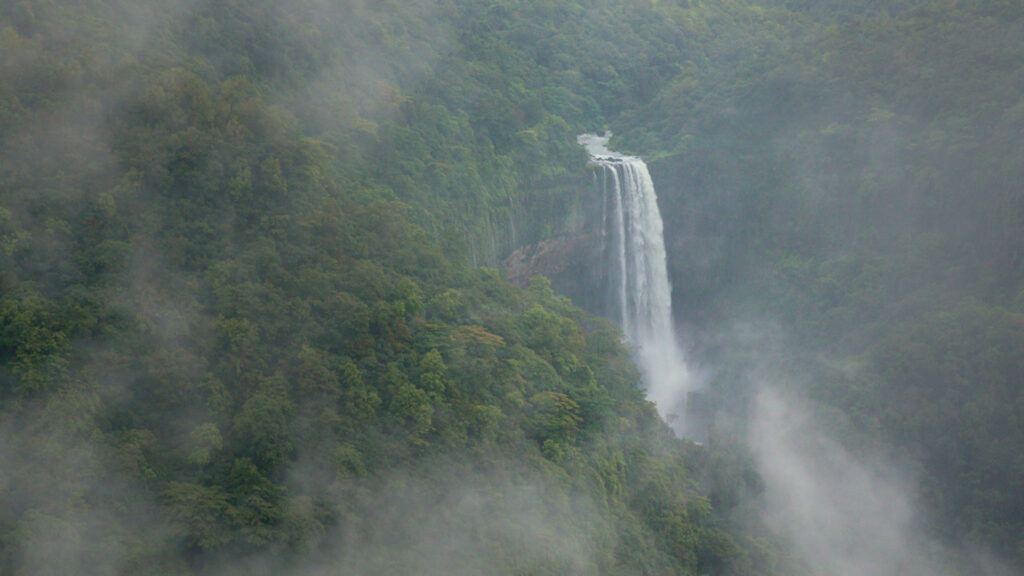
Figure E.1: How do you value the beauty of the river? Source: Shrinivas Ananthanarayanan/Gasper D’Souza Collection.
We started our deliberations with a limited focus. We began by looking at the river in terms of the diversion dispute, a two-dimensional framing that saw the river as a source of water for consumption and as a conflict that needed to be addressed. Over the last two years of working on the Mhadei, however, ours has become a multi-dimensional understanding as we have contemplated the seasonal changes of the river in time, deliberated the significance of its beauty, recognized the interdependence of all life in this region, marveled at its teeming biodiversity that is at risk, celebrated the cultural world that it has spawned, and acknowledged the eco-services that it provides. We now see the river in its entirety—as a body of flowing water, an ecosystem, a basin, a watershed, and a commons. For many, it is a repository of memories. Some happy, but not all. The Mhadei has become, therefore, a story waiting to be told. That is what we have tried to do here, in depth, and in honesty. And that is why you will find many voices in the collection, not all of which are in agreement. Presenting a plurality of readings of the river has also been one of our aspirations.
Eleven Pathways to Understand the River
Let me, in what follows, briefly list and comment on some of the rubrics that have emerged from our epistemic deliberations. This is not intended as a summary of arguments. It is, in fact, an attempt to derive, from the complex deliberations, certain signages which could serve as aids for future deliberations. The phrase that you see in inverted commas are these signages. Each is capacious and can hold many narratives. We have drawn on only a few.
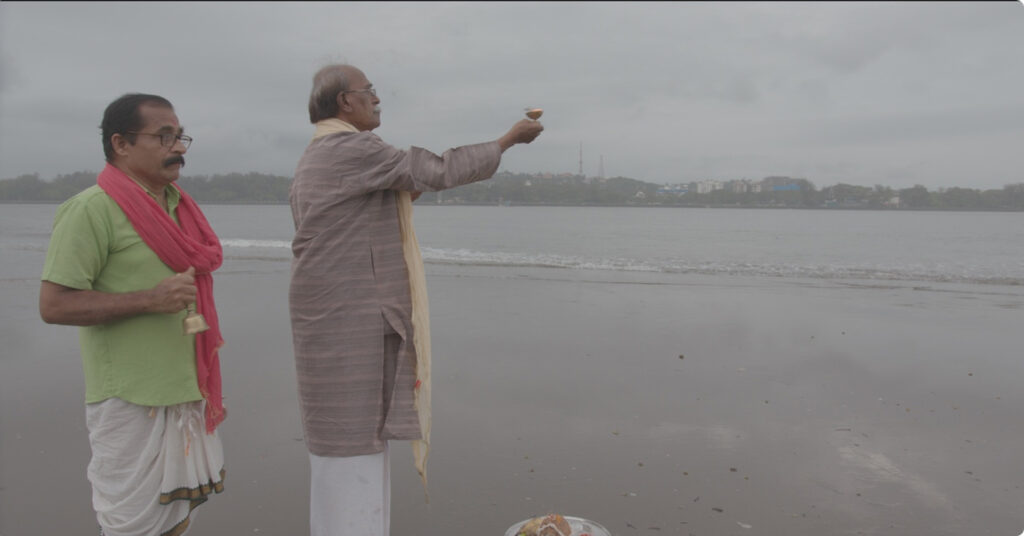
Fig. E.2: Nariyal Purnima commencing the fishing season. Source: Shrinivas Ananthanarayanan/Gasper D’Souza Collection.
In many accounts the river has emerged as a “memory archive.” This was most evident in the chapters of Sujata Noronha, Parineeta Deshpande-Dandekar, and Narayan Desai. In several of the inter-state river disputes this aspect of the river as a memory archive is sadly not just overlooked but actually discounted. Yet we know that from the river has come not only our civilization, (the big narrative) but also the little traditions of our periodic rituals (the immersions at Ganesh Chaturti), and the many unique festivals like the Sangodd festival (Jackson 2021). In addition to these little traditions the river has also created a community cultural calendar such as the ritual of Nariyal Purnima in August when fishing can recommence after the spawning period of the monsoon, during which it is prohibited, has ended (see Fig. E.2).
It has also created a calendar of individual memories such as the time, as one girl remembered, when the river was in flood and she got swept away but, in its beneficence, it also saved her by sending a floating branch for her to cling onto and paddle towards the banks; or the reminiscences of the young poet Manoharrai Sardessai, studying in Paris in the 1950s and long-ing for home. He writes in his poem Gonyan, Kenna Gonyan, mentioned by Narayan Desai in his chapter, of “the things he wishes to enjoy on Man-daviche panchve deger (on the lush green bank of the Mandovi).” The deliberations of any future river tribunal must certainly engage with the river as a “memory archive.”
The river as a “witness to history” is a different kind of memory archive. This too is an incredibly valuable dimension. Littered on the Mhadei’s banks are remnants of our past, the military and civilian infrastructures of different historical periods, such as the lighthouse at Aguada built by a maritime power, or the fort at Reis Magos that controlled entry and exit to the river, or the jetties along the river that enable people and goods to travel from one river-bank to another, or the river-facing houses in Ribandar that tell us of a period when the river was an important waterway. Lakshmi Subramanian has brought to life this aspect of the river as a “witness to a history” from the pre-colonial, to the colonial, and even later till today.
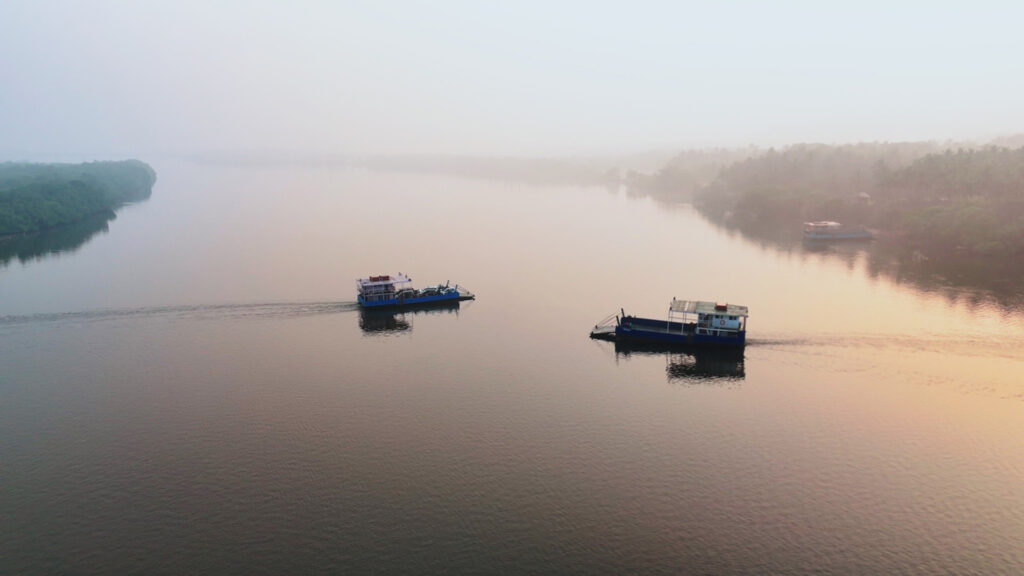
Fig. E.3: River infrastructure. Ferries carrying people and goods between banks. Source: Shrinivas Ananthanarayanan/Gasper D’Souza Collection.
These are infrastructures that both contain congealed time and are a display of state power. One aspect that has found mention in other papers as well, such as that of Leon Morenas, is of the khazans, an artifact of history and an example of human ingenuity where land and water are made to co-habit (Sonak 2014). In the process, this engineering intervention protects the settlement of Panjim from flooding and also enables agriculture and pisciculture. The khazans were/are illustrative of an ancient technology of managing the tides. Sadly, today, we have allowed them to be neglected. This aspect of the river in historical time must also enter the forecourt of our deliberations.
In their ceaseless efforts to protect the river, those who have led the movement have brought out both the most vulnerable and the most resilient aspects of it. In their accounts the river is an indulgent “nurturer of biodiversity” (Munduruku 2021). Because of this display of magnificence, we, as editors, have taken the decision to include colour photographs in the volume—in spite of the additional cost—because we wanted some of the magic of Mhadei’s biodiversity to come across to the reader. Biodiversity is more than just a word used repeatedly by environmentalists. It is an archway to another universe where one discovers the interdependence between species, the centuries-long evolution of plant and animal life, the humidity of the air producing moist riverine deciduous forests that aid precipitation and bring the gift of the annual monsoon.

Fig. E.4: Does the golden tortoise beetle have less rights to the forest? Source: Shrinivas Ananthanarayanan/Gasper D’Souza Collection.
The forests of the Western Ghats, with which the river Mhadei plays hide-and-seek as it goes underground to reappear a kilometer away, sustain a diversity of life—from reptiles, to insects, to fish, to even the tiger. They are truly an evolutionary treasure that we hope will be discovered by students who live in the watershed and beyond. We are indeed fortunate to have this diversity in our very neighbourhood. The good fortune of having several contiguous sanctuaries in Goa and Karnataka, by policy accident or deliberate design, is to be celebrated. Protecting the biodiversity of the Mhadei basin must be regarded a central aspect of state planning. Or this biodiversity risks being destroyed. (Gadgil et al. 2011)
Irrigation engineers and legal experts, who comprise the Tribunal, and who deliberate in courts to arrive at decisions on what is to be done, must be re-schooled on the fragility and resilience of the biodiversity. The species found in the Mhadei watershed, some of which are endemic, must indeed be protected. If a bat, as Nirmal Kulkarni in his rich account suggests, seeds this biodiversity, and the mahseer fish, in Parineeta Deshpande-Dandekar’s chapter, is a measure of the river’s health, and the migration of freshwater fish upriver is necessary for their spawning, as argued in Vidyadhar Atkore and Nandini Velho’s chapter (Krishnaswamy et al. 2017), and of course the magic of the Myristica swamps that Rajendra Kerkar tells us are millions of years old—if these give us a glimpse into this biodiversity, then it is incumbent on us to frame policies that will protect the watershed of the Mhadei. For it is more than just a forest or a basin. It is the rakhandar (protective spirit) of Goa and the Karnataka region.
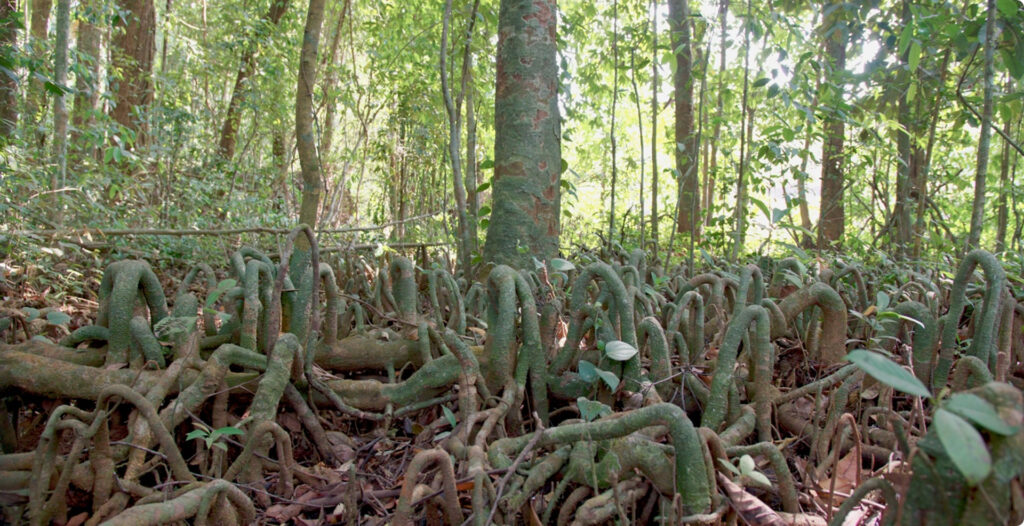
Fig. E.5: Myristica forest that evolved across millennia. Source: Shrinivas Ananthanarayanan/Gasper D’Souza Collection.
This idea of interdependence comes out most forcefully in Helga do Rosario Gomes’s chapter that addresses the issue raised in the Tribunal of ‘water going waste into the sea’. From the river to the sea are carried nutrients from the land. These are the offerings from one ecosystem to nurture the aquatic life of the other. The nutrients are a gift of the monsoon. Our book details the type of nutrients carried and their role in supporting phytoplankton that produce the oxygen that sets into motion the cycle of fish life and thus of all life. No such river has yet been found among the billions of stars that the James Webb telescope has been scrutinizing. There are none in our solar system. Earth is a mystery that continues to baffle us (Pope Francis 2016). Gaia is very precious. A poster in the Smithsonian Natural History Museum in Washington DC, in the section on Oceans, has this to say: “A single drop of ocean water may contain the DNA of many species.” Just imagine so much life in a single drop. Another poster announces that “life probably began in the ocean at least 3.5 billion ago.” The Mhadei’s water clearly has not been wasted. No nutrients. No fish. No Goan. No us.
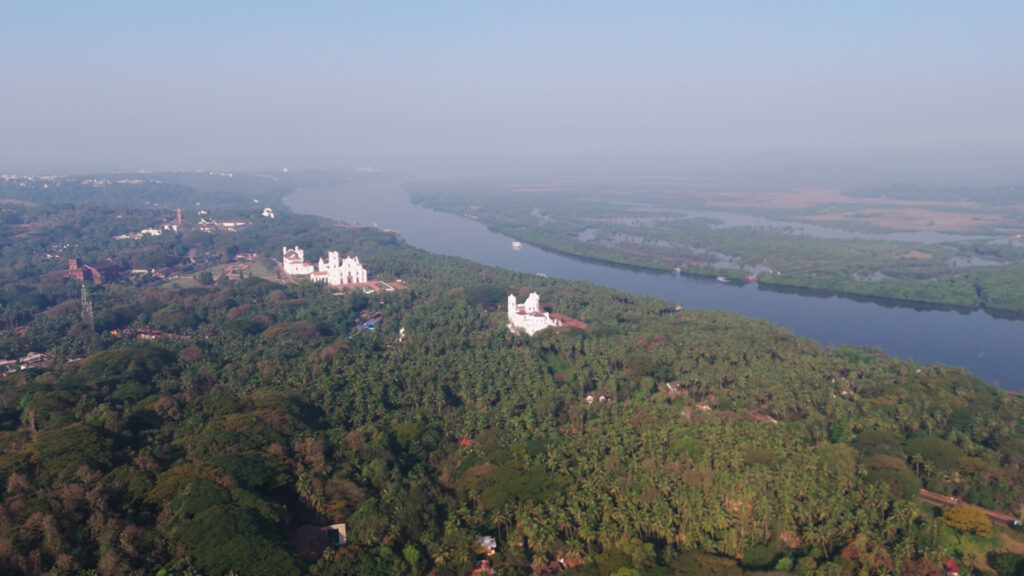
Fig. E.6: The Mandovi, the cultural community at Old Goa, the Salim Ali Bird Sanctuary, and the khazan fields. Source: The Shrinivas Ananthanarayanan/Gasper D’Souza Collection.
If we wish to be less romantic and more practical and ask what the river does for us, then Dhirendra Deshpande’s chapter answers this question. Under the rubric of the river as “a provider of ecosystem services” he sets out to list the many ways the river benefits us. Studies have listed sixteen services a river provides that can be grouped into four clusters: (i) supporting, which includes providing food, enabling soil formation, supporting photosynthesis, etc., (ii) provisioning, which includes the spawning of fish, the provision of wood, the cooling of surface temperatures, etc., (iii) cultural, which includes recreation, aesthetic enjoyment, education, etc., and (iv) regulating, which includes purifying water, cleaning air, storing carbon, etc.
Policy makers in Goa have not even begun to see the river in this way, as a “provider of ecosystem services,” and that is why we found it so difficult to get the necessary data in achieving our goal to put a value on the river. We therefore attempted a proxy by developing a model by which to proceed. This was a small step. It will, we hope, enable future data collection. Globally the river as a provider of ecosystem services has entered the mainstream of policy thinking. We wish our study will do the same in Goa and that universities and planning and state statistical departments will begin the exercise of producing and collecting data based on our model’s requirements. Ascribing value to beauty is, however, a difficult exercise but it must be attempted if we wish to quantify the value of the river Mhadei. What value does one give the pleasure one gets from beauty in the photograph alongside?
The narrative now brings us to the central issue with which we began our deliberations, of the river as “an inter-state water dispute.” (Ranjan 2018). This is an issue that cannot be ignored and must be examined from different perspectives, especially in a country with the largest population in the world, with a growing middle class whose attendant lifestyle produces an increased demand for water, and where competing economic interests such as agriculture vs. industry, urban vs. rural, and proximate vs. distant (about which I shall say more later) are in full flow. Water sharing disputes are bound to grow between states, especially in a federal democracy. It is a tribute to the foresight of the members of our Constituent Assembly that they anticipated this situation and provided an article in the Constitution (Article 262) to give authority to the union government to set in motion a legal process to adjudicate such disputes. (Iyer 1994 and 2013) The Mhadei Water Disputes Tribunal is a child of this legal system. It allows for water disputes to be settled in a court and not on the street, using science and not hysteria as its basis (Chokkakula 2012; Richards and Singh 2001; Puthucherril 2022). But as many chapters have shown, the composition, procedures, processes of a water dispute tribunal are deficient and must themselves be evaluated.
This aspect of the “river as an inter-state water dispute” is the most studied but also the one where much more can and needs to be said. It shows the place of democratic politics, both in exacerbating the dispute a well as in promoting solutions to it. It emphasizes the importance of institutions and of laws to adjudicate these entangled disputes. It underscores the value of scientific knowledge in arriving at a solution and shows how, after science has been given this preeminent status, it gets turned on its head and becomes non-scientific, relying more on the gown of authority than on scientific data and scientific protocols. Experts called to depose before the Tribunal came unprepared but because they flaunted their scientific credentials, they remained largely unchallenged. “The professor from that scientific and engineering institute said…” constitutes the scientific cloak of this deception. Weak depositions were made before the Tribunal as Parineeta Deshpande-Dandekar’s chapter demonstrates. To the credit of the Tribunal, this casualness was called out. The aspect of the “river as an inter-state water dispute” also shows the contrasting political cultures between the two main states to the dispute. On observer commented that in Karnataka they protest by burning buses while in Goa it takes the form of a cultural protest through peaceful street plays and human chains across the state. All these issues find mention in the chapters of Vaishali Kashyap, Rahul Tripathi, Meera Mohanty, and Rajendra Kerkar.
This aspect of developing legal instruments to manage and even protect the river is the focus of the chapters of Vasudha Sawaiker, Aurobindo Gomes Pereira and Maya de Souza. A large comparative table of 21 laws and policies has been prepared, where activities that range from sand mining to regulating river traffic are identified, where the relevant articles in law are pinpointed, and where the institutions tasked with implementing these laws are named. How these institutions work, and what they do, is marked for further study by political economists and sociologists of organizations that seek to study the working of state regulatory institutions. The chapter by Vasudha Sawaiker makes a strong case for us to have adequate laws. The flaws, if any, lie in their non-implementation. The river here is regarded “a goal for the laws” (Iyer 2009).
In conjunction with these discussions of laws and institutions are two important ideas that the book has placed in the public domain. These are new and must be examined for their innovativeness and political possibilities. The first is of the river as a “commons.” Drawing on the work of Elinor Ostrom, which sees a commons as having three key features, (i) non-excludability (no one should be kept out), (ii) non-rivalrous consumption (consumption of the goods of the commons by one must not deprive another of the same goods) and (iii) a governance structure to avoid the “tragedy of the commons,” one chapter suggests that part of the river must be seen “as a commons,” in fact 2.8 km of it along the Panjim waterfront. This has been enclosed by the casinos, thereby violating all three principles of a healthy “commons” (Ostrom 1990).
In this process they have excluded the citizens of Panjim from enjoying the river as a commons. Surreptitiously the riverfront has been enclosed (similar to the process of making enclosures in England) by the casino owners and their allies among state officials (Biss 2022).
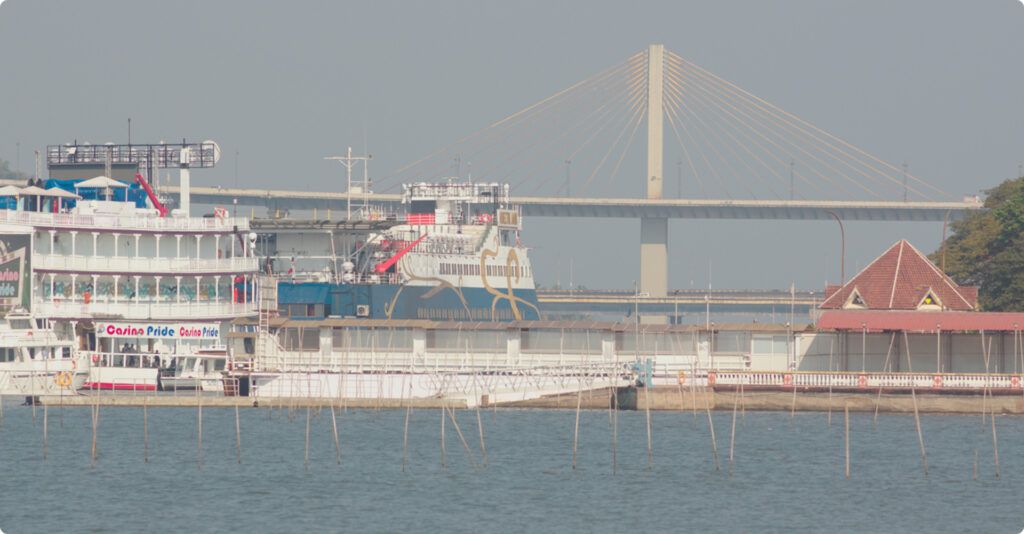
Fig. E.7: Enclosing the river commons by the casinos. Source: Shrinivas Ananthanarayanan/Gasper D’Souza Collection.
It needs to be reversed and the river as a commons returned to the people of Goa to enjoy it as they used to do in the past. Incidentally the chapter by Aurobindo Gomes Pereira, which flags this aspect, also makes an additional point of showing the cultural link between commons theory and our own system of gaunkari. This too calls for further study. The second idea, also drawing on Ostrom—the third principle of governance—elevates the concern for the river by recommending the creation of a River Authority to govern the river as a commons. This is a promising idea, developed by Maya de Souza, that will allow us to both shut down some departments because they are indifferent to the cause of the river, or merge them with the River Authority, within an overarching institution that will protect all Goa’s rivers (Pradhan et al. 2016).
The obvious characteristic of the river is as “a source of livelihood.” Whether we see it as providing water for agriculture and urban needs, or industry or tourism or eco-activities such as bird watching in the Salim Ali Bird Sanctuary, or carrying ore from the mines to the harbour, or supporting fishing both in terms of river-fishing and in terms of providing the infrastructure to land fish catches from the sea, the river has contributed to economic activity and has done so as new economic activities have emerged such as river cruises and casinos.
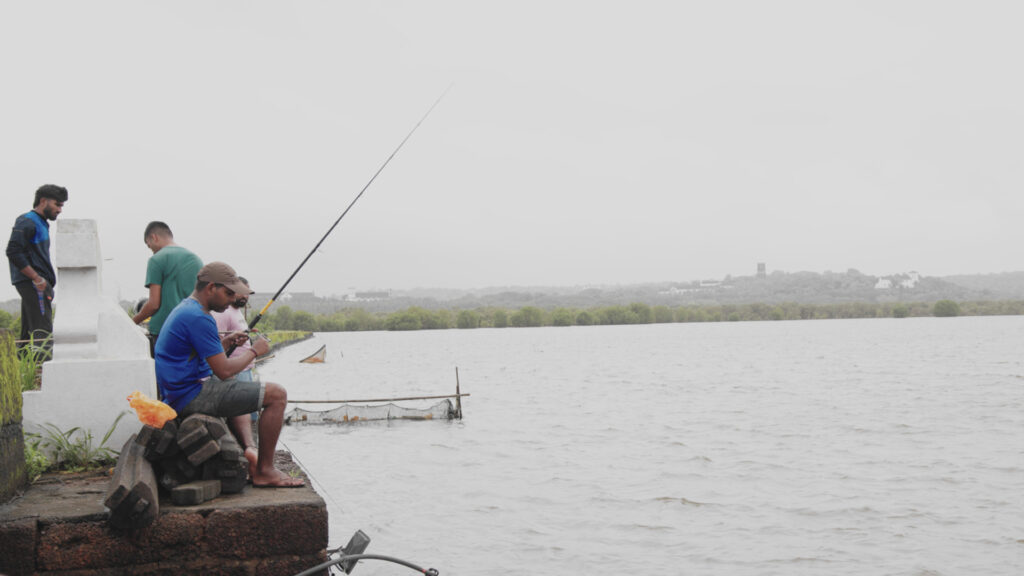
Fig. E.8: Old habits of fishing still continue along the Mhadei’s banks. Source: Shrinivas Ananthanarayanan/Gasper D’Souza Collection.
These have been discussed in the chapters of Rishi Bahadur Desai who has looked at the economic demands on the eastern face of the Ghats, of Dhirendra Deshpande who has tried to offer a model to estimate the economic value of the river based on the various activities it supports, of Rahul Tripathi who has looked at political and economic interests that have tried to influence policy. The river’s contribution to agriculture has never been fully quantified because our unit of analysis has not been the watershed. Goa must develop a policy concerning sustainable extraction of water, especially in the light of new demands coming from a growing economy.
This aspect of the river as livelihood is closely connected with the idea of the river as “a site for a contested politics.” There are many lenses to view this political contestation, such as the conflict between states, interest groups, political parties, civil society groups, and between political leaders. For example, the issue of whether the area should be declared a tiger sanctuary, has led to a dispute between the residents of Valpoi, who fear it would affect their livelihood, and the environmentalists, who think it would protect the health of the forest, for a healthy tiger means a healthy forest. Or the statements before the recent elections, by the BJP leadership, that the diversion dispute has been resolved by the two states of Goa and Karnataka. This was a direct appeal to vote banks in the Dharwad-Hubli region. These aspects of a contested politics have been discussed adequately in the chapters of Meera Mohanty, Rahul Tripathi, and Rishi Bahadur Desai.
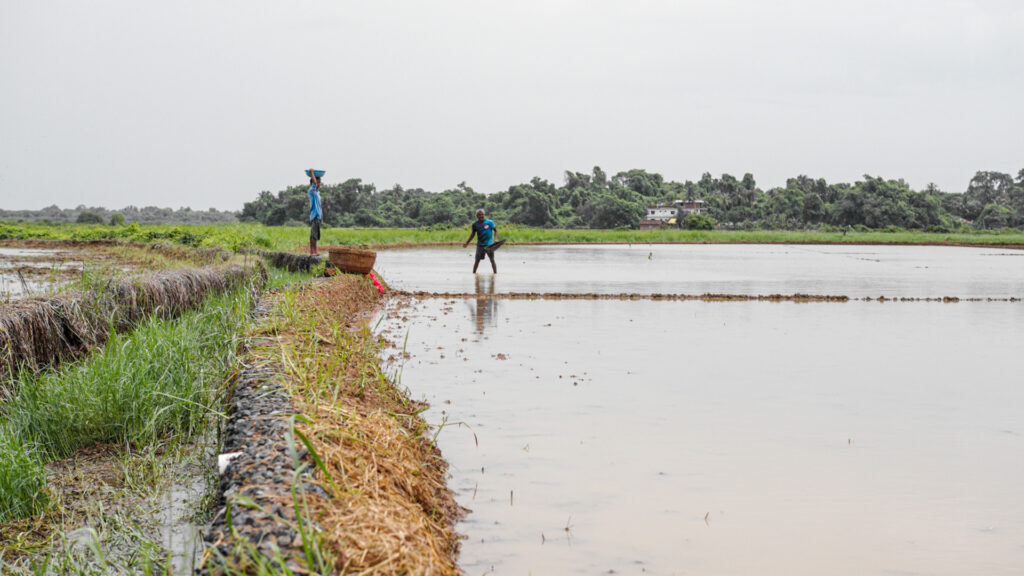
Fig. E.9: River Mhadei supporting Goan agriculture. Source: Shrinivas Ananthanarayanan/Gasper D’Souza Collection.
From a different angle is the urbanization challenge to the river. This is particularly so around Panjim where, because of urban growth, a Municipality has been converted, by law, into a Corporation. In such urbanization little provision, if any, seems to have been made for waste disposal, especially that of sewage. To treat the river as a “sewage sink” goes against modern systems of urban planning that seek to achieve a goal of zero discharge of sewage into the natural water bodies. This is not happening in Panjim. If we look at the St Inez nullah—which coincidentally flows via the city sewage treatment facilities—and its subsequent discharge of black water into the river, we get a sense of the planning deficiencies that have exacerbated this condition. A beautiful river is being converted into a polluted river following the sad trajectories of rivers in many places—the rivers in the UK, (Monbiot 2021) the Seine in Paris (Park 2024), the Yamuna in Delhi, and the Ganga in Kanpur (India Water Portal 2013).
This is because we have not regarded the river as a resource to be protected but treated it instead as a sewage sink that can carry waste indefinitely. In the volume we have one chapter, by Leon Morenas and Manisha Rodrigues, that discusses the difficulty in getting comprehensive data on urban planning that factors the river as a resource in which there will be zero discharge of sewage such as has taken place in Singapore. Data on amount of discharge in litres per day into the river is unavailable. This sewage discharge is compounded by the discharge from the casinos, from the increased urbanization on the other bank of the Mandovi, at Betim, Verem, Nerul, etc. The chapter by Helga do Rosario Gomes discusses the microplastics that have entered the river (Government of Goa 2019). A walk on Miramar Beach during the monsoon will reveal the amount of plastic and other solid waste, even vehicle tyres, that litter the beach, thrown back by a wounded river onto a wounded land.
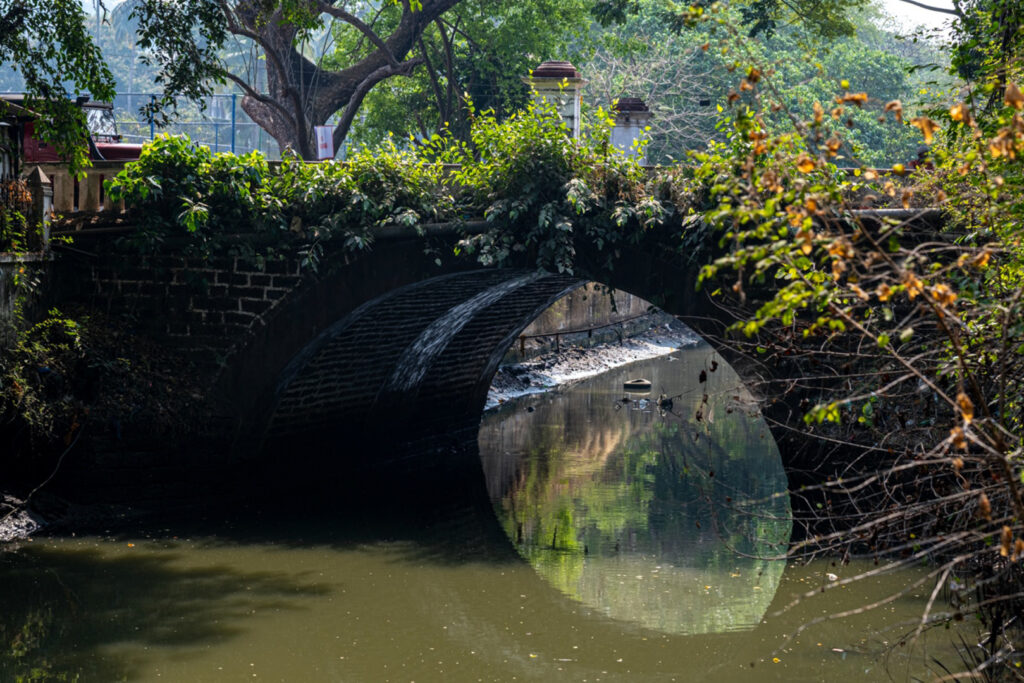
Fig. E.10: Sewage emptying out into the river. Source: Shrinivas Ananthanarayanan/Gasper D’Souza Collection.
From traversing this area of biodiversity, laws, cultural practices, and urban planning, I would like to conclude this listing of archways and move a level up to see the river as a “measure of cosmic time.” As grandiose as it may sound, even hyperbolic perhaps, thinking of the river through geographical time is a humbling experience. The river was there when the Ghats were formed by the annual cycle of the monsoon which produced springs and rivulets that have grown into our river Mhadei. This went on for millennia. Soon vegetation appeared, giving rise to insects, reptiles, fish, birds, and mammals that populated the Mhadei forests.
This in turn was followed by human communities, first as hunter-gatherers, and then as settlers along its banks, who today have become providers of leisure cruises. If we plot this chronology, and we could, as they do in natural history museums, we would see the river as a chronometer. Because of our anthropocentric worldview we are blind to this long evolution and see the river only in two-dimensional terms as a water resource to be harnessed and a political conflict to be resolved. Beyond such narrow thinking the fundamental question remains: Are we pushing the river basin and its biodiversity into a zone of risk? Will we be guilty of an ecocide?
Through his review of the scientific literature A.G. Chachadi has looked at the dimensions of geology and hydrology of the Mhadei basin and attempted to give an answer of how much water can be extracted, and by what technical instruments, without harming the river. His answer will be challenged by others in the collection but what is clear, and that was intended, is that the question cannot be ignored. Should we extract some water to meet escalating demands or draw no water at all because of the damage it would cause to the biosphere reserve? Can such extraction be done only during the monsoon season when there is an abundance of water or never ever? To formulate it directly: How much can be extracted, if any at all, without harming the precious biodiversity of the Mhadei watershed? Our collection has captured the debate between the different viewpoints and also placed this hard question within a context of ecology, culture, biodiversity, law, and politics. We have sought to move from an anthropocentric to an ecocentric view of the river dispute.
The above sketchy notes on the eleven archways from which to enter—as a memory archive, a witness to history, a nurturer of biodiversity, a provider of ecosystem services, an inter-state water dispute, a goal for the laws, a commons, a source of livelihood, a site for contested politics, a sewage sink, a measure of cosmic time—is just that, sketchy. No more. They are not to be read as summaries of the chapters but mere archways on which I have placed some conceptual clues of what you will find when you enter. For example, if you enter the “nurturer of biodiversity” archway, you will encounter freshwater fish, tigers, endemic species of bats, plants that bloom every ten years, and even the king cobra. If you walk instead through the archway of a “site of contested politics” you will discover party and electoral campaigns with respect to diversion, cabinet ministers disagreeing on whether the region should be declared a tiger sanctuary, and civil society protests in both Goa and Karnataka. In contrast, if you choose the “measure of cosmic time” archway you would have to engage with the climatic processes concerning the formation of the Western Ghats, why some rivers are west-flowing and some east-flowing, the unique geology of the Ghats where monsoon water is retained giving rise to the abundant biodiversity, to the climate change consequences on flora and fauna, etc. The choice of “archway” as a keyword was a deliberate epistemic strategy to bring some conceptual order to the chaotic discourse universe that is currently the case and to thereby group together arguments that have similar concerns. The archway is an invitation to enter. To seek more. And be awed by what you discover.
The River and Just Transitions
In addition to the many issues that the chapters have raised, some of which I have drawn attention to above, there are three sets of questions that I would, in conclusion, like to draw from the Mhadei river public discussion that address, perhaps indirectly, our overarching concern with just transitions. This work on the Mhadei controversy sought to provide a real-world case in thinking about just transitions. (deSouza 2023)
The idea of “Just Transitions,” which had its origin in the labour movement of the 1970s, was concerned with ensuring that as the economy transited from a brown to a green one, the livelihood security of working people would be protected, i.e., they would not be worse off. From this origin in the labour movement the concern with “just transitions” expanded to include “climate change, growing inequality, and social cohesion” (Simmons 2020) and now recognizes its linkage with other more established concepts in the justice literature such as environmental justice, climate justice and more specifically others such as “recognitional justice,” which is concerned with those who are affected, thereby bringing in the intergenerational question, or “distributive justice,” which looks at how social costs and benefits are shared, or “procedural justice,” which evaluates whether the processes and procedures guiding the transitions are equitable and inclusive, and “restorative justice,” which seeks a restoration of natural areas, compensation for loss of jobs, etc. (Newell and Mulvaney 2013; Just Transition Centre 2017). This is an extensive range of concerns, but they underlie not just the volume as a whole but also individual chapters. You will notice the value slant given by the language of each chapter.
Shackled Imagination and the River Dispute
The three new issue that have a bearing on our overall concern with “Just Transitions,” which will remain open ended, as they should be, are the following. The first is the concern with the institutions that are concerned with the river. There are two types of institutions here, each performing distinct functions: (i) the regulatory and planning institutions and (ii) the adjudicatory institutions. The Government of Goa has many regulatory and planning institutions such as the Goa State Pollution Control Board (GSPCB), the Goa State Biodiversity Board (GSBB), the Department of Forests, the Directorate of Fisheries, the Directorate of Planning, Statistics and Evaluation, and the Town and Country Planning Department, to mention a few. They are supposed to ensure the health of the river. Do they do so? The answer is both yes and no. Vasudha Sawaikar and Rahul Tripathi have shown in their chapters the weak regulatory role they play. A fuller answer, however, must come from an evaluation of the working of the institution and its success in meeting the objectives that were intended when they were set up. Are the outcomes they produce marked by efficiencies or lethargies or both? The Goa government report on the rejuvenation of the river Mandovi records increasing faecal coliform in the river in period 2015-2018, a single indicator which shows that the river is getting increasingly polluted by the city, by urbanization and by the casinos. See what the monsoon brings. (Government of Goa 2019, 23)
Table E.1: Mandovi River parameters bridge during the monsoon (June to September)
| 2015 | 2016 | 2017 | 2018 | Range | |
| Faecal Coliform | 1300–3300 | 1300–5400 | 5400–7900 | — | 130– |
| (MPN/100 ml) | 7900 |
Another possible indicator of their inability to protect the river is the list of 60-plus projects (dams, diversions and infrastructures) that the state government has planned—a list which I am sure received inputs from all these departments—which was submitted to the MWDT in response to the claim by Karnataka that water was being wasted when it was allowed to flow into the sea. The Goa government wanted to show it was not going to be wasted since they had extensive plans to utilize it. They seem unaware, unschooled by the argument of the dependent relationship between the river and the sea, made by Helga do Rosario Gomes in our book and by other oceanographers. The vandalism of the Goa government in these 60-plus proposed plans for the river will do as much damage to the Mhadei as the proposals of government of Karnataka. The river must flow as James Scott argued in his brilliant lecture (Scott 2020) and Philippe Sands wrote in his review of the brilliant book by Robert Macfarlane Is a River Alive?
Macfarlane ‘confronts the gross failure of our existing laws’ and holds that ‘our classical laws, built around the human, have failed, and we need another way, one that ruptures the shackles of our learnt and inherited imaginations, and the limits of our legal intuitions that have trapped us. Let us imagine a river that lives and has rights of its own.’ (Sands 2025)
Recognizing these shackled imaginations, we now look at the second type of institution, the “adjudicatory” one, i.e., the Mhadei Water Dispute Tribunal (MWDT). This institution, as stated earlier, is the child of a visionary provision in the Indian Constitution (Article 262). Democracies need adjudicatory institutions since they are then available to settle conflicts between contending interests. These conflicts will require an impartial institution that enjoys the legitimacy of the groups to the dispute, one whose procedures will be accepted and whose award will be listened to. The MWDT is one such adjudicatory institution. But unfortunately, it has been epistemically dominated by irrigation engineers and lawyers. Their perspectives on the river prevail. They are in fact the only accepted frames. But while these experts are certainly necessary, they should be accompanied by anthropologists, cultural theorists, environmentalists, ecologists, geologists, economists, social activists, and political scientists, experts with other relevant knowledge domains concerning the river. By creating an expansive area of expertise from which the MWDT would draw scientific knowledge, such as the one I have proposed, before deciding on their award, it would have been able to go beyond the “narrow scientistic” (as different from “broad scientistic”) frame that it has used. This critique is made in the chapters by Vaishali Kashyap and Parineeta Deshpande Dandekar. The broad composition of the adjudicatory institution is hence important in arriving at an acceptable decision. It needs to listen to different epistemic viewpoints. Our book demonstrates and celebrates epistemic plurality.

Fig. E.11: A friendly Malabar pit viper checking us out. Source: Shrinivas Ananthanarayanan/Gasper D’Souza Collection.
Further the procedures adopted by the MWDT gave no place to civil society to officially place their viewpoints before it. Only governments could make submissions. This denied civil society actors a chance to give their views, making the adjudicatory process very state-centric and not people-centric. Such a procedure ignored the fact that people also have relevant and considered views on the fish life of the Mhadei, on its biodiversity, on its connections with cultural communities, and on its status as a commons. They are the people of the river. Their knowledge too is valid. MWDT sadly showed a disdain for such knowledges, reinforcing an outdated thinking that knowledge held by experts from institutions is the only valid knowledge. As a result, a deficiently composed body, adopting deficient procedures, has produced, quite naturally, a deficient award. What is being imagined for the Mhadei is unfortunately not a Just Transition.
Ethical Eddies in the Mhadei
Missing also is an engagement with important ethical issues that the Mhadei controversy has brought to our attention. Let me here set at rest the false belief that ethical issues are for moral philosophers only and that government is concerned only with scientific issues. All policies are based on ethical positions, whether these are in the foreground of our deliberations or remain in the background of our thinking. Let me just flag three such ethical issues. The first concerns animal rights (Stilt 2021). While this can be dismissed as a Western obsession, which it is not, even from an Indic perspective such as the Jaina worldview, and other Indic cosmologies that believe in ‘rebirth,’ animals and even insects have a sacral place and are regarded as manifestations of the divine. The planning for the river has completely ignored this aspect of the rights of animals. One has only to walk into the forests of the Mhadei with ecologists such as Rajendra Kerkar and Nirmal Kulkarni to be easily persuaded that even the bats and the snakes have a “right” to the Bhimgad forest, to the ecosystem they inhabit. But our anthropocentric thinking places the forest and the river at risk. Allied to animal rights is the new movement in many parts of the world, including India, to give rights to rivers, the second ethical issue, which was debated in the Uttarakhand High Court in March 2017. This has been alluded to in the chapter by Aurobindo Gomes Pereira and gestures to the emergence of a new jurisprudence. This aspect too has been ignored by the Tribunal.
It is the third issue of ethics that I find most challenging, the issue of trade-offs between different objectives. The rights of fish versus the rights of farmers or the rights of bats versus the rights of tourists on river cruises. If we were to adopt an anthropocentric frame then the answer is clear, humans before bats and fish. But this is not the case if we distinguish between a “thin” and a “thick” anthropocentric frame. In the former the answer is clear but in the latter the answer must evolve through a study of interdependence between the species of the river watershed. A free-flowing river allows fish to go up-stream to spawn, which in turn maintains the health of the river, which is turn provides us with food. A dying river is one where there are no fish. This affects us humans. That is why we are so excited by the recent sightings of the dolphin in the Ganges and why the people of the Thames in the UK are so thrilled by the return of fish life to a river that was declared biologically dead in the 1950s. The same would be true of bats. Humans are dependent on a healthy forest for the ecoservices it provides of water, fresh air, wood, etc. Bats maintain the health of the forest by seeding it with their droppings of seeds from fruits. thereby enabling its biodiversity. A dead forest means a weak monsoon and a failed crop. The binary between human rights and animal rights is therefore not so clear. We must perform trade-offs, but this is a more complex exercise than we initially assumed it to be.
An interesting angle has been added to this issue of trade-offs, between the people residing around the river and people residing in urban clusters far away from the river. In the context of the dams on the Narmada river, Arundati Roy introduced the idea of the “greater common good,” where the residents dependent on the river, the Adivasis who live along its banks, are being asked to bear the burdens of the dam for a “greater common good,” not just for farmers far away in Saurashtra but for the greater common good of the nation (Roy 2019). This is also an argument being made with respect to the diversion of the Mhadei water. Residents of the watershed are being asked to bear the ecological burden of the diversion so that sugarcane farmers beyond the watershed and residents in the twin cities of Dharwad and Hubli can get the diverted water. The residents in the watershed in both Goa and even Karnataka, as can be seen in the protests in Belagavi and Chorla Ghat, do not accept this definition of the “greater common good” since for them it is defined by allowing the river to flow and to abandon the construction of dams for the diversion. Two conceptions of the “greater common good” are therefore in conflict. But what Roy’s formulation places for discussion is the conflict between the “proximate” groups, those who live within the watershed, and the “distant” groups, those who see the river only as a source of water and not as a provider of ecosystem services as we have shown.
This debate allows me to transit to my third and final ethical concern, the rights of future generations. This too is an entangled question since future generations can be seen as distant groups who place a responsibility on proximate groups, us today, to keep the river in as good a condition as we have received it and are enjoying it. In other words, they too, when their time comes, must get the same benefits from the river that we are receiving. The intergenerational question not only brings us back to the issue of time, i.e., the present versus the future, but also raises questions of what do we owe the future? Do generations not yet born have rights? And if they do, do they place duties on the present generation to maintain a sustainable and diverse Mhadei ecosystem? We must confront these questions as part of our engagement post the publication of this book. I hope we have here given readers the conceptual resources to enter this archway of “intergenerational rights.”
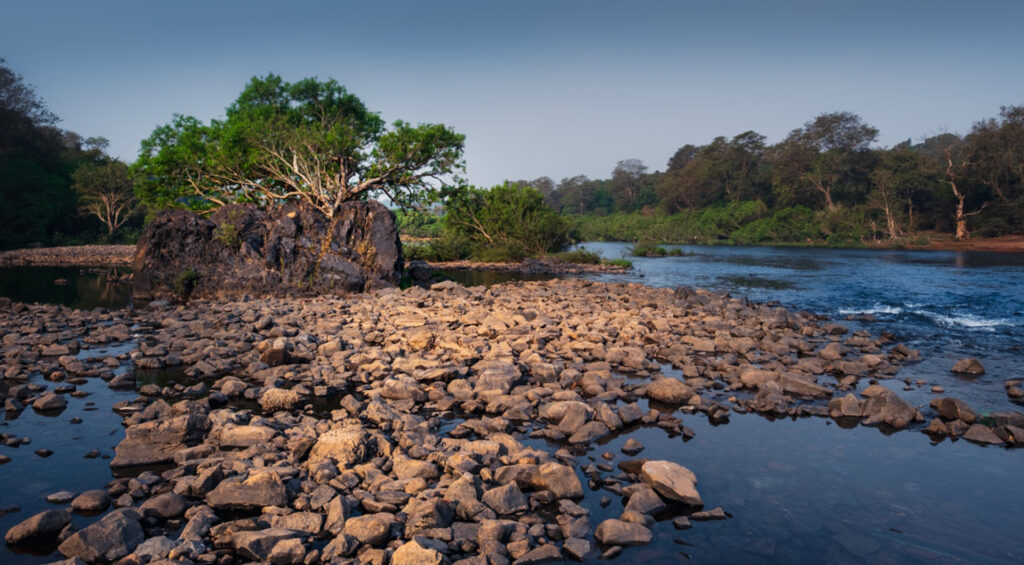
Fig. E.12: The Mandovi at Ganjem. Source: Shrinivas Ananthanarayanan/Gasper D’Souza Collection.
What I would like to do as a final flourish, however, is to connect the inter-generational rights issue with the thinking of Gandhi who put forward some revolutionary ideas for a sustainable planet. Bapuji was ahead of his time. One such idea that has relevance today, in the context of climate change and the river, is his idea of “trusteeship.” Whereas Gandhi developed the concept of trusteeship in the context of the economy—it draws on Snell’s equity law (concerning Trusts) and the Gita’s concept of aparigraha (non-possessiveness, non-greed, and non-attachment)—it travels to our engagements with the river and just transitions. In his different writings he formulates the argument as follows: a trustee (in this case the capitalist) is one who holds the capital which is in his charge for “God” (a term Gandhi used as a proxy for ‘the people’) and is entitled, therefore, to use only a portion of it for his pleasure, the rest being for the use of the people. The trustee therefore has only limited rights of use and alienation. While he developed the concept in his attempt to give an alternative model of economic management to that offered by capitalism and socialism, the concept of “trusteeship” can also be used in the context of the earth’s resources. We are trustees of these resources not just for other species of the planet but also for future generations since we only have limited rights to its use. We can use only a portion of it since the rest belongs not to us but to “God.” As trustees it is in our care. We carry the responsibility of caring for it on behalf of God (read other species and future generations). This is a responsibility we cannot take lightly. It is a privilege and a grace.
We are the trustees of the river Mhadei.
References
American Rivers. 2025. America’s Most Endangered Rivers® of 2025. America’s Most Endangered Rivers® Campaign. Accessed April 18, 2025. https://mostendangeredrivers.org/.
Biss, Eula. 2022. “The Theft of the Commons.” The New Yorker, June 8, 2022. https://www. newyorker.com/culture/essay/the-theft-of-the-commons. Accessed April 17, 2025.
Chokkakula, S. 2012. “Disputes, (De)Politicization and Democracy: Interstate Water Disputes in India.” RULNR Working Paper no. 13; CESS Working Paper 108. Hyderabad.
deSouza, Peter R. 2021. “Knowledge Commons and Enclosures.” UNESCO, Paris. https://www. unesco.org/en/articles/knowledge-commons-and-enclosures. Accessed April 17, 2025.
———. 2023. “Just Transitions: The Work the Idea Is Doing.” PowerPoint presented at BA 2 meet-ing, Cape Town.
Facer, Keri. 2023. “Possibility and the Temporal Imagination.” Possibility Studies and Society 1 (1–2).
Gadgil, Madhav, et al. 2011. Report of the Western Ghats Ecology Expert Panel. Submitted to the Ministry of Environment and Forests, Government of India.
Government of Goa. 2019. River Rejuvenation Committee: Action Plan Report on the Mandovi River.
Heinrich Bo¨ll Stiftung. 2023. “Elinor Ostrom and 8 Rules for Managing the Commons.” https://tn. boell.org/en/2023/04/19/5-elinor-ostrom-et-les-huit-principes-de-gestion-des-communs. Ac-cessed April 17, 2025.
India Water Portal. 2013. “Living Rivers, Dying Rivers: Everything You Wanted to Know about Rivers in India.” https://www.indiawaterportal.org/rivers-and-lakes/rivers/living-rivers-dying-rivers-everything-you-wanted-know-about-rivers-india. Accessed January 1, 2025.
———. n.d. “A Tale of Two Sparring States and a River.” https://www.indiawaterportal.org/ articles/tale-two-sparring-states-and-river. Accessed March 6, 2023.
Iyer, R. R. 1994. “Indian Federalism and Water Resources.” International Journal of Water Develop-ment 10 (2): 191–202.
———, ed. 2009. Water and the Laws in India. Sage India.
———. 2013. “Viewpoint–The Story of a Troubled Relationship.” Water Alternatives 6 (2): 168–176.
Jackson, S. 2021. “Rivers and Their Cultural Values: Assessing Cultural Water Requirements.” Ox-ford Bibliographies.
Just Transition Centre. 2017. Just Transition: A Report for the OECD. https://web-archive.oecd.org/ 2017-05-23/439051-Just-Transition-Centre-report-just-transition.pdf. Accessed April 25, 2025.
Krishnaswamy, J., et al. 2017. “Moving from Requiem to Revival: India’s Rivers and Riverine Ecosys-tems.” In Transcending Boundaries: Reflecting on Twenty Years of Action and Research at ATREE, edited by Ankila J. Hiremath, Nitin D. Rai, and Ananda Siddhartha, 94–103. Bangalore: ATREE.
Monbiot, George. 2021. “Britain’s Rivers Are Suffocating to Death.” The Guardian, July 21, 2021. Also see Rivercide
https://www.youtube.com/watch?v=kSPtVkJ Uxs Accessed Apr 19, 2025.
Munduruku, A. K., et al. 2024. “Rivers Are Key to Restoring the World’s Biodiversity.” Independent Media Institute. https://mahb.stanford.edu/library-item/rivers-are-key-to-restoring-the-worlds-biodiversity/. Accessed May 6, 2024.
Newell, Peter, and Dustin Mulvaney. 2013. “The Political Economy of the ‘Just Transition’.” The Ge-ographical Journal. https://www.iss.nl/sites/corporate/files/66-ICAS CP Newell and Mulvaney. pdf. Accessed April 25, 2025.
Ostrom, Elinor. 1990. Governing the Commons: The Evolution of Institutions for Collective Action. Cambridge: Cambridge University Press.
Park, Amy. 2024. “How Dangerous Is the Seine for Olympic Athletes?” Time, July 30, 2024. Pope Francis. 2015. Laudato Si’. Vatican City: The Holy See.
Pradhan, Amruta, et al. 2016. State of India’s Rivers for India River Week: Goa. SANDRP.
Puthucherril, T. G. 2022. “Water Federalism, Tribunalization of Water Justice, and Hydro-Politics: India’s Inter-State River Water Disputes Act at 65 Years.” Columbia Journal of Asian Law 35 (1): 1–73.
Ranjan, A. 2018. “The Mahadayi River Water Disputes between Karnataka and Goa.” ISAS Insights, no. 485, March 19.
Revealed: Big Tech’s New Datacentres Will Take Water from the World’s Driest Areas. 2025. The Guardian, April 9, 2025.
Richards, A., and N. Singh. 2001. “Inter State Water Disputes in India: Institutions and Poli-cies.” SSRN Working Paperno. 503. UCSC Dept. of Economics.
Roy, Arundhati. 2019. My Seditious Heart: Collected Non-Fiction. Chicago: Haymarket Books.
Sands, Philippe. 2025. “Why Our Planet (and Not Just Its People) Should Have Legal Rights.” Fi-nancial Times, April 26, 2025. https://on.ft.com/4cZ5JQU. Accessed April 26, 2025.
Scott, James C. 2020. “In Praise of Floods.” Luce Lecture, Kenan Institute of Ethics, Duke University, February 10, 2020. https://kenan.ethics.duke.edu/event/in-the-praise-of-floods-luce-lecture-with-james-scott/. Accessed April 25, 2025.
Simmons, Daisy. 2020. “What Is Climate Justice?” Yale Climate Connections. https:
//yaleclimateconnections.org/2020/07/what-is-climate-justice/. Accessed April 25, 2025.
Sonak, S. 2014. Khazan Ecosystems of Goa: Building on Indigenous Solutions to Cope with Global Environmental Change. Springer.
Stilt, Katrina. 2021. “Rights of Nature, Rights of Animals.” Harvard Law Review Forum 134
(5): F276. https://harvardlawreview.org/forum/vol-134/rights-of-nature-rights-of-animals/. Accessed April 25, 2025.
Williams, John. 2018. “Elinor Ostrom’s 8 Rules for Managing the Commons.” The Earthbound Report. https://earthbound.report/2018/01/15/elinor-ostroms-8-rules-for-managing-the-commons/. Accessed April 17, 2025.
World Wildlife Fund. 2018. Valuing Rivers. https://awsassets.panda.org/downloads/wwf valuing riversfinal .pdf. Accessed April 17, 2025.
Author Profile